Overhead squat
Also called barbell overhead squat.
What is an overhead squat?
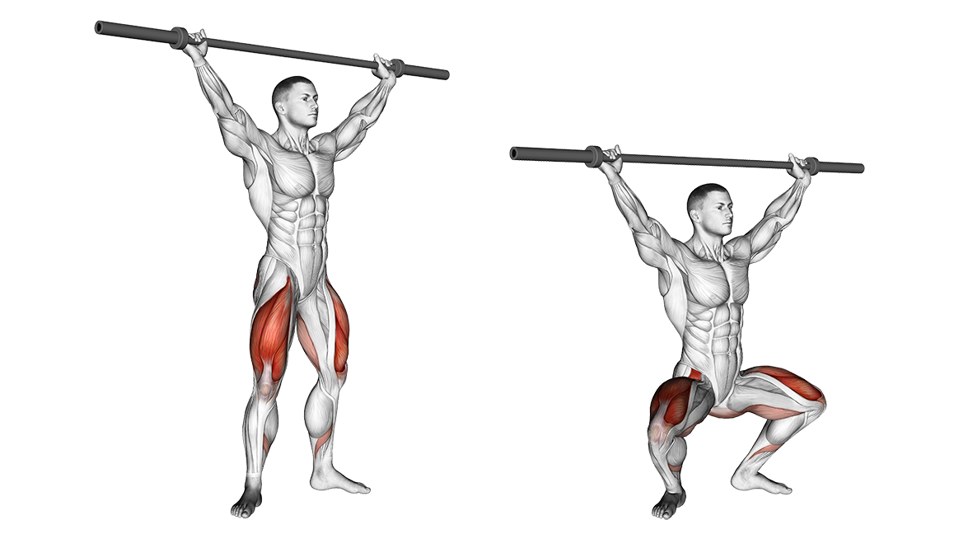
An overhead squat is a squat performed while holding a barbell overhead on straight arms, usually with a wide snatch grip. You lower and stand while keeping the bar balanced over your feet. This guide starts from a rack with a light bar.
How do you perform an overhead squat?
Set up
- Set the rack just below shoulder height and clear the area overhead and around you. Use a light bar and practice a safe release onto a platform with a coach before loading it.
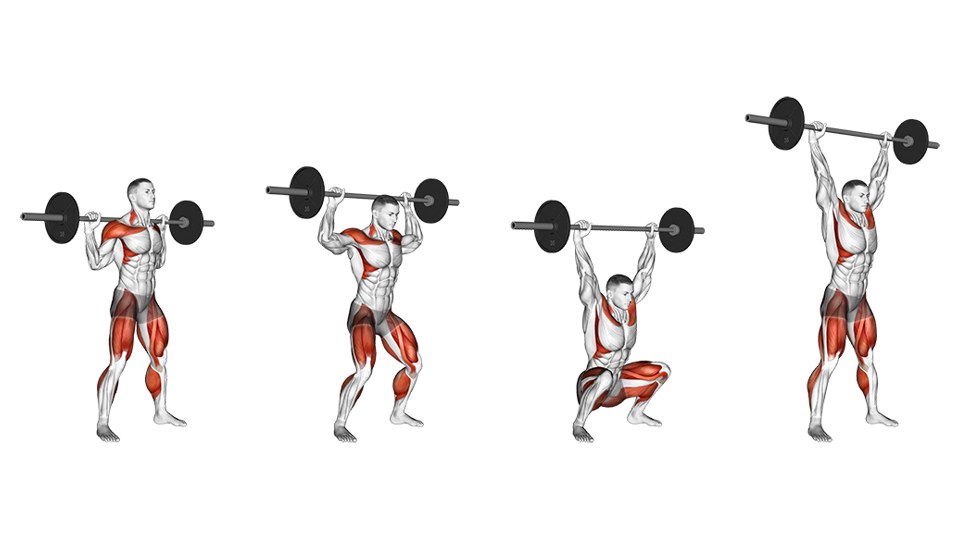
- Unrack the bar across your upper back with a wide grip. Use a small dip and drive to bring it overhead, fix the elbows straight and move your feet into a comfortable squat stance.
Execution
- Brace and check that the bar is steady above your base of support before starting the descent.
- Bend the hips and knees together, sitting between the feet while keeping the elbows straight and the bar balanced overhead.
- Lower only as far as you can retain that balance and full-foot contact. Do not force extra depth by tipping the bar forward.
- Push through the feet to stand, maintaining the overhead position. After the final rep, use a practiced safe return or release rather than catching a heavy bar behind your neck.
Common mistakes
Dropping the elbows as you descend
Use less weight and maintain straight arms. Avoid trying to save a bar that has fallen beyond your control.
Letting the bar drift forward
Pause at a depth you can control and reset. Do not compensate by balancing on the toes.
Forcing a deep squat immediately
Use a technique bar and a comfortable depth. Work on the position separately rather than loading a depth you cannot hold.
Where it fits in a session
Practice this near the start of the session, after your planned warm-up and before tiring assistance work.
Start with an unloaded bar and short sets. Stop when the elbows soften or balance changes; use the same controlled depth before adding load.
Muscles worked
Primary
Secondary
Schematic surface view. Some muscles are partly visible or not shown.
Variations

Frequently asked questions
How wide should I grip the bar?
Start with your snatch grip or a width that allows a stable overhead position with straight elbows. Adjust with a light bar; hand width is a setup choice, not a reason to tolerate pain.
Do I have to squat below parallel?
Use the depth you can control while keeping the bar overhead and the feet grounded. For weightlifting receiving practice, build toward the depth required by your snatch with appropriate coaching.
How do I get the bar overhead to start?
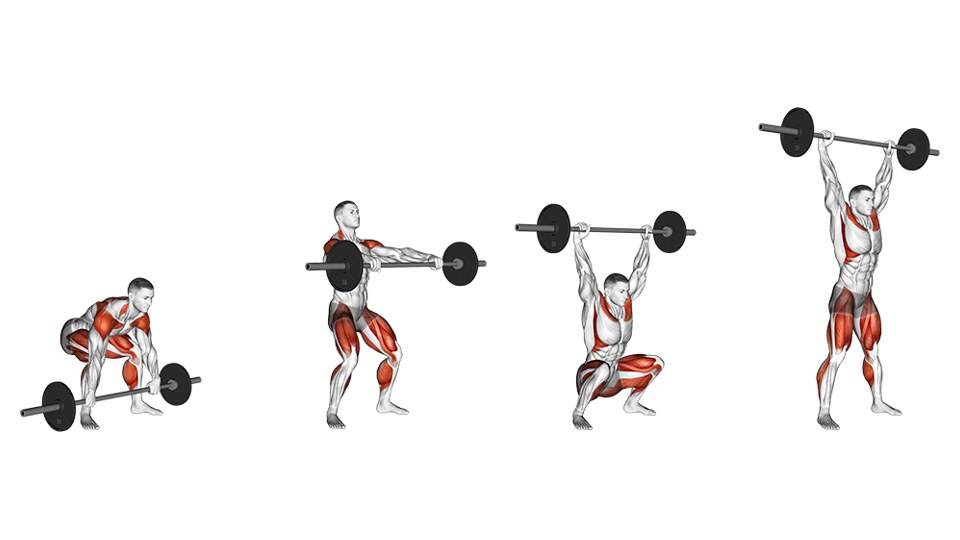
You can use a snatch or another practiced route to the overhead position. This guide uses a rack start to keep the squat itself the focus; do not add an unfamiliar lift just to get the bar up.
Sources
- Mohammed A. Miniato; Prashanth Anand; Matthew A. Varacallo. Anatomy, Shoulder and Upper Limb, Shoulder. 2023. https://www.ncbi.nlm.nih.gov/sites/books/NBK536933/