Snatch balance
What is a snatch balance?
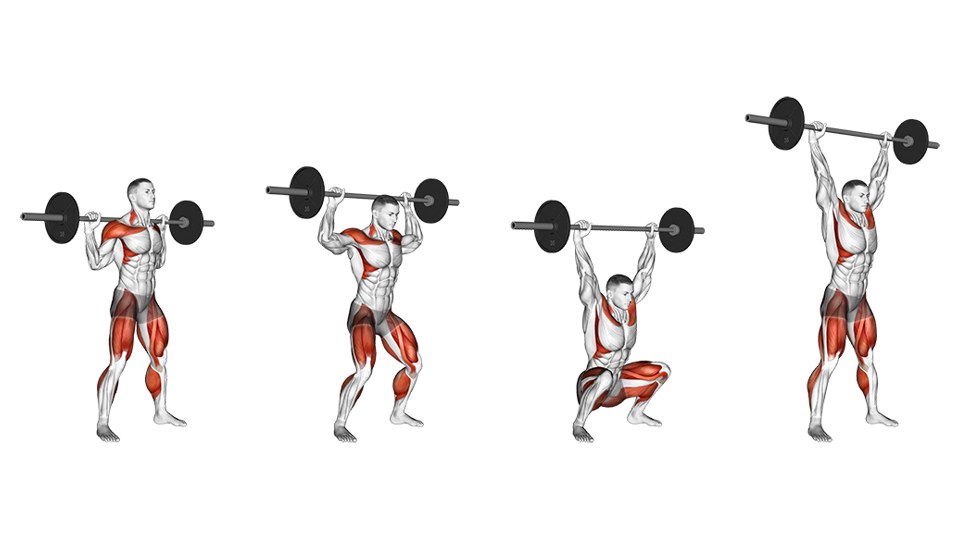
A snatch balance begins with a barbell across the upper back and a wide grip. A short dip and drive starts the bar upward while you move quickly into a full squat beneath it and receive on straight arms. Stand from the squat to finish. This guide covers the dip-and-drive version.
How do you perform a snatch balance?
Set up
- Set the rack hooks just below shoulder height, clear the platform and start with a technique bar. Practice safely releasing a missed overhead lift with a coach.
- Unrack the bar onto your upper back with your usual snatch grip. Step clear, stand balanced and brace; keep the bar supported on the upper back rather than the neck.
Execution
- Make a short knee dip with your torso upright, then drive upward to start the bar moving.
- Move quickly down into a squat as you straighten your arms against the bar. Shift your feet into your receiving stance if needed rather than jumping forward.
- Receive the bar above your base of support with straight elbows in a full squat. Establish balance before beginning the recovery.
- Stand while maintaining the overhead position. Return to the upper back only with a light weight and a practiced technique; otherwise release safely onto the platform and set up again.
Common mistakes
Pressing the bar up before squatting
Practice getting under during the upward bar motion. The lift is not an overhead press followed by an unrelated squat.
Dropping before the bar has space to rise
Use a small coordinated dip and drive. Avoid collapsing downward while the bar is still resting on your back.
Trying to return a heavy bar onto the neck
Choose a load and return method you have practiced. Use a permitted platform release for heavier attempts.
Where it fits in a session
Use light technique practice after warming up, or place loaded sets after the main snatch work and before tiring strength accessories.
Practice with a technique bar, then use short sets from a fresh back-rack setup. Stop if the receiving depth or overhead position becomes inconsistent.
Muscles worked
Primary
Secondary
Schematic surface view. Some muscles are partly visible or not shown.
Variations
Frequently asked questions
Is this the same as a drop snatch?
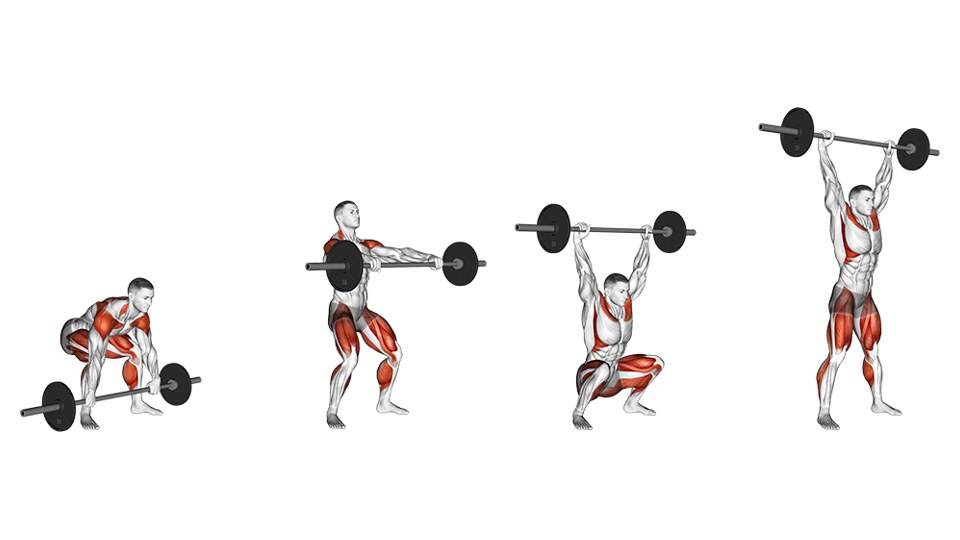
Coaches use these names differently. This guide includes a short dip and drive. A no-drive drop snatch is a distinct drill; state which version you are practicing.
Do I need to move my feet?
You may move from a narrower driving stance into your squat stance. Keep the step small and consistent. Starting in the receiving stance changes the drill, so log that detail if it matters to your practice.
Should I start this before I can overhead squat?
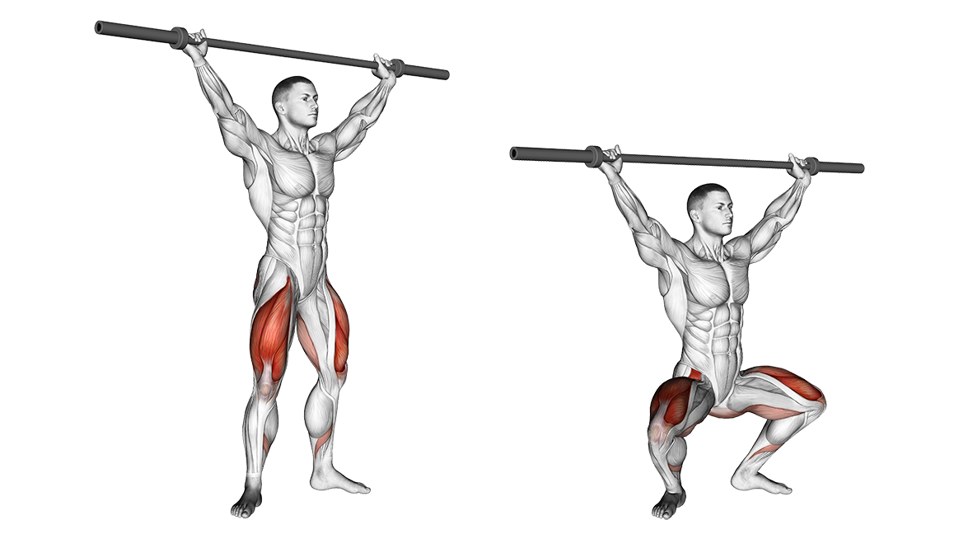
First learn to hold and stand from a stable overhead squat with a light bar. Add the quick move underneath with coaching once you can control that receiving position.
Sources
- Bruno Bordoni; Matthew A. Varacallo. Anatomy, Bony Pelvis and Lower Limb: Thigh Quadriceps Muscle. 2023. https://www.ncbi.nlm.nih.gov/sites/books/NBK513334/
- Adel Elzanie; Judith Borger. Anatomy, Bony Pelvis and Lower Limb, Gluteus Maximus Muscle. 2023. https://www.ncbi.nlm.nih.gov/sites/books/NBK538193/
- Mohammed A. Miniato; Prashanth Anand; Matthew A. Varacallo. Anatomy, Shoulder and Upper Limb, Shoulder. 2023. https://www.ncbi.nlm.nih.gov/sites/books/NBK536933/