
Pause squat

What is a pause squat?

A pause squat is a barbell back squat with a deliberate stop at the bottom. Stay braced during the pause, then stand without first bouncing lower. The depth and pause length should be repeatable across the set.
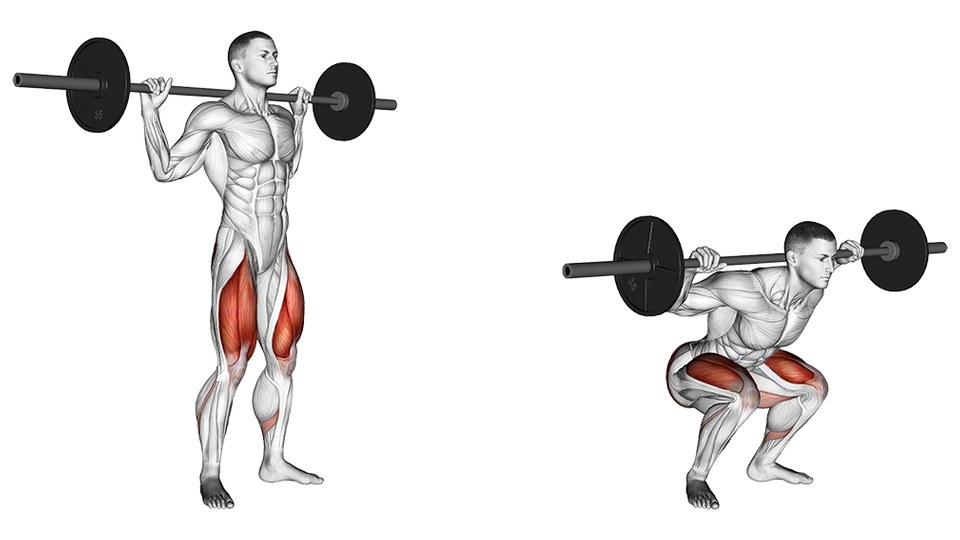
Two-frame anatomical illustration of a barbell back squat on a white background. On the left a muscular male figure stands upright, seen square from the front, with a loaded barbell across his upper back and both hands gripping it wide; from the front the bar's height on the back cannot be read. The fronts of both thighs are shaded red, as is a strip down the front of each shin. On the right the same figure is at the bottom of the rep, seen from the side and a little behind, hips at or below the knees in a deep squat with the feet flat and the toes turned out slightly; from this angle the red shading covers the fronts of the thighs and the inner thigh running up toward the groin. The buttock is in view in that frame and is not shaded, and nothing on the back of the thigh is shaded in either.

How do you perform a pause squat?

Set up

  1. Set the rack hooks below shoulder height and the safeties just below your planned bottom position. Secure the plates.
  2. Set the bar across your upper back with an even grip. Unrack, take a small step back and settle into your usual squat stance.

Execution

  1. Brace, then bend the knees and hips to lower between your feet. Keep the bar supported on your back.
  2. Stop at your planned depth and hold your position without releasing your brace.
  3. Push through your feet to stand, keeping the bar balanced over them. Reset your breath and brace before repeating.
  4. Walk the bar into both rack uprights and lower it onto the hooks.

Common mistakes

  • Losing tension during the pause

    Reduce the load if you cannot maintain your bottom position.

  • Bouncing to leave the pause

    Start the ascent directly from the held position.

Where it fits in a session

Place it in the squat portion of the session while you can hold a steady bottom position.

Choose the pause duration before the set. Keep depth and timing consistent, and reduce the load if you cannot stay braced through the stop.

Muscles worked

Front
Front — Schematic surface view. Some muscles are partly visible or not shown.
Back
Back — Schematic surface view. Some muscles are partly visible or not shown.

Primary

Secondary

  • None listed in this guide

Schematic surface view. Some muscles are partly visible or not shown.

Variations
  • Two-frame anatomical illustration of a barbell back squat on a white background. On the left a muscular male figure stands upright, seen square from the front, with a loaded barbell across his upper back and both hands gripping it wide; from the front the bar's height on the back cannot be read. The fronts of both thighs are shaded red, as is a strip down the front of each shin. On the right the same figure is at the bottom of the rep, seen from the side and a little behind, hips at or below the knees in a deep squat with the feet flat and the toes turned out slightly; from this angle the red shading covers the fronts of the thighs and the inner thigh running up toward the groin. The buttock is in view in that frame and is not shaded, and nothing on the back of the thigh is shaded in either.
    SquatA back squat without a deliberate bottom stop.
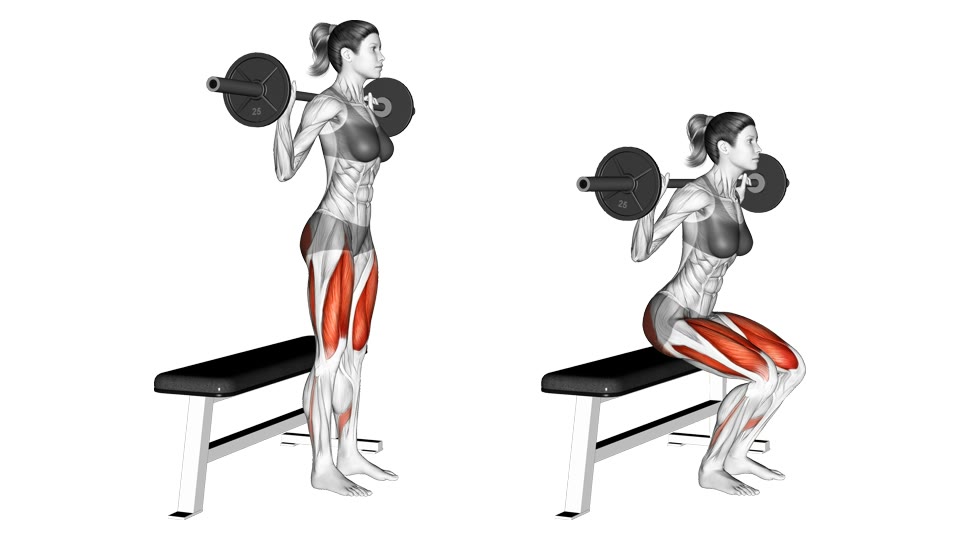
  • Anatomical illustration of a woman performing a barbell box squat to a flat bench, shown standing and seated, with the quadriceps and glutes highlighted.
    Box squatUses a stable box at the bottom.

Frequently asked questions

Should I pause below parallel?

Choose a depth you can control. For meet preparation, use the depth required by your federation and maintain it during the pause.

How is it different from a box squat?

A pause squat holds the bottom without sitting on anything. A box squat uses a box or bench.

Track your progress over time with RepCount

Log every set, see plate loading in context, and track your strength over time. Available on iOS and Android.