
Paused deadlift

What is a paused deadlift?

A paused deadlift interrupts a conventional deadlift on the way up, then finishes the lift. This guide pauses shortly after the plates leave the floor. Keep that height consistent rather than changing the pause point during the set.
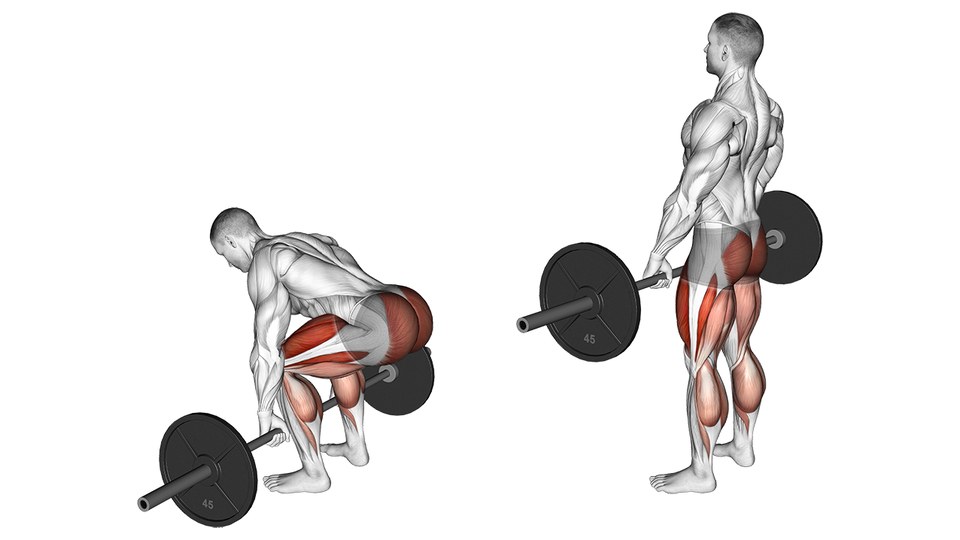
Anatomical illustration of a barefoot male figure performing a conventional barbell deadlift, drawn twice side by side against white. On the left he is at the start: hips back, knees bent, torso angled forward over a loaded barbell held in a double-overhand grip with both palms facing him, arms straight and hands just outside his knees. The glutes and the backs of both thighs are shaded red. On the right he stands upright at lockout, seen from behind, the bar held at arm's length across the front of his thighs; the shading is on the glutes, the backs of both thighs and the calves, with a faint wash over the upper back and rear shoulders. The lower back is not shaded in either frame, and the fronts of the thighs are not in view.

How do you perform a paused deadlift?

Set up

  1. Set the bar on level ground with the plates secured. Stand with the bar over the middle of your feet.
  2. Bend to grip outside your legs, bring your shins toward the bar and brace with your arms straight.

Execution

  1. Push through the floor and lift the plates just clear of it, keeping the bar close.
  2. Hold the bar at that height without resting it against your knees or releasing your brace.
  3. Continue upward until you are standing tall with straight knees and hips. Do not lean backward.
  4. Guide the bar down by moving your hips back, then bending your knees as it passes them. Let the plates settle before resetting.

Common mistakes

  • Pausing at a different height each rep

    Choose a visible reference near the shin and use it consistently.

  • Jerking out of the pause

    Resume with a smooth push through the feet.

Where it fits in a session

Use it in the deadlift portion of the session, before fatigue makes the held position difficult to control.

Record the pause location and duration. Reset on the floor between repetitions so each pause begins from the same setup.

Muscles worked

Front
Front — Schematic surface view. Some muscles are partly visible or not shown.
Back
Back — Schematic surface view. Some muscles are partly visible or not shown.

Primary

Secondary

Schematic surface view. Some muscles are partly visible or not shown.

Variations
  • Anatomical illustration of a barefoot male figure performing a conventional barbell deadlift, drawn twice side by side against white. On the left he is at the start: hips back, knees bent, torso angled forward over a loaded barbell held in a double-overhand grip with both palms facing him, arms straight and hands just outside his knees. The glutes and the backs of both thighs are shaded red. On the right he stands upright at lockout, seen from behind, the bar held at arm's length across the front of his thighs; the shading is on the glutes, the backs of both thighs and the calves, with a faint wash over the upper back and rear shoulders. The lower back is not shaded in either frame, and the fronts of the thighs are not in view.
    DeadliftA conventional floor pull without an intentional interruption.
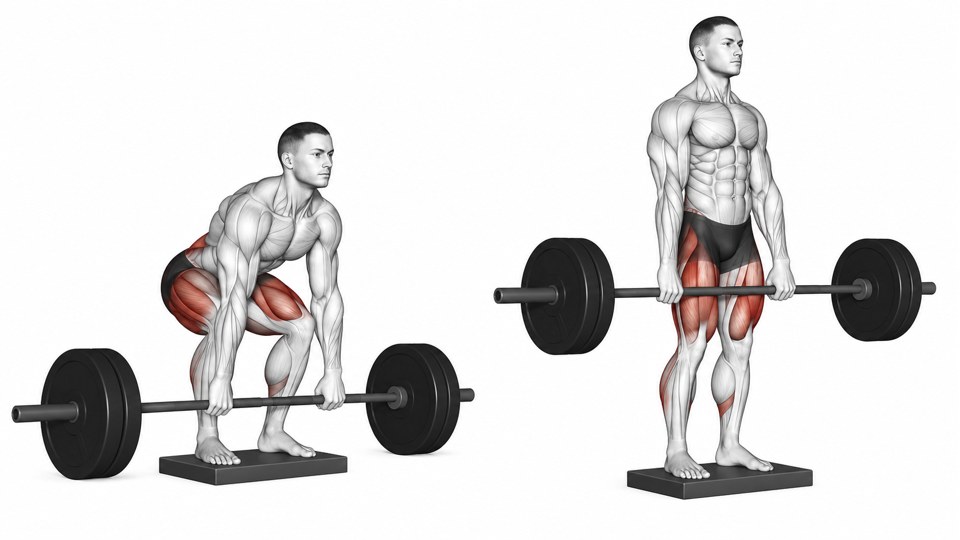
  • Exercise illustration: Both feet on a low stable platform, plates outside it on the floor, then standing lockout.
    Deficit deadliftPulls from the floor while standing on a raised surface.

Frequently asked questions

Can I pause near the knee instead?

Yes, but that is a different training prescription. Record the pause position so the sessions remain comparable.

Does the pause replace a normal deadlift?

It is an optional variation. Use the version your program calls for and keep its loads separate.

Track your progress over time with RepCount

Log every set, see plate loading in context, and track your strength over time. Available on iOS and Android.