
Pendlay row
Also called Pendlay rows, dead-stop barbell row.
What is a Pendlay row?
A Pendlay row is a barbell row that begins with the plates resting on the floor for every repetition. With your torso close to horizontal, you pull the bar toward your lower chest, lower it and reset before pulling again. It trains the back and elbow flexors.
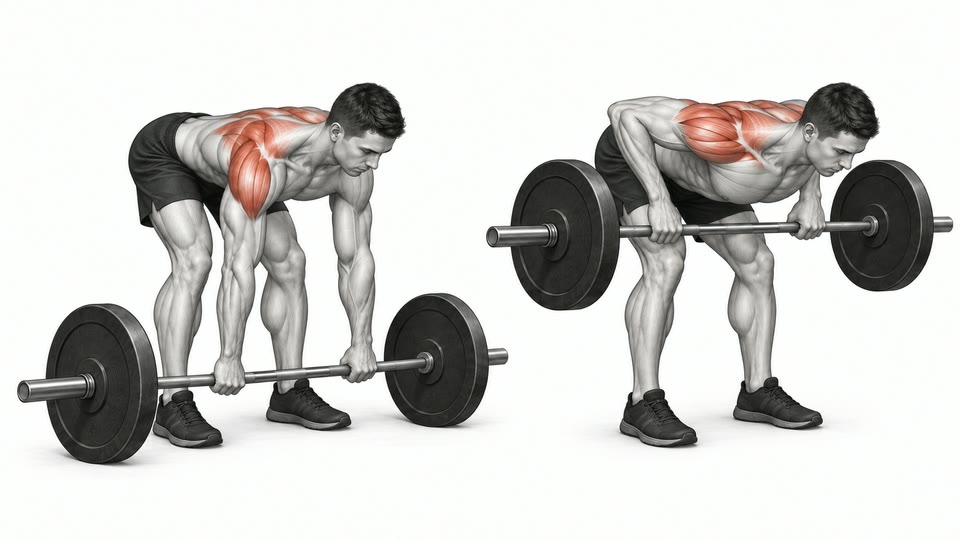
How do you perform a Pendlay row?
Set up
- Load the bar with plates that let it rest at a reachable height, and stand with the bar over the middle of your feet. Clear space around both ends.
- Bend your knees and hinge forward to take an overhand grip just outside your legs. Set your torso close to horizontal, with your back held steady and your arms straight.
Execution
- Brace, then pull the bar briskly toward your lower chest without driving your torso upright.
- Lower the bar onto the floor with control and let both sides settle.
- Reset your breath and body position before the next pull. End the set if you can no longer keep the same torso angle.
Common mistakes
Bouncing the plates into the next repetition
Let the bar settle, then brace again. A bounce removes the deliberate floor reset.
Jerking the chest upright
Reduce the load if the pull requires a large change in torso angle.
Forcing the floor setup
If you cannot reach the bar with a controlled back position, use higher plates or an elevated dead-stop row rather than rounding to reach.
Where it fits in a session
Use it early in your pulling work if you want to practice forceful repetitions from a still start.
Keep the starting height and torso angle consistent. Add load only while every repetition still begins with a full reset.
Muscles worked
Primary
Secondary
Schematic surface view. Some muscles are partly visible or not shown.
Variations
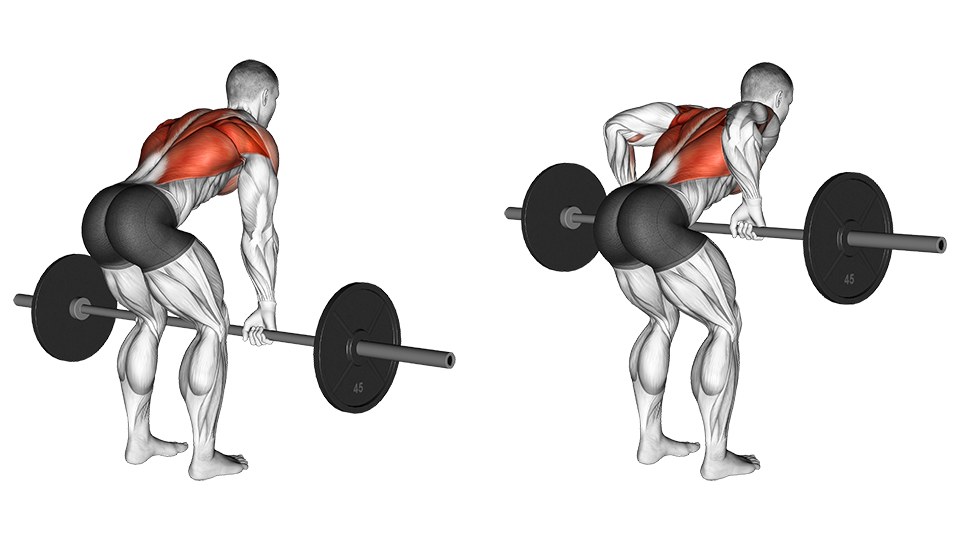
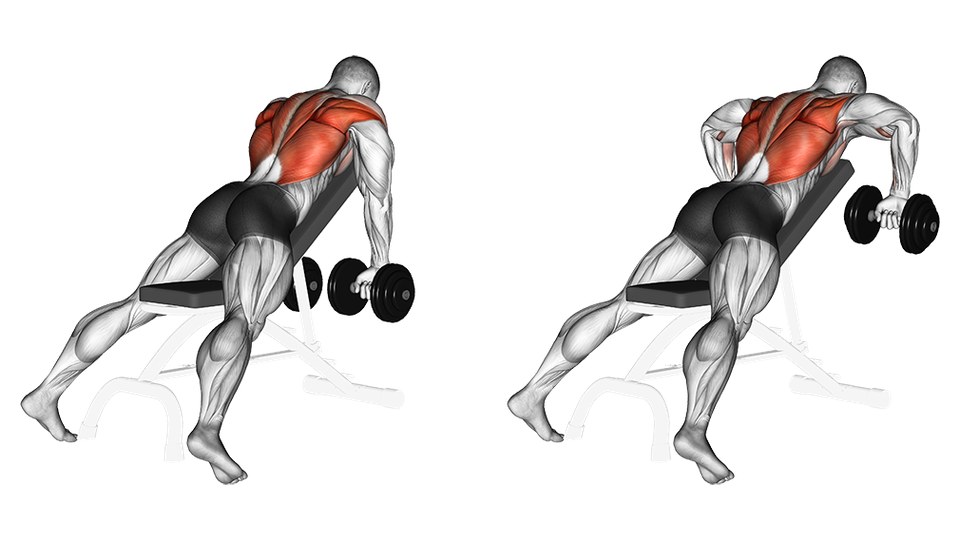
- Elevated dead-stop row — Starts each repetition from stable supports when the floor position is out of reach.
Frequently asked questions
What makes a row a Pendlay row?
The defining features are the near-horizontal torso and the bar returning to the floor between repetitions. A bent-over row can keep the bar suspended for the entire set.
Where should the bar touch?
Aim toward the lower chest or upper abdomen while holding your torso angle. Adjust the grip slightly if needed rather than changing your body position to chase a precise point.
Can you row from blocks?
Yes, if the floor setup is out of reach. Use stable supports of equal height and log the elevated starting position consistently.