
Reverse-grip lat pulldown
Also called underhand lat pulldown, supinated lat pulldown.
What is a reverse-grip lat pulldown?
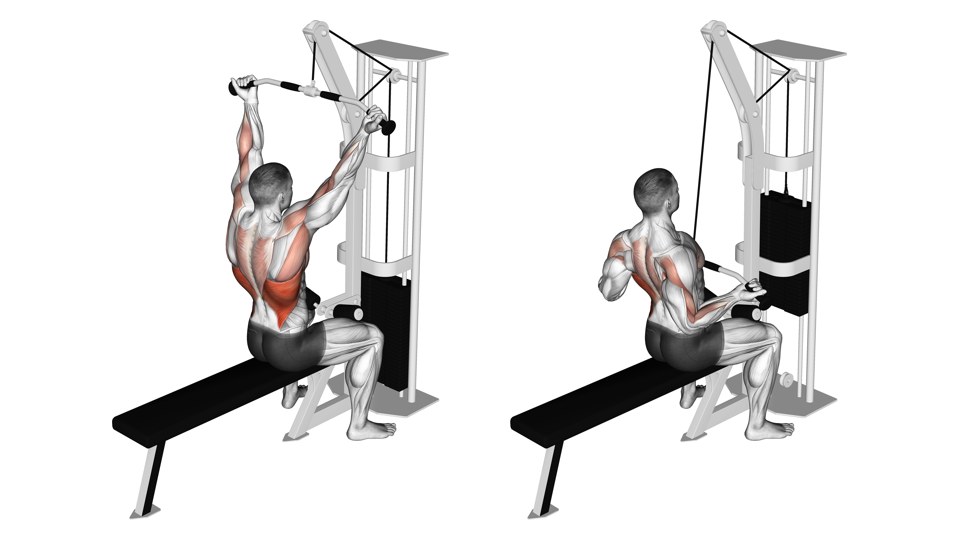
A reverse-grip lat pulldown is a seated cable pull performed with the palms facing you. An underhand grip on the bar distinguishes it from the standard overhand pulldown; the bar travels in front of the body.
How do you perform a reverse-grip lat pulldown?
Set up
- Choose your load and adjust the thigh pad to hold your legs against the seat. Take an underhand grip on the bar with the hands about shoulder-width apart.
- Sit beneath the cable with both feet on the floor. Keep the palms facing you and the wrists aligned with the forearms.
- Begin with the arms extended overhead. Lift your chest, brace your trunk and settle into a small backward lean.
Execution
- Bring the bar toward the top of your chest, moving both elbows down beside your torso. Hold the same torso angle as the bar descends.
- End the pull before your shoulders roll forward or you need to lean farther back to lower the bar.
- Let the attachment rise under control until your arms extend overhead again. Allow the shoulder blades to move with the reach.
Common mistakes
Leaning farther back during the pull
Choose a lighter load if the rep needs a backward swing. Start and finish each pull with the same torso angle.
Bending the wrists to finish the pull
Keep the hands in line with the forearms instead of curling the bar toward you as it approaches the chest.
Cutting the return short
Return to the overhead starting position under control so the next repetition follows the same path.
Where it fits in a session
Use it where your session calls for a vertical pull.
Keep the grip and attachment consistent when comparing your sets. Select a load that permits the same seated posture throughout.
Muscles worked
Primary
Secondary
Schematic surface view. Some muscles are partly visible or not shown.
The lats and biceps contribute to the pull. This list does not rank this grip against other pulldown grips.
Variations
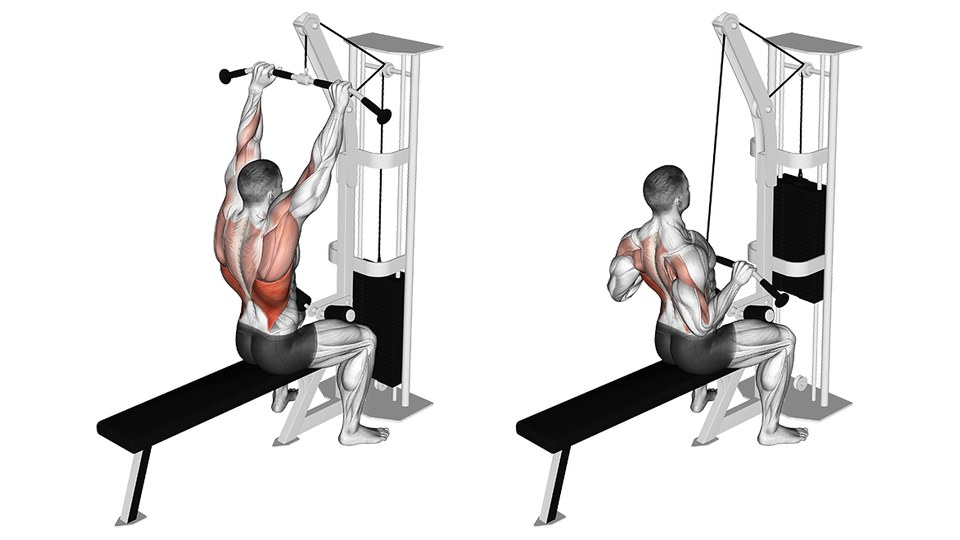
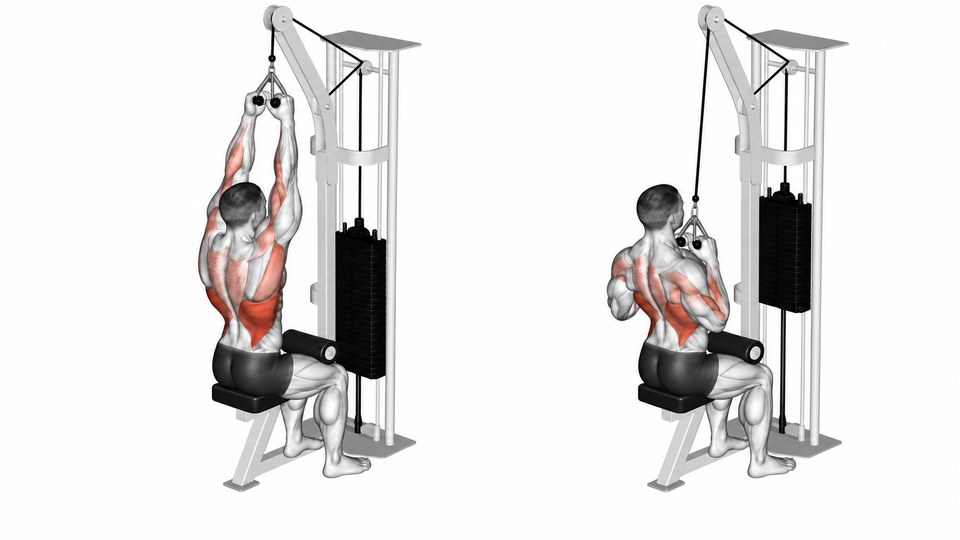
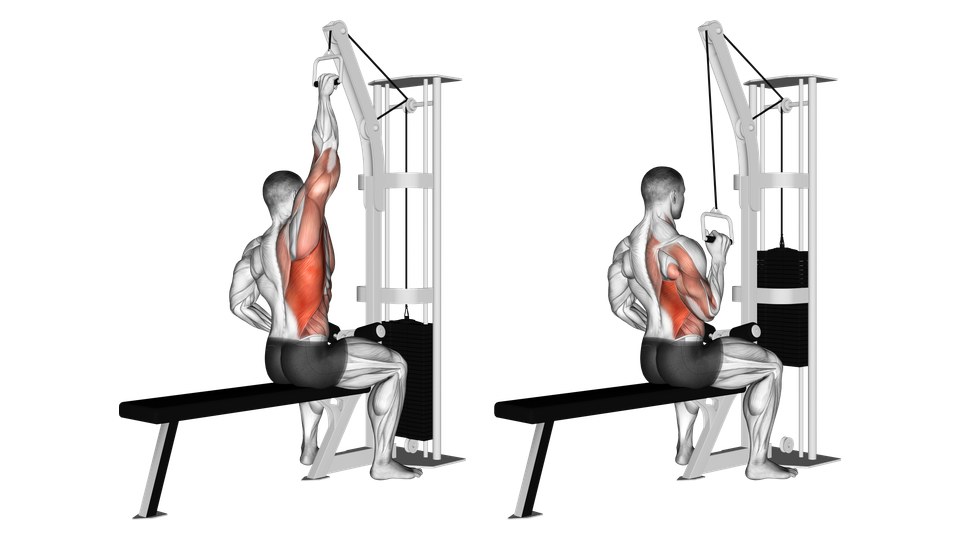
Frequently asked questions
Is reverse grip the same as underhand grip?
Yes. Reverse grip and underhand grip both describe holding the bar with the palms facing you. Supinated grip is another name for that hand position.
Should the attachment touch my chest?
Bring it toward the upper chest. Contact is optional: finish where you can keep the shoulders controlled and the torso steady.
How wide should I place my hands?
Start around shoulder width and adjust slightly for comfort. Keep the grip consistent across your working sets.