
Seated cable fly
Also called seated cable chest fly, seated cable flye.
What is a seated cable fly?
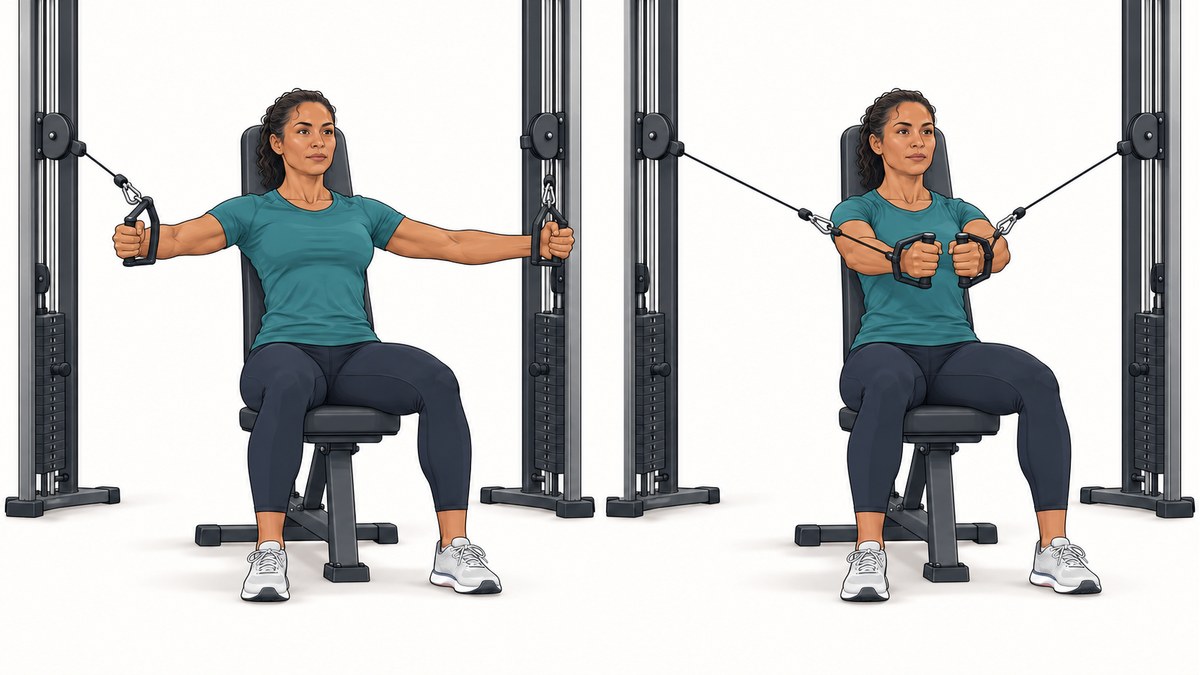
A seated cable fly is a chest exercise performed sitting upright against a bench between two cable pulleys. With a small bend held in the elbows, you open the arms beside the chest and sweep the handles together in front of you. The backrest supports your torso while the upper arms move through the fly arc.
How do you perform a seated cable fly?
Set up
- Set a bench nearly upright, centred between the cables and slightly ahead of them; set both pulleys just above seated shoulder height and attach single handles.
- Choose a light load, take the handles one at a time and sit with your back against the pad and both feet planted.
- Keep the handles close as you settle, then press them forward to chest height and hold a small bend in your elbows.
Execution
- Open your arms slowly in a broad arc, keeping your back on the pad and your elbows at the same angle.
- Stop with your upper arms beside your torso, or sooner if your shoulders feel uncomfortable.
- Sweep your arms forward until the handles meet in front of your chest, without straightening your elbows to press them together.
- After the last rep, bend your elbows to bring the handles close, stand with control and return each handle toward its pulley before releasing it.
Common mistakes
Turning each rep into a press
If the elbows fold on the way back and straighten as you close, the movement becomes a press. Reduce the load until you can keep the same elbow bend.
Sliding forward or lifting off the backrest
The seat should stay put and your back should remain supported. Reposition the bench or lower the load if the cables pull you out of that position.
Letting the cables drag the arms behind the bench
A bigger opening is not the goal of the rep. End the opening beside your torso and choose a shorter arc if that position is uncomfortable.
Where it fits in a session
Use it as chest accessory work after pressing, if both are in your session.
Start with a load you can also control while taking the handles and returning them. Add weight only while the bench position, elbow bend and opening range stay consistent.
Muscles worked
Primary
Secondary
- None listed in this guide
Schematic surface view. Some muscles are partly visible or not shown.
The pectoralis major brings the upper arms across the front of the body.
Variations
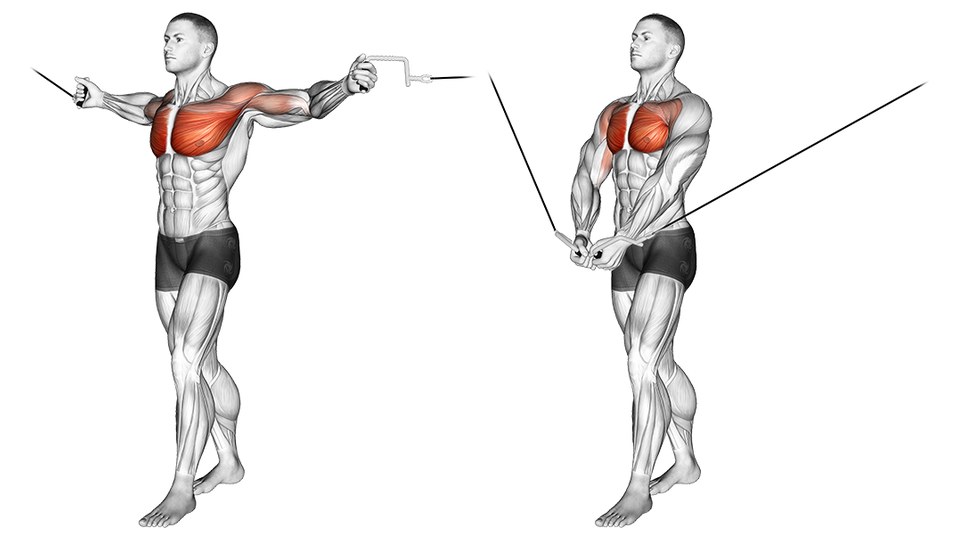
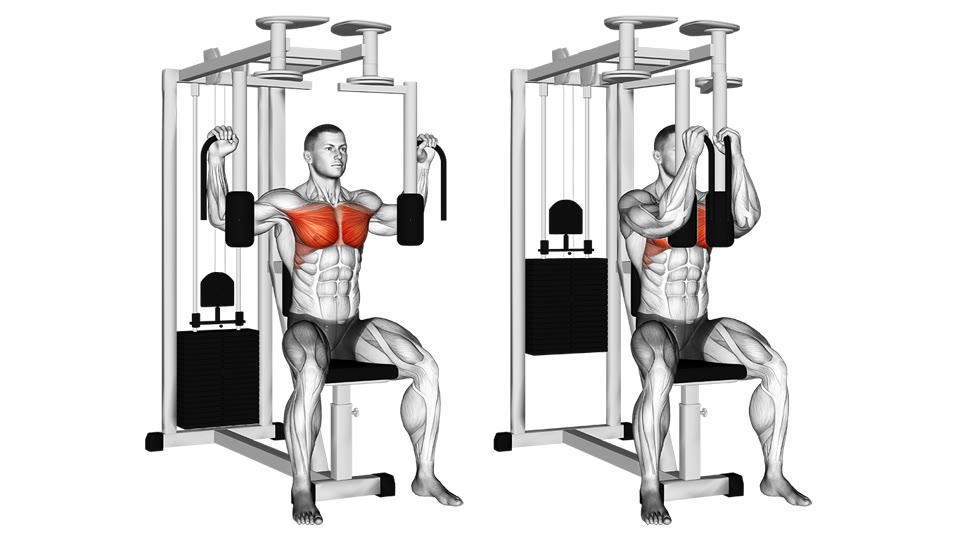
Frequently asked questions
What muscles does the seated cable fly work?
The main target is the pectoralis major, the large chest muscle. Its action here is to bring your upper arms across the front of the body.
Where should I put the bench and pulleys?
Place the bench in the middle, facing away from the cable machine, with the backrest nearly upright. Start with the pulleys just above your shoulders when seated and slightly behind the backrest. Leave enough room for the cables to clear the bench and your arms. Check the path with a light load before starting your set.
How do I get the handles into position?
Use a load you can manage one side at a time. Bring the handles close to your body as you sit, settle against the backrest, then press them forward once to establish the start position. That entry press is separate from the fly repetitions. If you cannot reach both handles without twisting or being pulled sideways, move the bench or ask someone to pass them to you.
Should I cross my hands at the finish?
For this version, let the handles meet in front of the chest. There is no need to reach across or lift your shoulders away from the pad to finish a rep.
Is this the same as an incline cable fly?
This guide keeps you seated almost upright, with the pulleys near seated shoulder height and the handles moving across the chest. An incline cable fly uses a reclined bench and low pulleys, with the hands closing above the upper chest. Use the guide that matches the setup you intend to train.
How should I finish the set?
Finish with the handles in front of you, then bend your elbows to bring them close before standing. Return one handle at a time toward its pulley, letting the stack rest before releasing it. If the machine is too wide for a controlled return, ask someone to help. Keep enough control in reserve to perform that exit.
Sources
- Lee A, et al. Anatomical and surgical considerations of the pectoralis muscle. Orthopedic Reviews (2024). https://pmc.ncbi.nlm.nih.gov/articles/PMC11291263/