
Sliding leg curl
Also called slider hamstring curl, sliding hamstring curl.
What is a sliding leg curl?
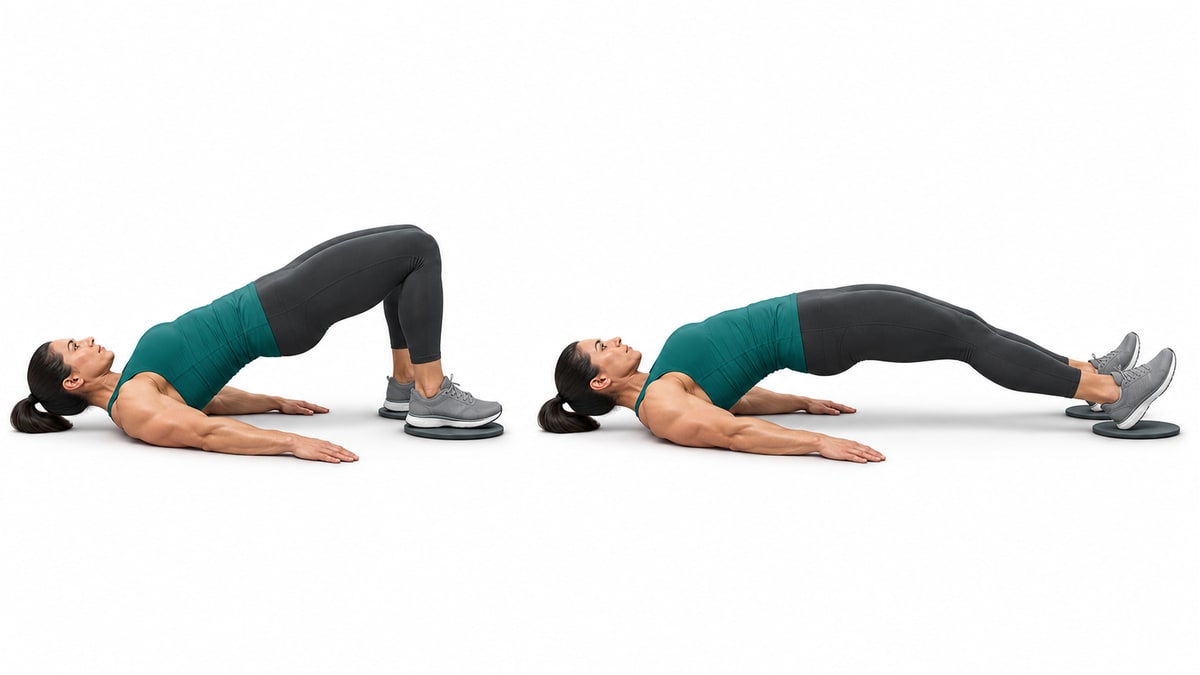
A sliding leg curl is a hamstring exercise done lying on your back with your heels on sliders. Keep your hips off the floor as you slide your feet away and curl them back toward you. A towel on a smooth floor can replace the sliders.
How do you perform a sliding leg curl?
Set up
- Choose sliders made for your floor and clear enough space to straighten your legs. Test that they move smoothly before getting into position.
- Lie on your back with your knees bent and a slider under each heel, feet about hip-width apart. Rest your head, upper back and arms on the floor.
- Press through your heels to lift your hips until your thighs line up with your trunk. Tighten your abdomen without arching your lower back.
Execution
- Slowly slide both heels away to straighten your knees. Keep your hips off the floor and stop the slide before you lose control.
- Pull through your heels to bend your knees and bring your feet back to the starting position, keeping your hips lifted. Repeat from there.
- After the last return, lower your hips to the floor before moving your feet off the sliders.
Common mistakes
Sliding farther than you can pull back
Start with a shorter slide that lets you complete the return. Extend it gradually while keeping both halves of the rep under control.
Resting the hips before curling back
Keep your hips clear of the floor for the full rep. If you have to put them down to return your feet, reset and use a shorter slide on the next attempt.
Using a surface that catches or slips unpredictably
Stop and check the sliders and floor before continuing. Both heels should travel smoothly instead of one foot sticking while the other moves.
Where it fits in a session
Use it for hamstring work in a lower-body session when you have sliders and a suitable floor.
Practise the outward slide and return over a short distance first. End the set when you can no longer keep your hips supported through both.
Muscles worked
Primary
Secondary
Schematic surface view. Some muscles are partly visible or not shown.
Your hamstrings bend your knees, and your gluteus maximus helps hold your hips off the floor. The individual hamstring muscles are listed together, without a ranking of how much each works.
Variations
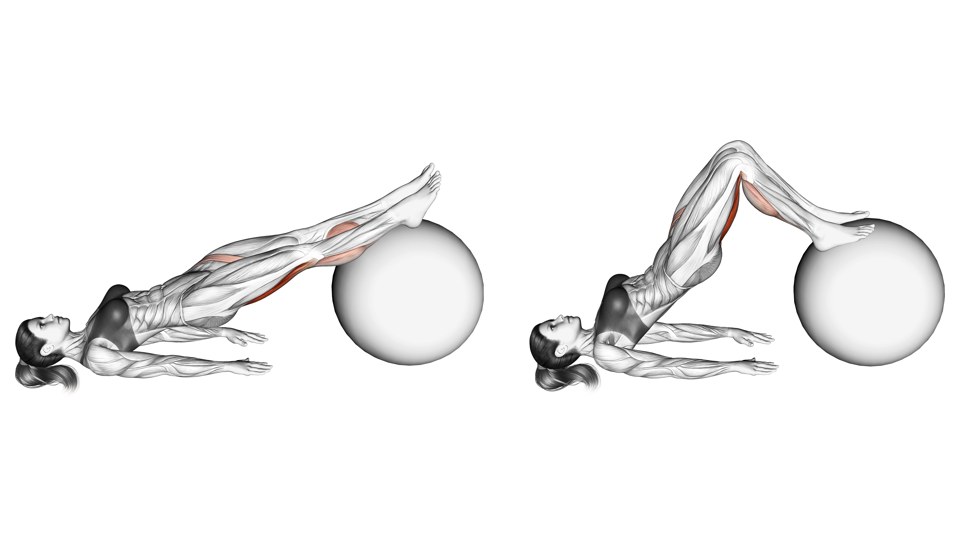
- Swiss ball leg curlRest your heels on a stability ball and roll it toward you as you bend your knees.
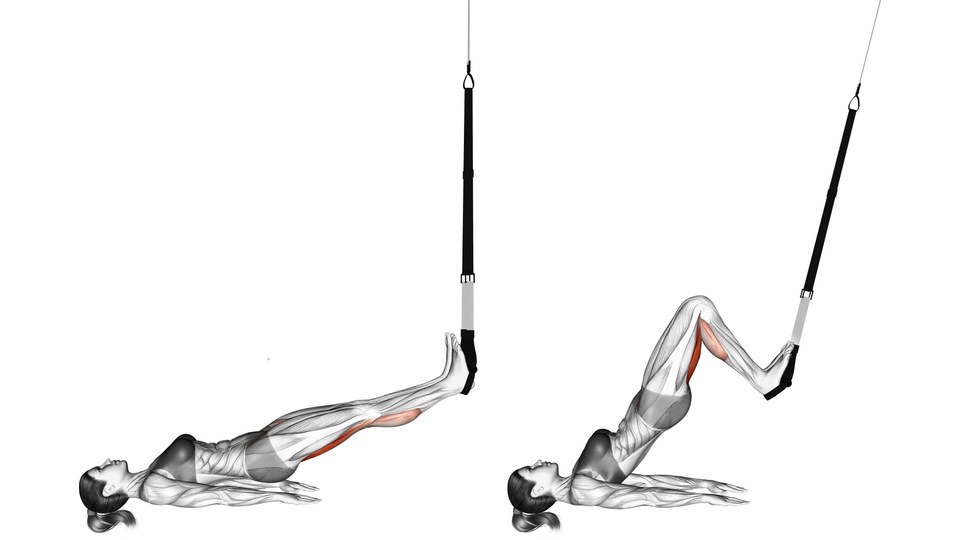
- Suspension hamstring curlPlace your feet in hanging straps instead of sliding your heels across the floor.
Frequently asked questions
Can I use a towel instead of sliders?
Yes. Put both heels on a folded towel on a smooth floor, as shown in the video. Test the surface first: the towel needs to slide freely in both directions. Keep your upper back on a surface that stays in place.
How high should I keep my hips?
Start with your thighs in line with your trunk. As your legs straighten, your hips will move closer to the floor. Keep them clear of it without lifting your chest or arching your lower back to chase extra height.
What if I can slide out but cannot curl back?
Lower your hips to the floor, bring your feet back and reset. Next time, slide out a shorter distance. You can also practise only the outward slide and reset on the floor between attempts; that is a lowering-only variation rather than a full rep.
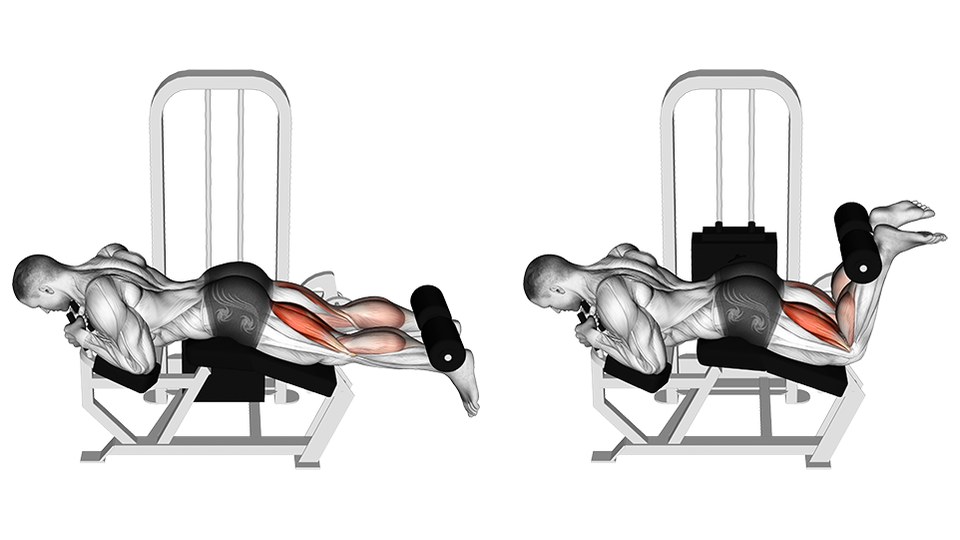
Do I need a leg curl machine?
No. This version uses your bodyweight, sliders or a towel, and a suitable floor. Your heels travel along the floor while you support your hips, instead of moving a machine's padded lever.
Sources
- Hu Y, Raja A. Anatomy, Bony Pelvis and Lower Limb, Hamstring Muscle. Updated January 31, 2026. StatPearls. https://www.ncbi.nlm.nih.gov/books/NBK546688/
- Elzanie A, Borger J. Anatomy, Bony Pelvis and Lower Limb, Gluteus Maximus Muscle. Updated April 1, 2023. StatPearls. https://www.ncbi.nlm.nih.gov/books/NBK538193/