
Smith machine reverse lunge
Also called Smith rear lunge.
What is a Smith machine reverse lunge?
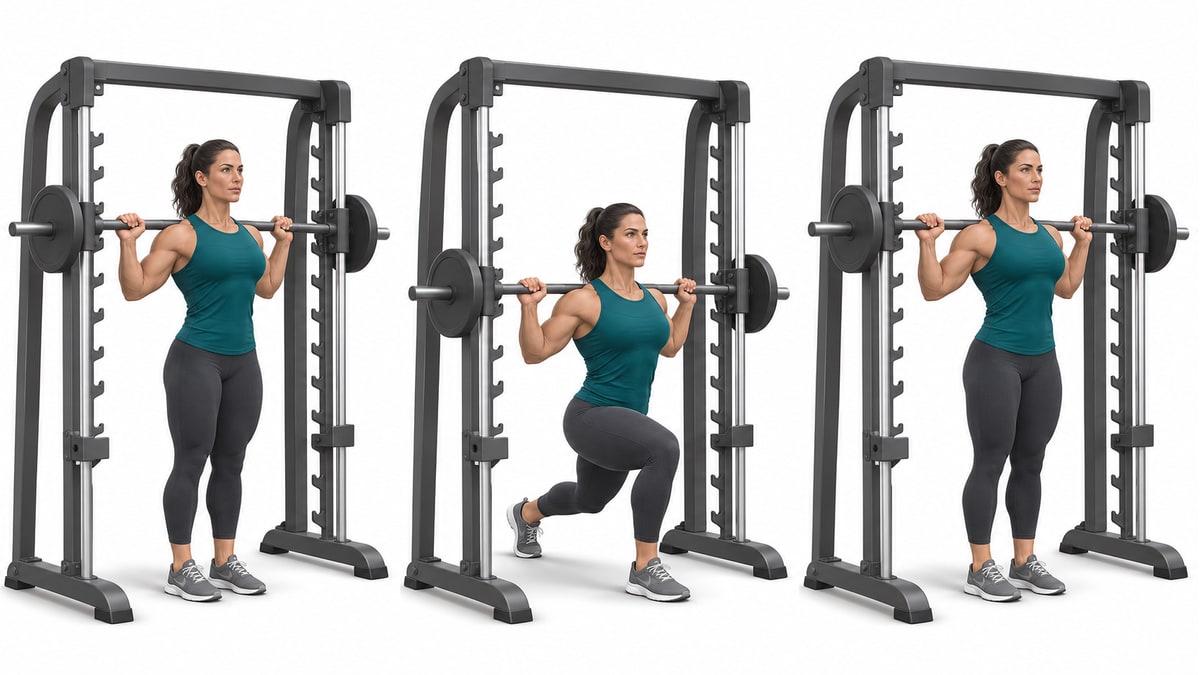
A Smith machine reverse lunge is a lunge with the guided bar across your upper back. Keep one foot planted, step the other backward, then bring it forward again as you stand. This floor version trains the quadriceps and gluteus maximus. A Smith machine split squat keeps both foot positions fixed instead.
How do you perform a Smith machine reverse lunge?
Set up
- Set the bar just below shoulder height and the safety stops below your planned bottom position. Practise releasing and securing the hooks with the unloaded bar before adding weight.
- Rest the bar on the muscular part of your upper back, hold it on both sides and stand with your feet about hip-width apart. Brace your trunk, stand up and release the hooks.
Execution
- Keep one foot planted and step the other backward onto its forefoot, leaving some sideways space between the feet.
- Bend both knees to lower under control. Keep the front foot flat and its knee pointing with the toes, stopping before the rear knee hits the floor.
- Press the planted foot into the floor to rise, then bring the rear foot forward beside it. Regain your standing position before the next backward step.
- Finish the repetitions for that side, then change legs. At the end of the set, stand tall and secure both hooks before stepping out from under the bar.
Common mistakes
Leaving the rear foot behind between repetitions
That changes the movement into a stationary split squat. Bring it forward after each repetition to keep the step-and-return pattern.
Forcing a stride that lifts the front heel
Re-rack and adjust the step length or foot position before continuing. You should be able to lower and rise with the whole front foot supported.
Dropping onto the rear knee
Keep the descent controlled and stop just above the floor. Reduce the load if you cannot brake the last part of the descent.
Where it fits in a session
Use it as single-leg work in a lower-body session.
Begin light enough to repeat the same backward step and controlled return on both sides. Count repetitions per leg and match the other side to the side that needs more practice.
Muscles worked
Primary
Secondary
- None listed in this guide
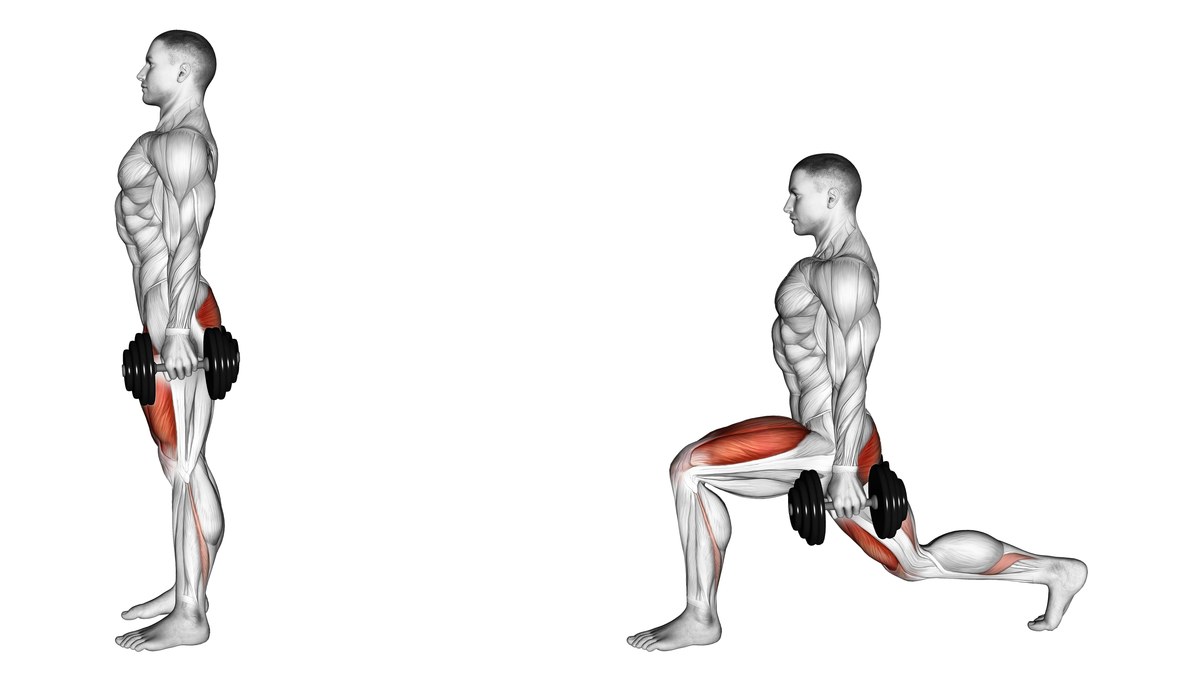
Schematic surface view. Some muscles are partly visible or not shown.
The quadriceps straighten the front knee, while the gluteus maximus extends the front hip as you rise. These targets describe their roles rather than a measured activation ranking.
Variations
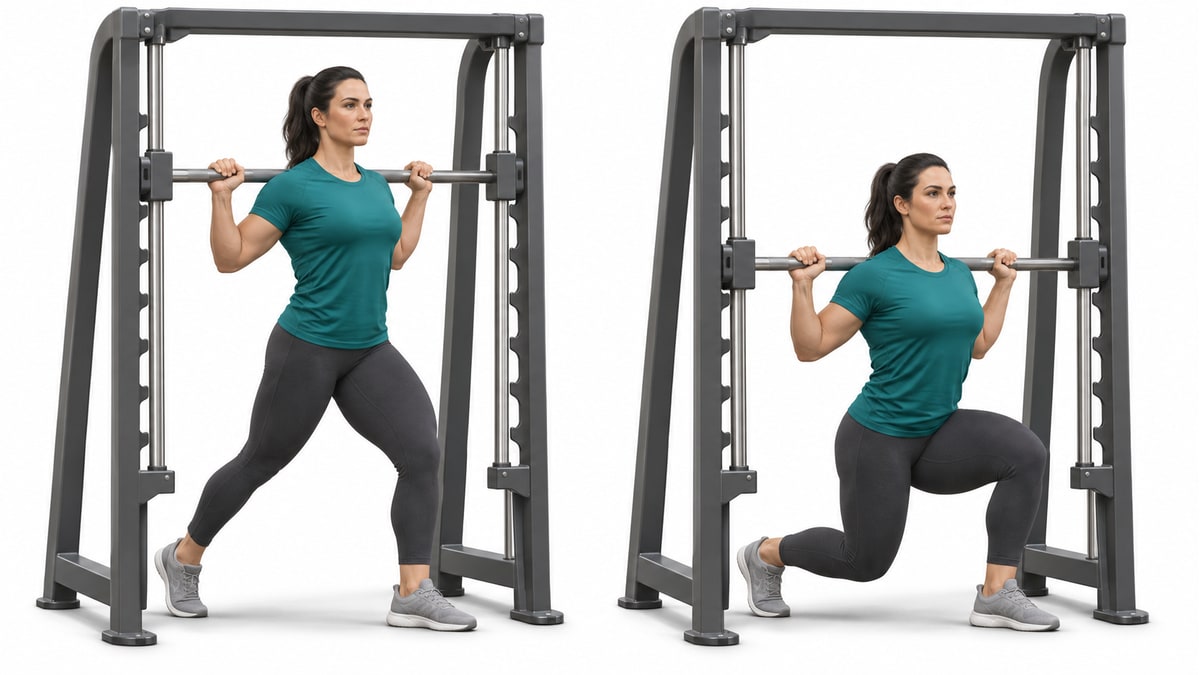
- Smith machine split squatKeeps the front foot and rear forefoot in place for the set instead of stepping on every rep.
Related tools
Frequently asked questions
What muscles does the Smith machine reverse lunge work?
It trains the quadriceps and gluteus maximus of the front leg as you straighten the knee and hip to stand.
Is it the same as a Smith machine split squat?
The footwork differs. A reverse lunge starts from standing, steps backward and returns to standing on each repetition. In a split squat, the feet stay in their split positions for the set.
How far back should I step?
Start with a comfortable stride and test it with a light bar. Choose a distance that lets you lower with the front heel down, the hips facing forward and room for the rear knee. Re-rack before adjusting if you feel cramped or stretched out.
Should I alternate legs or finish one side first?
Either is an option. The steps here finish one side first so you can repeat the same footwork; alternating sides changes the sequence, not the exercise. In both cases, return the stepping foot beside the other foot on every repetition.
Do I need to stand on a step?
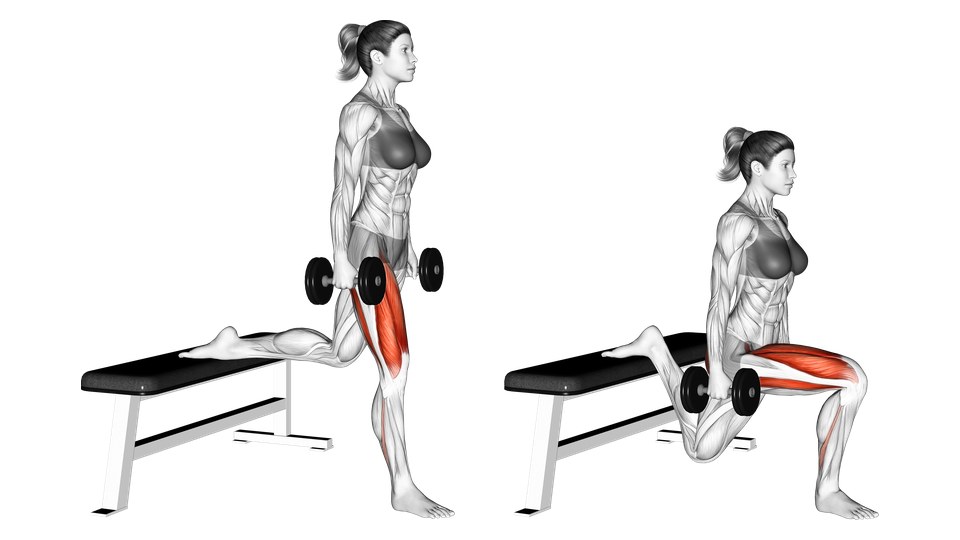
No. This guide uses the floor beneath both feet. Starting with the front foot on a platform is a front-foot-elevated version with a different setup; it is not required for this movement.
Sources
- Adel Elzanie and Judith Borger. Anatomy, Bony Pelvis and Lower Limb, Gluteus Maximus Muscle. StatPearls, updated April 1, 2023. https://www.ncbi.nlm.nih.gov/sites/books/NBK538193/
- Bruno Bordoni and Matthew A. Varacallo. Anatomy, Bony Pelvis and Lower Limb: Thigh Quadriceps Muscle. StatPearls, updated May 8, 2023. https://www.ncbi.nlm.nih.gov/sites/books/NBK513334/