Split jerk
What is a split jerk?
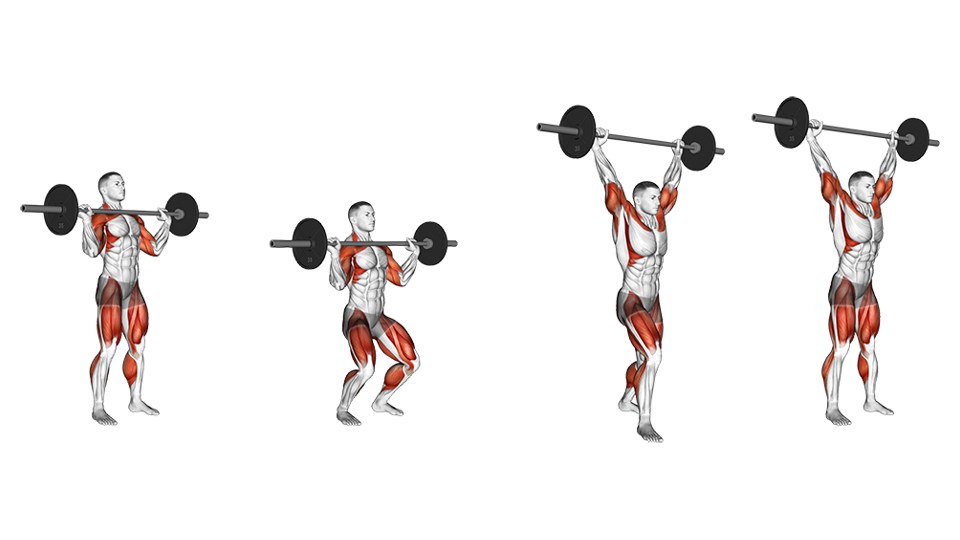
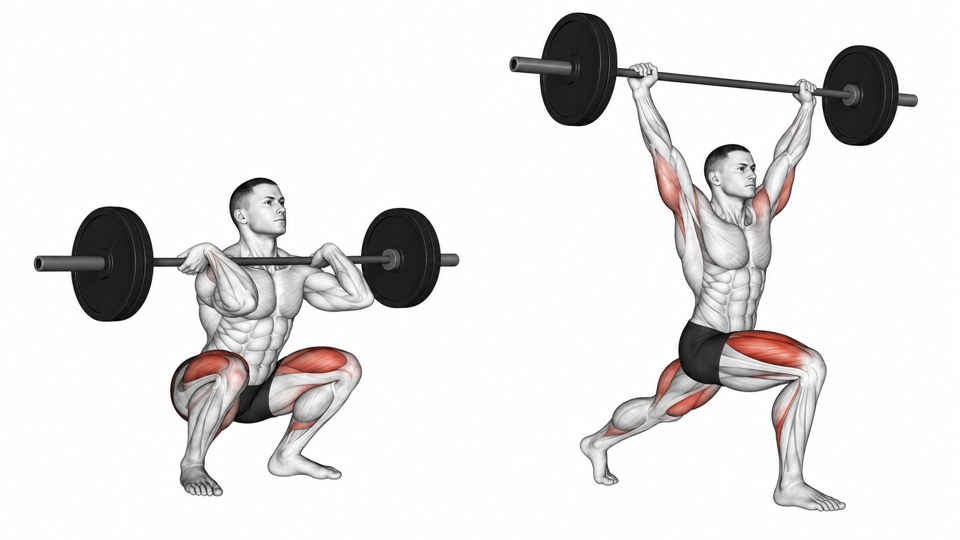
A split jerk sends a barbell from the front rack to overhead with a dip and leg drive. You move underneath into a split stance and receive it on straight arms, then bring the feet back together to finish. This guide starts from a rack, so it does not include a clean.
How do you perform a split jerk?
Set up
- Set a bar on rack hooks just below shoulder height and clear enough space overhead and around your feet. Start with a light bar; practice safely releasing a missed overhead lift onto a clear platform with a coach.
- Take a grip a little wider than your shoulders, unrack the bar onto your shoulders and step clear. Stand balanced with the elbows slightly in front of the bar and brace your torso.
Execution
- Make a short, upright knee dip, keeping the bar supported on your shoulders and your weight spread across the feet.
- Reverse the dip firmly and drive the bar upward. Move your head clear and quickly send one foot forward and the other back as you press yourself beneath the bar.
- Receive with locked elbows, a bent front knee and a soft rear knee. Keep some sideways distance between the feet, with the bar balanced above your torso.
- After settling, bring the front foot partway back, then bring the rear foot forward and finish with the feet level. Lower to the shoulders only with a load you can control, or use your practiced release onto the platform.
Common mistakes
Making the split very narrow
Leave sideways space between your feet so you can balance the overhead position.
Receiving with a straight rear knee
Keep the rear knee soft rather than forcing a rigid back leg.
Walking before the bar is secure
Pause in the split and settle the overhead position before recovering.
Where it fits in a session
Practice this near the start of the session, after your planned warm-up and before tiring assistance work.
Practice footwork first, then short sets from the rack. End a set if the split becomes narrower, the elbows stay bent or you need to chase the bar.
Muscles worked
Primary
Secondary
Schematic surface view. Some muscles are partly visible or not shown.
Variations
Frequently asked questions
Which foot should go forward?
Try both with footwork drills and an unloaded bar. Use the stance you can land and recover consistently, and keep it consistent as you add weight.
Should I straighten the rear leg?
Receive with a soft rear knee so you can settle beneath the bar. A locked back knee often leaves you reaching forward rather than moving underneath.
How do I return the bar?
Learn the return with a coach and a light load. For heavier attempts on a permitted platform, use a practiced safe release; do not try to absorb a falling bar on the neck or chase it.
Sources
- Mohammed A. Miniato; Prashanth Anand; Matthew A. Varacallo. Anatomy, Shoulder and Upper Limb, Shoulder. 2023. https://www.ncbi.nlm.nih.gov/sites/books/NBK536933/