Push jerk
Also called power jerk, barbell push jerk.
What is a push jerk?
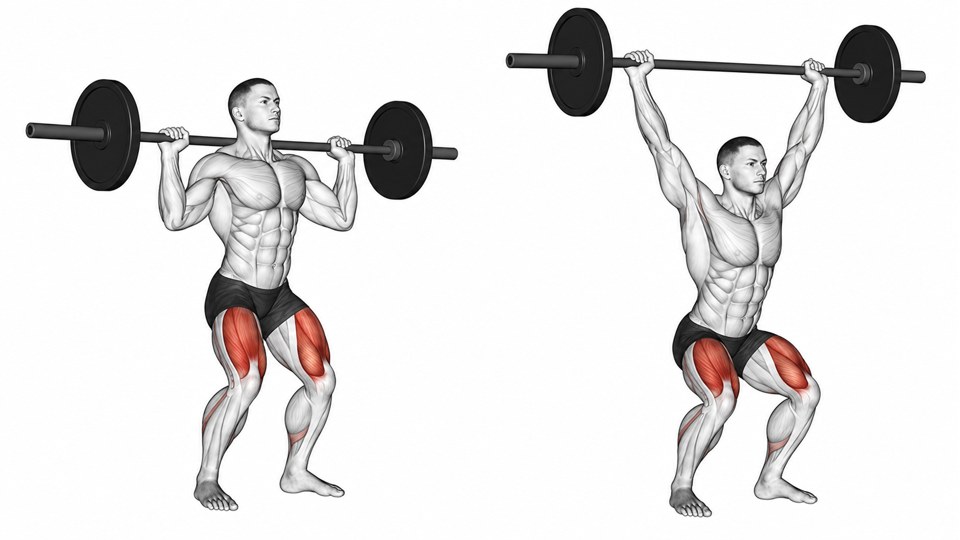
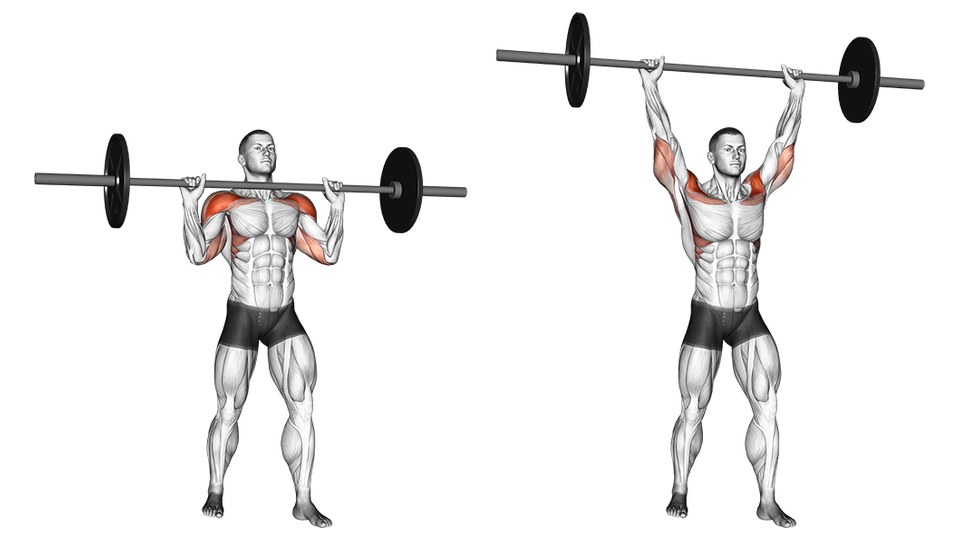
A push jerk takes a barbell from the shoulders to overhead using a short dip and leg drive. You bend the knees again to receive it on straight arms in a partial squat, then stand. This second knee bend distinguishes it from a push press.
How do you perform a push jerk?
Set up
- Set a bar on rack hooks just below shoulder height and clear enough space overhead and around your feet. Start with a light bar; practice safely releasing a missed overhead lift onto a clear platform with a coach.
- Take a grip a little wider than your shoulders, unrack the bar onto your shoulders and step clear. Stand balanced with the elbows slightly in front of the bar and brace your torso.
Execution
- Dip a short distance by bending the knees while keeping your torso upright and the bar resting on your shoulders.
- Drive forcefully upward through the feet to send the bar overhead. Move your head clear of its path.
- Quickly bend the knees again as you fix the elbows straight. Receive in a partial squat with the feet under you and the bar balanced above your base of support.
- Steady the bar, then stand fully upright. Return it to your shoulders with a light load you can control, or use your practiced safe release onto a clear platform.
Common mistakes
Pressing slowly through the whole lift
Use a light weight and practice the drive followed by a quick second knee bend.
Catching with bent elbows
Reduce the weight and move beneath the bar sooner. Do not turn the catch into a prolonged press.
Landing with the feet extremely wide
Choose a receiving stance that lets you balance and stand comfortably.
Where it fits in a session
Practice this near the start of the session, after your planned warm-up and before tiring assistance work.
Use short sets and return to a settled front rack between attempts. Stop if the second knee bend disappears, the elbows remain bent or the bar drifts beyond your base of support.
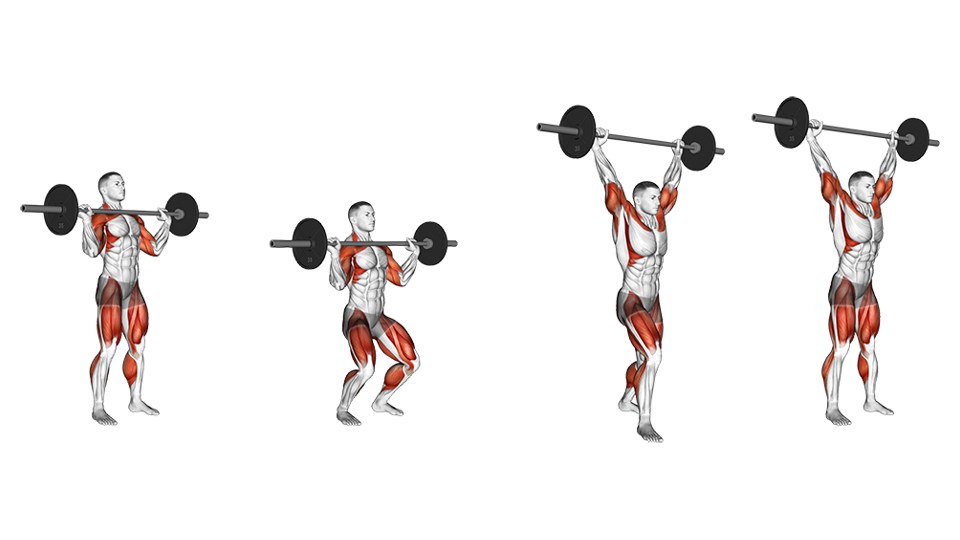
Muscles worked
Primary
Secondary
Schematic surface view. Some muscles are partly visible or not shown.
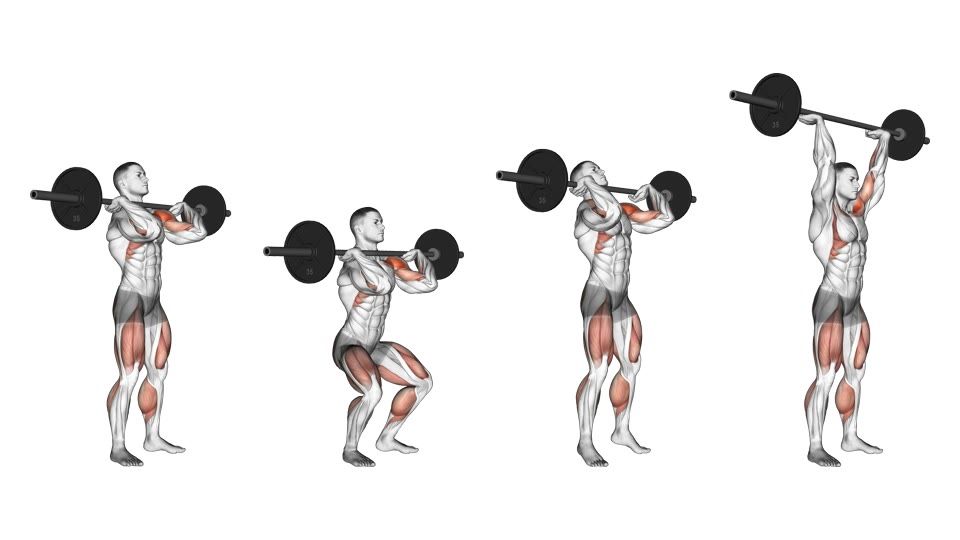
Variations
Frequently asked questions
Is a push jerk the same as a power jerk?
The names overlap in common coaching usage. Here, both refer to a non-split jerk received above parallel. A squat jerk deliberately receives much deeper and is a separate movement.
Can I start it with a clean?
Yes. A clean followed by a push jerk is one version of the clean and jerk. This page starts from a rack so you can practice the jerk on its own.
Do the feet need to leave the floor?
A small move into the receiving stance is common, but do not chase a high jump. Practice the dip, drive and move under with a light bar.
Sources
- Mohammed A. Miniato; Prashanth Anand; Matthew A. Varacallo. Anatomy, Shoulder and Upper Limb, Shoulder. 2023. https://www.ncbi.nlm.nih.gov/sites/books/NBK536933/