
Standing dumbbell shoulder press
Also called standing dumbbell overhead press, standing DB shoulder press.
What is a standing dumbbell shoulder press?
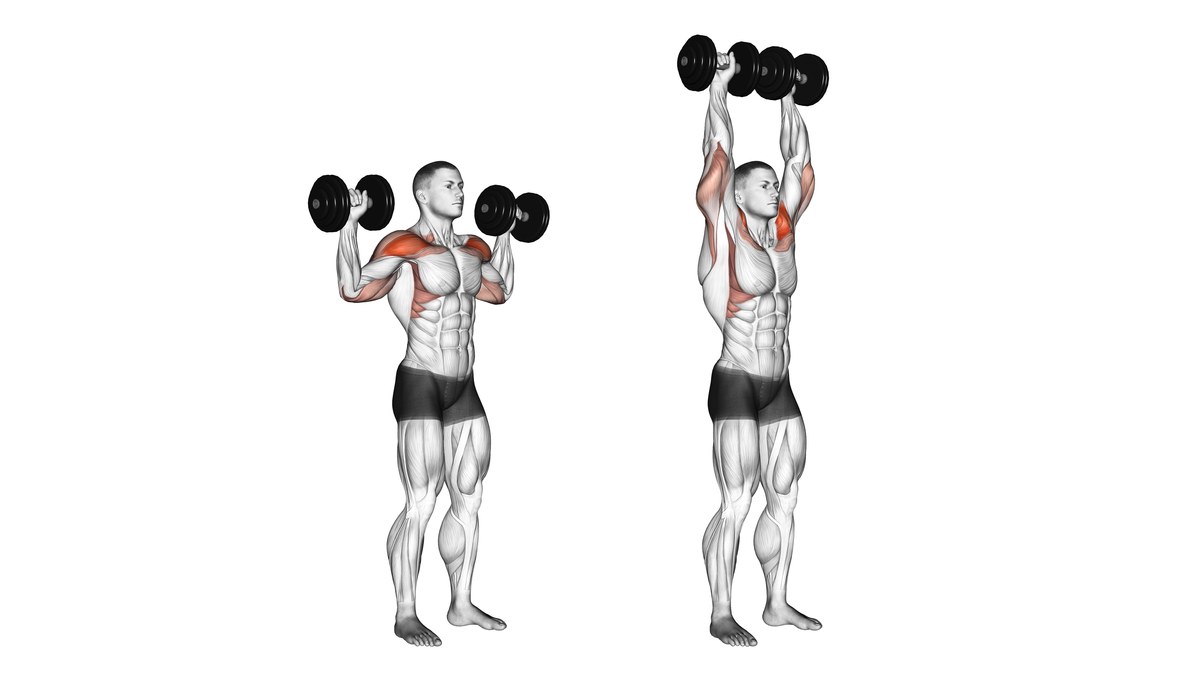
A standing dumbbell shoulder press moves two dumbbells from shoulder level to overhead while you remain standing. You keep your legs still and press with your arms. It differs from the seated bench-supported press and from a push press that starts with leg drive.
How do you perform a standing dumbbell shoulder press?
Set up
- Take two dumbbells you can bring safely to shoulder level and stand with your feet firmly planted about hip- to shoulder-width apart.
- Hold the weights beside your shoulders with your palms facing forward or slightly inward, wrists over elbows and elbows slightly in front of your body. Brace with your ribs over your pelvis.
Execution
- Press both dumbbells overhead without dipping your knees or leaning backward.
- Finish with your arms straight and the weights balanced over your shoulders. Let the dumbbells approach naturally without knocking them together.
- Lower to the same shoulder-level position under control. After the last repetition, bring the weights down safely before putting them away.
Common mistakes
Dipping the knees to start each repetition
That adds leg drive and changes the movement toward a push press. Reduce the weight for the strict standing version.
Leaning back as the dumbbells rise
Keep your ribs over your pelvis. Use lighter weights or a seated back-supported press if you cannot hold that position.
Letting one weight drift far ahead
Keep each dumbbell balanced above its forearm and lower both along repeatable paths rather than chasing a drifting weight.
Where it fits in a session
Use it where your session calls for standing overhead pressing.
Start with a load you can bring to shoulder level safely and press without a knee dip. Keep stance, grip and start depth consistent when comparing sets.
Muscles worked
Primary
Secondary
- None listed in this guide
Schematic surface view. Some muscles are partly visible or not shown.
The deltoids raise the upper arms and the triceps straighten the elbows.
Variations
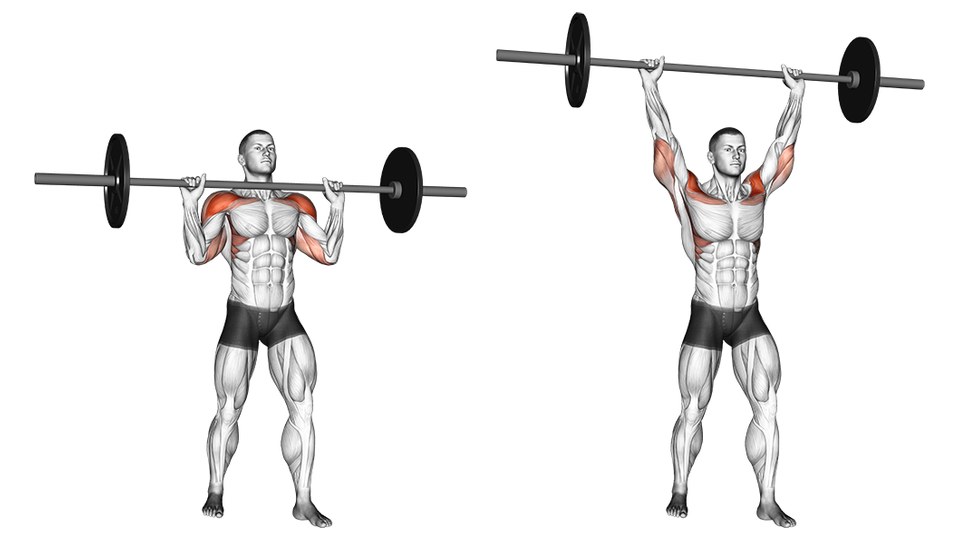
- Standing barbell overhead pressUses one bar and a fixed grip instead of two independently held dumbbells.
Frequently asked questions
How is it different from a seated dumbbell press?
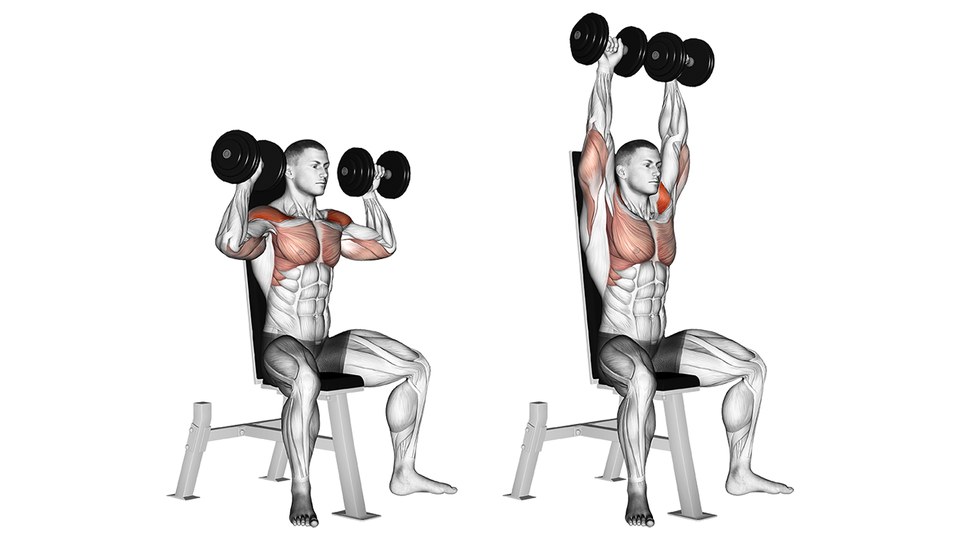
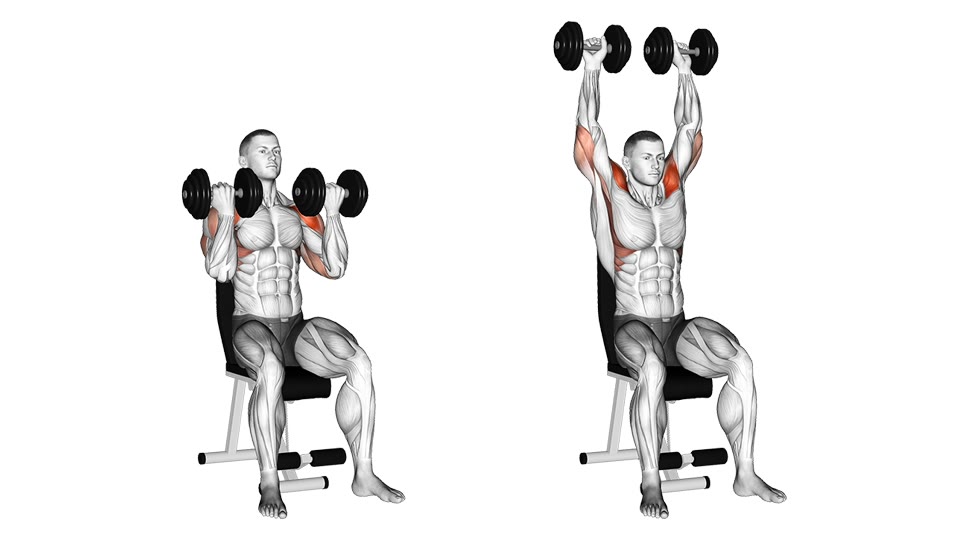
You hold your torso upright without a bench backrest and keep your balance on your feet. The parent dumbbell shoulder press guide uses a seated setup.
Should you use your legs?
Keep them still for this strict press. A deliberate knee dip and drive makes it a push-press variation.
Should your palms face forward?
This guide allows palms forward or slightly inward. A fully palms-in neutral-grip press is another grip setup; choose a comfortable position and use it consistently.
What if the dumbbells are hard to get into position?
Use a lighter pair you can handle safely or choose a supported pressing setup. Do not begin a set with weights you cannot bring to or lower from shoulder level under control.
Sources
- Elzanie A; Varacallo MA. Anatomy, Shoulder and Upper Limb, Deltoid Muscle. StatPearls. https://www.ncbi.nlm.nih.gov/sites/books/NBK537056/
- Tiwana MS; Sinkler MA; Bordoni B. Anatomy, Shoulder and Upper Limb, Triceps Muscle. StatPearls. https://www.ncbi.nlm.nih.gov/sites/books/NBK536996/