
Supine march
Also called supine marching, lying march.
What is a supine march?
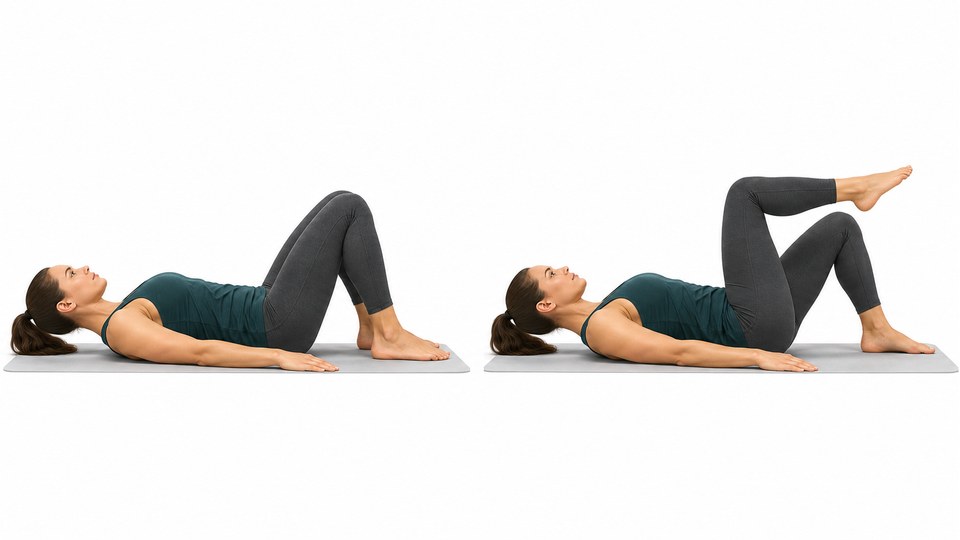
A supine march alternately lifts one bent leg from a feet-on-floor position while the other foot stays planted. The abdominal wall helps steady the trunk, and the hip flexors lift the leg. Return each foot to the floor before starting the other side.
How do you perform a supine march?
Set up
- Rest on your back with both knees bent, feet flat and arms beside you.
- Set a comfortable back position and gently firm the abdomen while breathing normally.
Execution
- Float one foot upward by bringing that bent knee toward your hip; leave the other foot planted.
- Pause the lift at a height where your pelvis and lower back stay steady.
- Place the foot back down under control, then switch legs.
Common mistakes
Lifting both feet at once
Return the first foot before starting the next lift. Both legs raised is a different starting position.
Flattening and arching the back with each step
Keep the chosen back position steady and reduce the lift height when it starts to change.
Turning the lift into a knee hug
Do not pull the thigh to your chest. Stop where the trunk can remain quiet.
Where it fits in a session
Use as a chosen abdominal-control drill in a session you can manage comfortably.
Choose a short set that leaves breathing and movement controlled. Keep the starting position and range consistent before adding repetitions. Record any variation in the set notes.
Muscles worked
Primary
Secondary
Schematic surface view. Some muscles are partly visible or not shown.
Abdominal targets describe the trunk-control task, not isolation or a ranking of muscle activation. The leg movement and the steadying work are different roles.
Variations
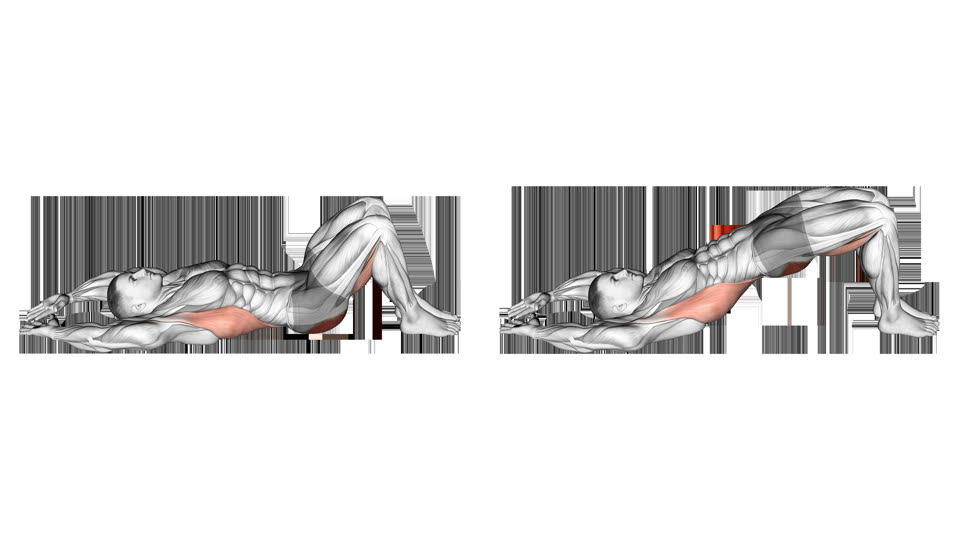
- Low supine march — Lift the foot only a small distance while the other stays planted.
Frequently asked questions
What muscles does a supine march use?
The abdominal wall, including the transversus abdominis and obliques, contributes to controlling the trunk. The iliopsoas is a hip flexor involved in lifting the leg. Moving the thigh does not mean the abdominal muscles are lifting it by themselves.
Does my knee need to come directly above my hip?
No. A smaller lift is a useful starting option when you can keep the trunk steady and breathe comfortably. Keep the knee bent and use a repeatable height.
How is this different from a heel tap?
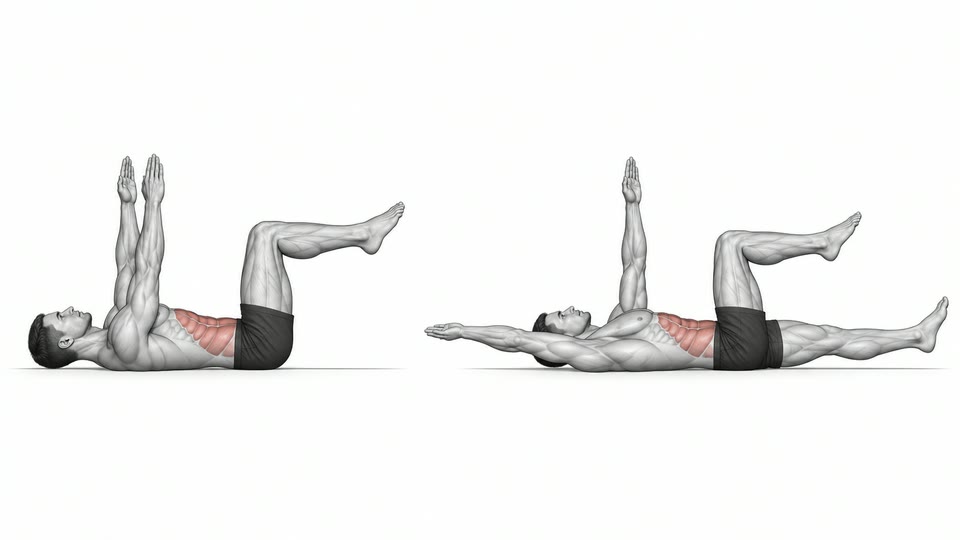
This march starts with both feet planted and returns each foot before the next lift. The heel-tap dead-bug version starts with both knees raised and lowers one heel while the other leg remains up.
How do I count supine marches?
Count one lift and return as one repetition for that leg. You can also record left-right pairs, but keep the same convention and note it in the log.
Can I use this after pregnancy?
Choose a version that fits your recovery and any advice from your maternity or pelvic-health team. Stop if the movement brings on pain, urine or bowel leakage, or pelvic heaviness, and get advice for symptoms that persist or recur. Being able to perform this drill is not a test of readiness for harder training.
Sources
- Gordana Sendić, MD; reviewer Roberto Grujičić, MD. Transversus abdominis muscle. Kenhub. https://www.kenhub.com/en/library/anatomy/transversus-abdominis-muscle
- Gordana Sendić, MD; reviewer Declan Tempany, BSc (Hons). Internal abdominal oblique muscle. Kenhub. https://www.kenhub.com/en/library/anatomy/internal-abdominal-oblique-muscle
- Jana Vasković, MD; reviewer Declan Tempany, BSc (Hons). External abdominal oblique muscle. Kenhub. https://www.kenhub.com/en/library/anatomy/external-abdominal-oblique-muscle
- Gordana Sendić, MD; reviewer Roberto Grujičić, MD. Iliopsoas muscle. Kenhub. https://www.kenhub.com/en/library/anatomy/iliopsoas-muscle