
Barbell lunge
Also called barbell forward lunge, barbell lunges.
What is a barbell lunge?
A barbell lunge is a lunge performed with a bar resting across your upper back. You step forward, lower into a split stance, then push back to standing. It trains your quadriceps and gluteus maximus.
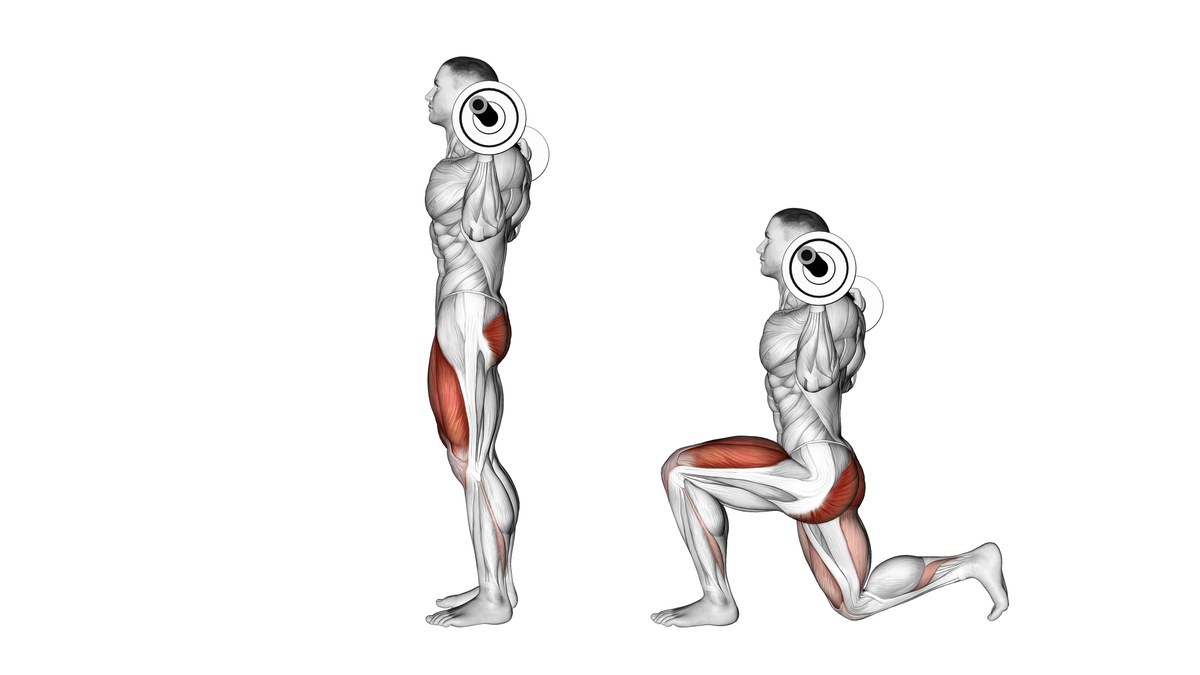
How do you perform a barbell lunge?
Set up
- Set a light barbell in a rack at upper-chest height, load both sides evenly and secure the plates with collars.
- Place the bar on the muscles of your upper back, grip it firmly with both hands and stand up to lift it clear of the hooks.
- Take small steps back until you have room to lunge forward. Stand with feet about hip-width apart, hold your torso tall and brace your midsection.
Execution
- Step forward with one foot, leaving enough space between your feet from side to side to balance.
- Bend both knees to lower the rear knee toward the floor, keeping your front foot flat and your front knee following your toes.
- Stop just above the floor, or earlier if you cannot keep the bar steady and your torso tall.
- Press through the front foot to bring it back beside the other foot. Settle your balance, then repeat with the opposite leg.
Common mistakes
Stepping across the other foot
A crossed or very narrow landing leaves little room to balance the bar. Keep some space between your feet from side to side as you step.
Bouncing the rear knee off the floor
Use a depth you can stop at under control. The floor should not provide the rebound that starts your return.
Starting the next rep while still swaying
An unsettled return makes the next landing harder to control. Regain a stable standing position before changing legs.
Adding weight before the return is controlled
Lowering into the lunge is only part of the rep. Reduce the load if bringing the front foot back needs several recovery steps or makes the bar tilt.
Where it fits in a session
Use barbell lunges as the stepping leg exercise in a lower-body session, with enough clear space around the rack to step and return.
Practise the movement without weights before adding a bar. Choose a load you can control in both directions, count repetitions for each leg and return the bar to the hooks after the set.
Muscles worked
Primary
Secondary
- None listed in this guide
Schematic surface view. Some muscles are partly visible or not shown.
The front leg is the focus as you lower into the lunge and return to standing.
Variations
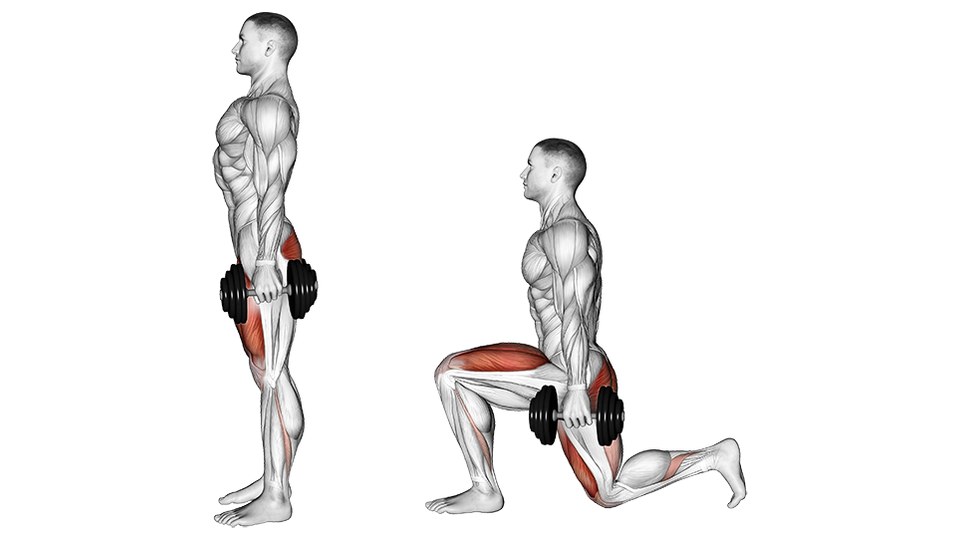
- Dumbbell lungeUses a dumbbell in each hand for the forward step and return. The linked guide also covers starting without weights.
- Barbell split squatKeeps both feet in the same split stance for the set, with no forward step or return between repetitions.
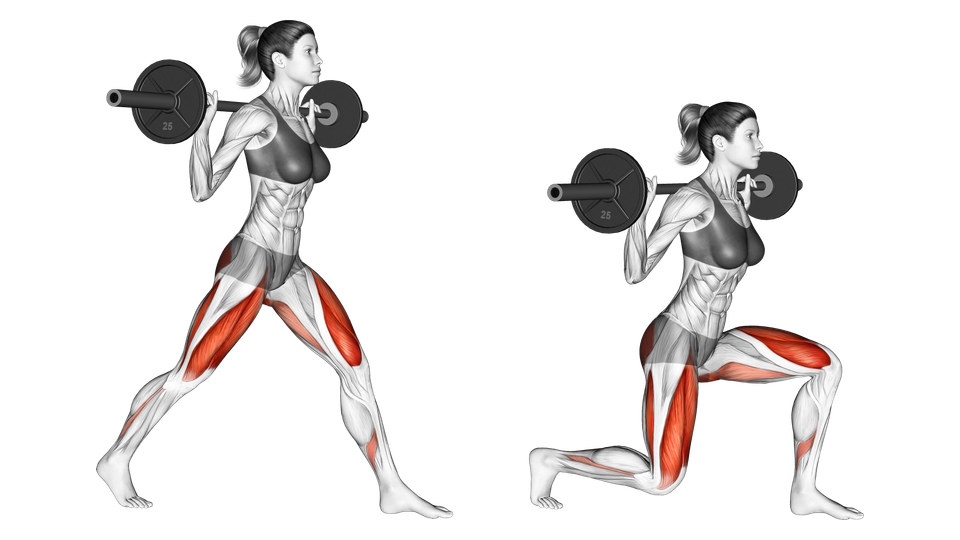
- Reverse lungeSteps backward while the front foot stays in place. The linked guide demonstrates this direction with dumbbells.
- Walking lungeTravels forward from one repetition to the next. The linked guide uses dumbbells rather than an upper-back barbell.
Frequently asked questions
What muscles do barbell lunges work?
Barbell lunges work the quadriceps and gluteus maximus. The front leg is the focus as you lower and push back to standing.
Is a barbell lunge the same as a split squat?
A barbell lunge includes a forward step and a return to standing on every rep. In a barbell split squat, both feet stay in the split stance for the set.
Where should the bar sit?
Rest it across the muscles of your upper back, below the neck, and hold it securely with both hands. Use a rack to take it out and put it away; do not balance it on your neck.
Should I alternate legs or finish one side first?
This guide teaches alternating forward steps. You can repeat the same lead leg before switching if you prefer, returning both feet to the standing position after each rep. Keep the planned repetitions clear for each leg.
How far forward should I step?
Use a distance that lets you lower with the front foot flat and return in one controlled step. Practise without a bar first. Adjust the distance if the stance feels cramped or you have to reach so far that you lose your balance.
Can I step backward with the bar instead?
Yes, but that is a barbell reverse lunge. This page and its video teach a forward step and return. Keep the direction consistent when comparing your repetitions and loads.