Chest-supported T-bar row
Also called chest supported T bar row, supported T-bar row, lying T-bar row.
What is a chest-supported T-bar row?
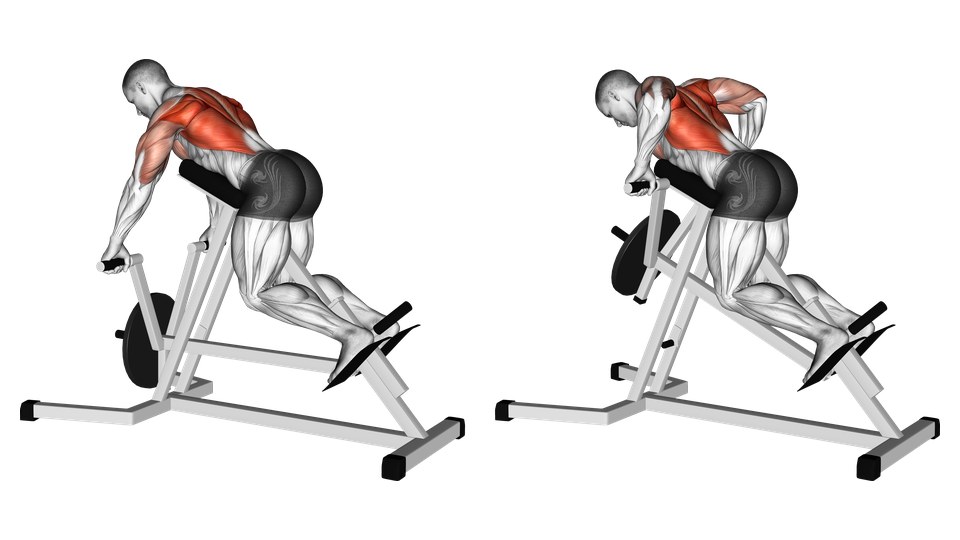
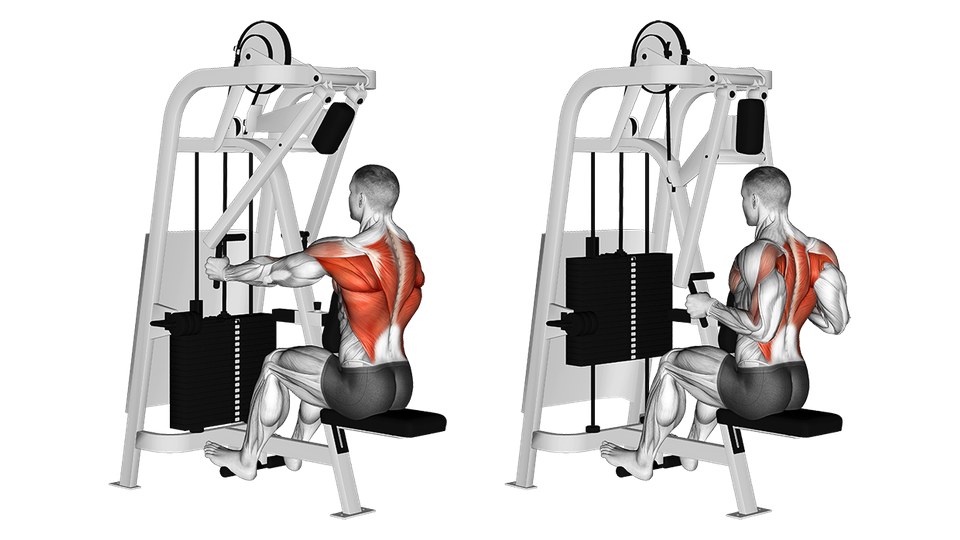
A chest-supported T-bar row uses a plate-loaded rowing station with a pad under the chest. With your torso resting on the pad, you pull the handles toward your ribs and lower the lever without standing up between reps.
How do you perform a chest-supported T-bar row?
Set up
- Load the station and adjust its chest pad or foot platform so your chest is supported and the handles are within reach.
- Place your feet firmly on the platforms, lean onto the pad and grip the horizontal handles with your palms facing down.
Execution
- Lift the lever clear of its resting support, if fitted, and begin with your arms extended.
- Row the handles toward your ribs while your chest stays against the pad.
- Lower until your arms extend again, keeping control of the lever.
- After the last rep, lower the lever onto its support before releasing the handles.
Common mistakes
Pulling your chest away from the pad
You lose the supported setup and use torso movement to finish the rep. End the pull while the chest remains in contact.
Setting the pad where the handles cannot travel
The handles hit the pad or your body before you can complete a comfortable row. Adjust the station before loading heavily.
Dropping the lever at the bottom
The weights can hit the frame abruptly. Control the return and set the lever down only when finishing the set.
Where it fits in a session
Use it for a horizontal pulling slot in your back or upper-body session.
Keep the station, pad setting and handle choice consistent when comparing sets. Record the plate load separately from the weight you use on other row machines.
Muscles worked
Primary
Secondary
Schematic surface view. Some muscles are partly visible or not shown.
Back muscles and assisting arm muscles are listed without an activation ranking.
Variations
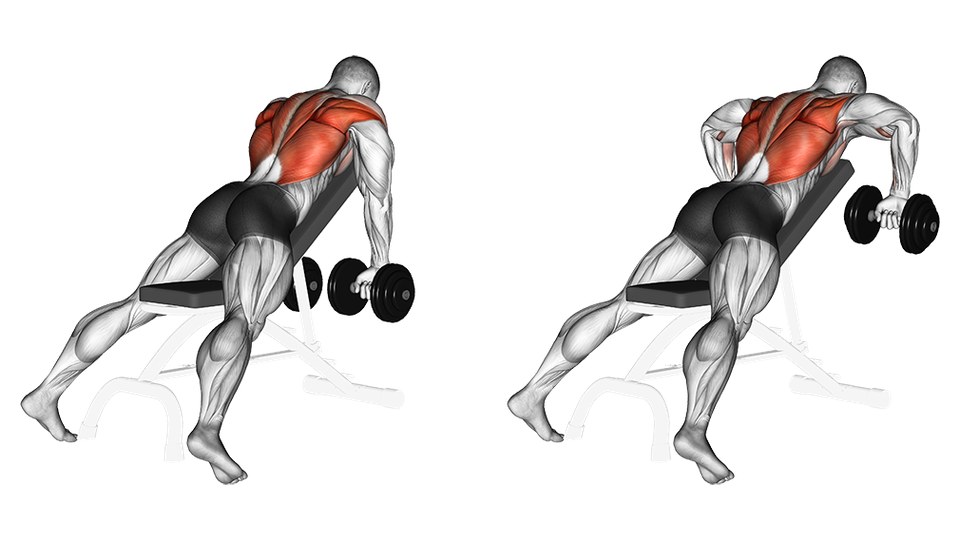
- Chest-supported dumbbell rowUses two independent dumbbells on an incline bench instead of a plate-loaded lever.
Related tools
Frequently asked questions
What muscles does a chest-supported T-bar row work?
It trains the lats, middle and lower trapezius and rhomboids, with the rear deltoids and biceps assisting.
Is it the same as a T-bar row without a chest pad?
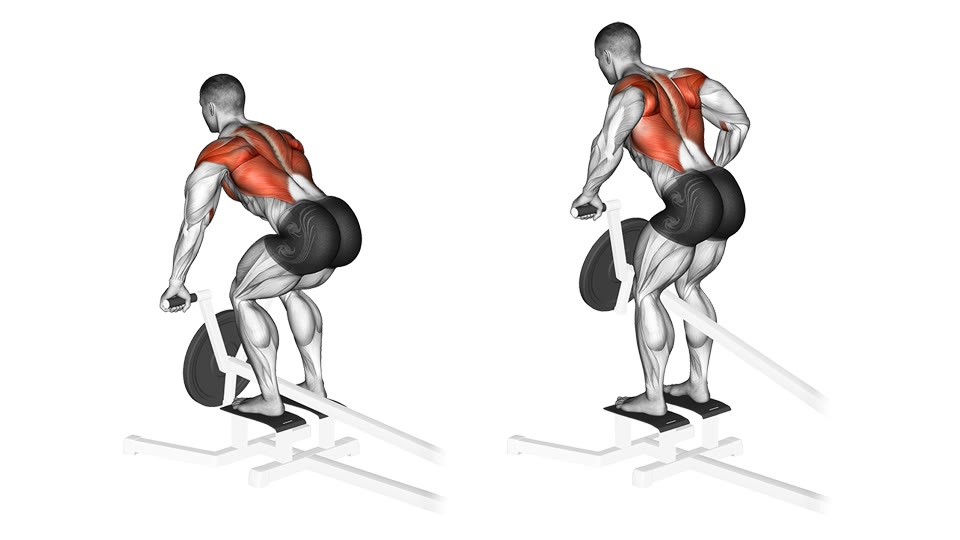
This guide uses a dedicated station that supports your chest throughout the set. An unsupported T-bar row requires you to hold your torso in a bent-over position.
Which handles should I use?
The instructions and illustration use the horizontal handles with palms facing down. Some stations also offer handles with palms facing each other. Choose the grip for your planned session and keep that choice consistent when logging it.
Should I lift my chest to finish the row?
Keep contact with the pad and stop the pull where you can remain supported. Use a lighter load if the only way to finish is to lift your torso.
Can I use the same load as another row machine?
Treat each station as its own exercise setup. Begin with a manageable load and record the machine and handle choice rather than transferring another row machine’s number directly.