Close-grip pulldown
Also called close-grip lat pulldown, narrow-grip pulldown, close-grip cable pulldown.
What is a close-grip pulldown?
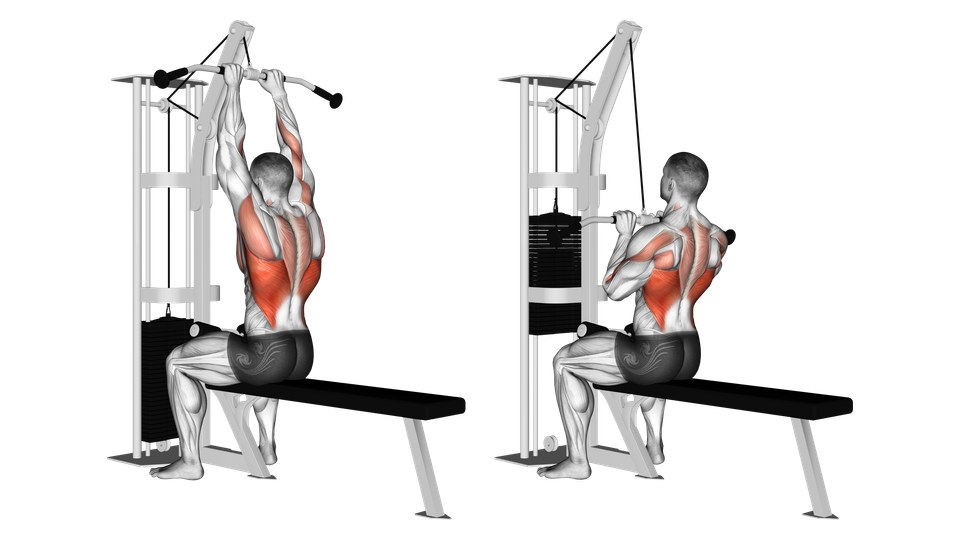
The close-grip pulldown is a lat pulldown performed with the hands close together. This version uses an overhand grip on a curved bar and pulls it in front of the body, training the lats and teres major while the biceps and upper-back muscles assist.
How do you perform a close-grip pulldown?
Set up
- Set the thigh pad snugly, take a close overhand grip on the bar and sit with your feet flat.
- Begin with the arms straight overhead, the chest tall and a small backward lean.
Execution
- Pull the bar down in front of your face toward the upper chest, driving both elbows toward your sides.
- Stop before the shoulders roll forward or the torso leans farther back.
- Return under control until the arms are straight overhead and the shoulder blades rise naturally.
Common mistakes
Rocking backward to start the rep
Torso momentum changes the exercise into a row and makes the load harder to compare between sets.
Pulling the bar behind the neck
The selected front-pulldown path brings the bar to the upper chest without moving behind the head.
Using grip width to promise a lower-lat emphasis
Close and wide pulldown grips have not established separate regional growth effects; choose the grip for control and comfort.
Where it fits in a session
Usually used as the main vertical pull or after pull-ups in a back session.
Choose a grip spacing and load that let both arms reach overhead without the torso rocking.
Muscles worked
Primary
Secondary
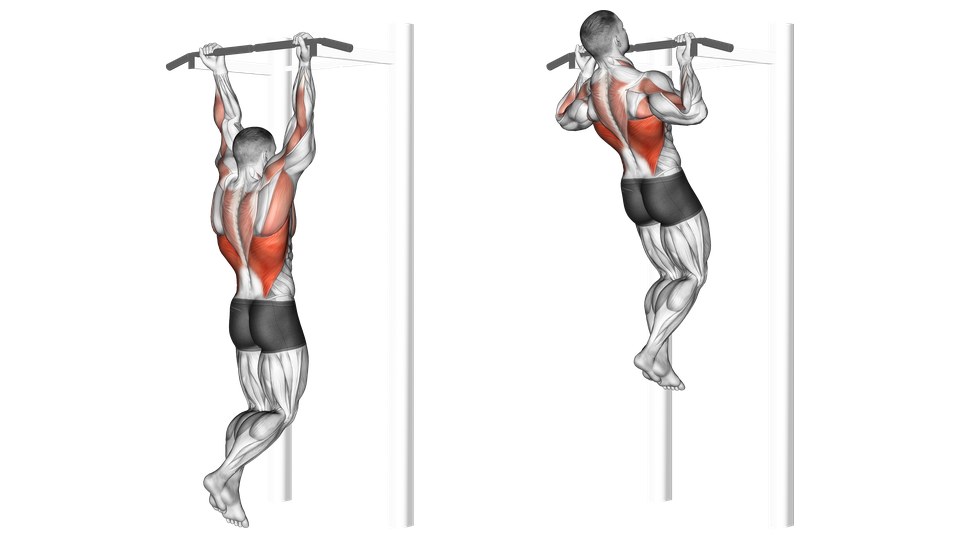
Schematic surface view. Some muscles are partly visible or not shown.
The lats and teres major pull the upper arms down while the elbow flexors and shoulder-blade muscles assist; a close grip does not establish a separate lower-lat target.
Variations
Frequently asked questions
What muscles do close-grip pulldowns work?
They mainly train the latissimus dorsi and teres major. The biceps, rear shoulders, trapezius and rhomboids assist.
Do close-grip pulldowns target the lower lats?
There is no established regional-growth advantage that makes a close grip a lower-lat exercise. Use it as a comfortable pulldown variation.
Should the bar touch your chest?
Pull toward the upper chest and stop where the shoulders remain controlled. Touching the chest is not required if it makes you lean or roll forward.
Is a neutral handle the same exercise?
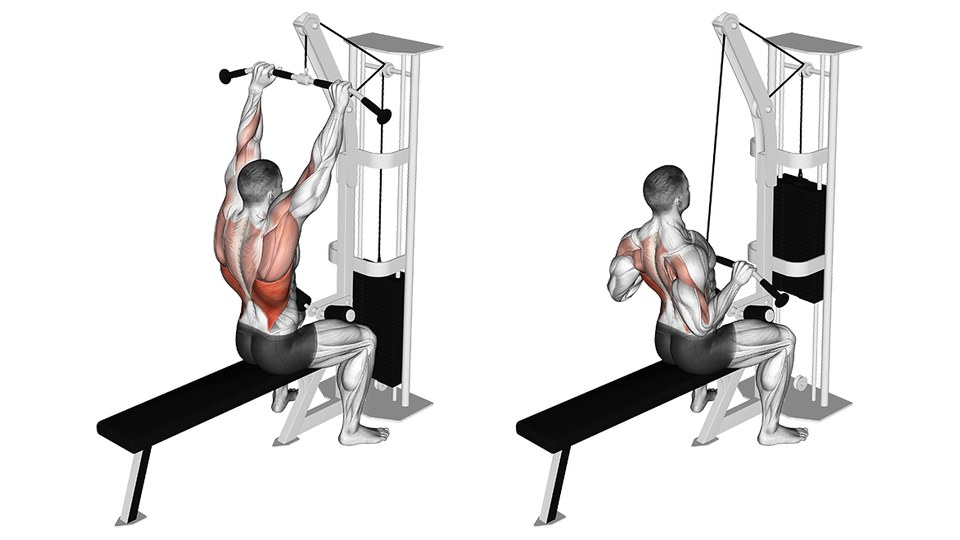
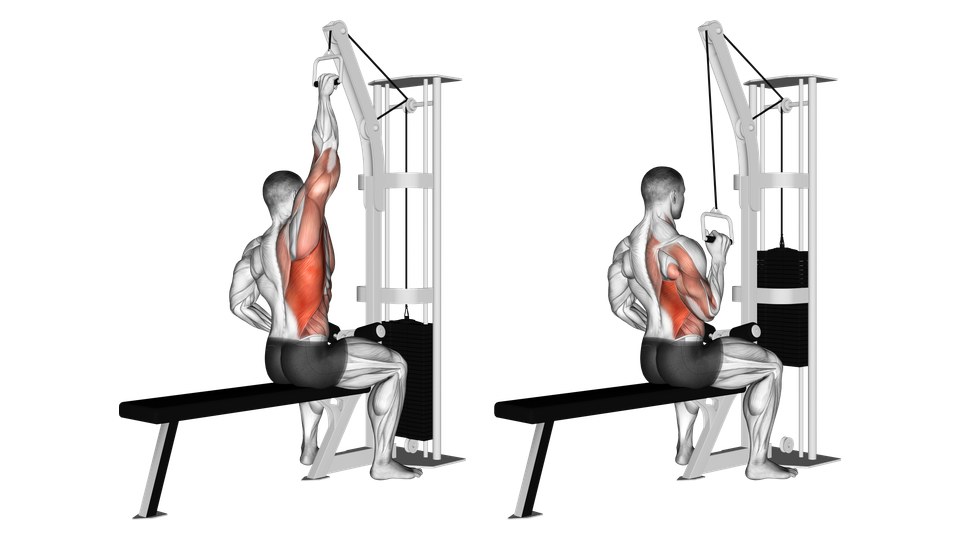
It is a close-grip pulldown variation, but the palms face each other. This guide and illustration use a close overhand grip on a bar.
Sources
- Jeno SH, Varacallo MA. Anatomy, Back, Latissimus Dorsi. StatPearls. https://www.ncbi.nlm.nih.gov/books/NBK448120/
- Syros A, Rizzo MG. Anatomy, Shoulder and Upper Limb, Teres Major Muscle. StatPearls. https://www.ncbi.nlm.nih.gov/books/NBK580487/