
Cuban press
Also called dumbbell Cuban press.
What is a Cuban press?
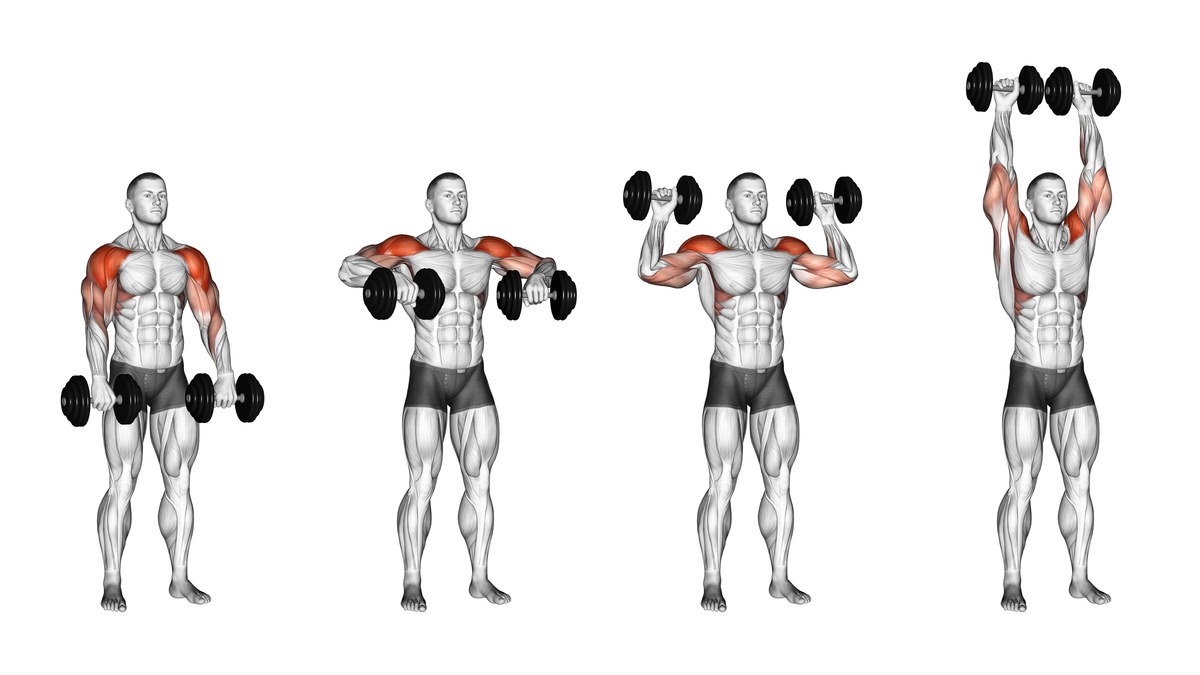
A Cuban press combines a bent-arm raise, an outward shoulder rotation and an overhead press with light dumbbells. You reverse those stages to return to the start. This guide includes the press; it is not only an external-rotation drill.
How do you perform a Cuban press?
Set up
- Choose very light dumbbells and stand with your feet planted comfortably apart. Hold the weights in front of your thighs with your palms facing back.
- Keep your torso upright and leave room above and beside you. Begin with less weight than you would use for an ordinary shoulder press.
Execution
- Raise your elbows out to the sides, bending them so the dumbbells hang below your elbows. Stop with your upper arms around shoulder height or a little lower.
- Hold that elbow height and rotate at the shoulders so the dumbbells swing upward until your forearms point up. Keep your wrists straight.
- Press the weights overhead by straightening your arms without leaning backward.
- Lower back to the elbows-bent position, rotate the forearms down and then lower the upper arms to return the weights to your thighs. Keep all three stages controlled.
Common mistakes
Using your normal pressing weight
Choose the load for the controlled rotation stage. If that stage becomes a swing, use much lighter weights.
Rushing through the middle position
Separate the stages so the weights do not flip from below the elbows to overhead in one throw.
Forcing the rotation
Stay within a comfortable range and stop if the position hurts.
Where it fits in a session
Use it as a light shoulder accessory if your session includes the full rotation-to-press sequence.
Practise each stage with no weight first. Add a small load only when you can reverse the sequence without swinging or changing your torso position.
Muscles worked
Primary
Secondary
Schematic surface view. Some muscles are partly visible or not shown.
The deltoids move the arms, the infraspinatus contributes to outward shoulder rotation and the triceps straighten the elbows during the press.
Variations
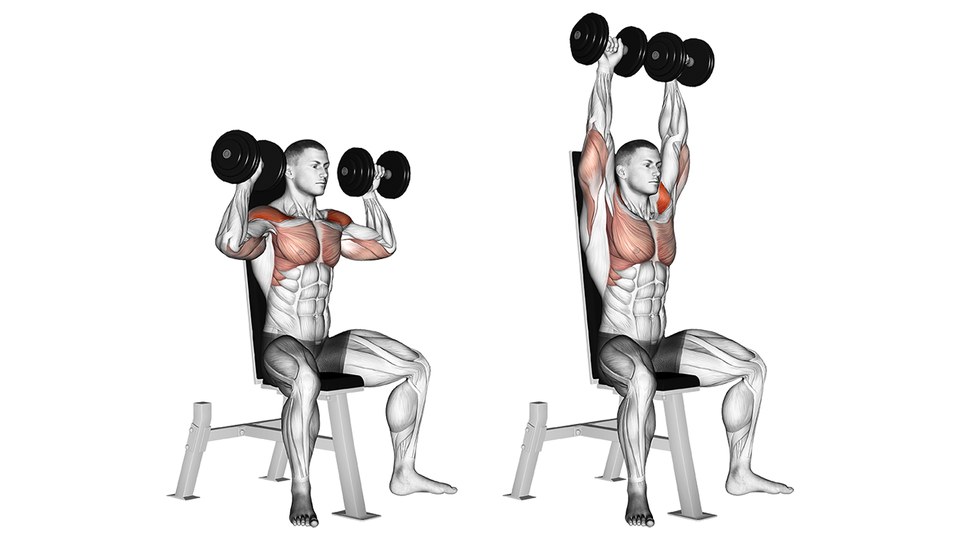
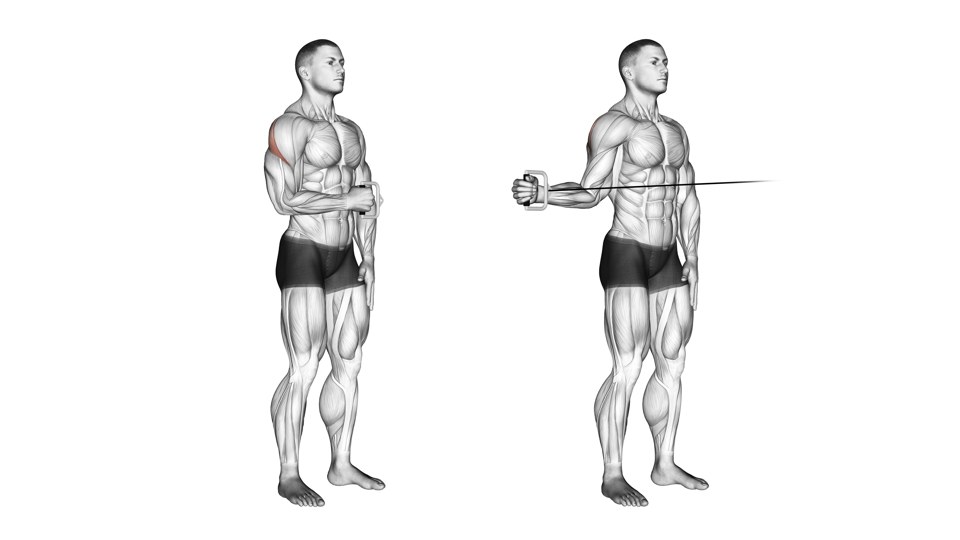
Frequently asked questions
Is a Cuban press the same as a Cuban rotation?
The full press adds an overhead press after the outward rotation. A rotation-only drill stops before that pressing stage.
Why use such light dumbbells?
Choose the weight for the rotation you can control, rather than what you can press overhead. The same pair must suit every stage.
Should the rotation come from the wrists?
No. Keep the wrists straight while the upper arms rotate at the shoulders and the forearms move from pointing down to pointing up.
What if the rotation feels uncomfortable?
Use a lighter pair and a smaller comfortable range. Stop if it hurts rather than pushing the dumbbells into position.
Sources
- Elzanie A; Varacallo MA. Anatomy, Shoulder and Upper Limb, Deltoid Muscle. StatPearls. https://www.ncbi.nlm.nih.gov/sites/books/NBK537056/
- Tiwana MS; Sinkler MA; Bordoni B. Anatomy, Shoulder and Upper Limb, Triceps Muscle. StatPearls. https://www.ncbi.nlm.nih.gov/sites/books/NBK536996/
- Williams JM; Sinkler MA; Obremskey W. Anatomy, Shoulder and Upper Limb, Infraspinatus Muscle. StatPearls. https://www.ncbi.nlm.nih.gov/sites/books/NBK513255/