High row
Also called machine high row, lever high row, plate-loaded high row.
What is a high row?
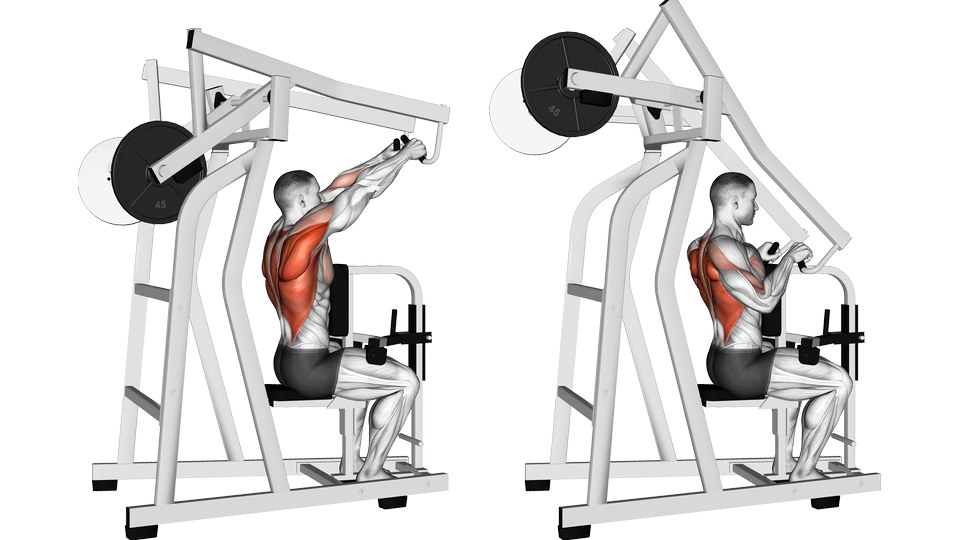
The high row is a machine pulling exercise with handles that start above shoulder height. From a chest-supported seat, you pull the handles down and back toward the upper torso, training the lats, middle back and rear shoulders.
How do you perform a high row?
Set up
- Adjust the seat so the handles begin above shoulder height and the chest pad supports your torso without lifting your shoulders.
- Plant your feet, brace against the pad and take the handles with the grip provided by the machine.
Execution
- Pull the handles down and back, leading with your elbows while your chest stays on the pad.
- Finish when the elbows pass the torso and the shoulder blades draw back without shrugging.
- Return the handles under control until the arms are straight and the upper back reaches forward without the weights slamming down.
Common mistakes
Leaning away from the chest pad
Torso movement shortens the pull and uses body weight to move the handles.
Pulling only with the hands
Leading the elbows down and back keeps the intended shoulder and upper-back motion in the repetition.
Stopping the return early
A controlled forward reach restores the starting range; holding the shoulders pinned back turns every rep into a shorter one.
Where it fits in a session
As a main machine pull or after free-weight rows in a back or upper-body session.
Machine lever paths vary. Repeat the same seat setting, grip and reach when tracking progress, and use a load that keeps the chest on the pad.
Muscles worked
Primary
Secondary
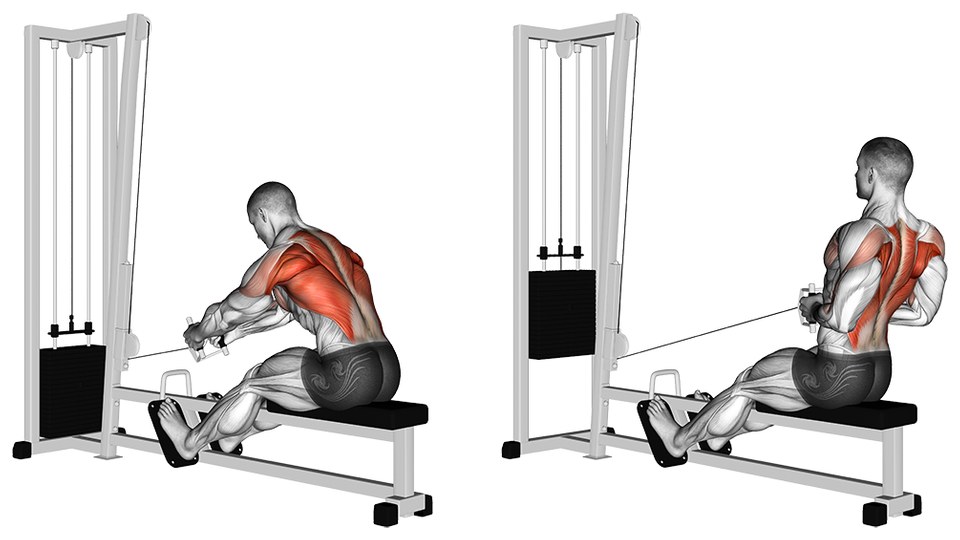
Schematic surface view. Some muscles are partly visible or not shown.
The upper and mid-back muscles pull the elevated handles down and back while the elbow flexors assist.
Variations
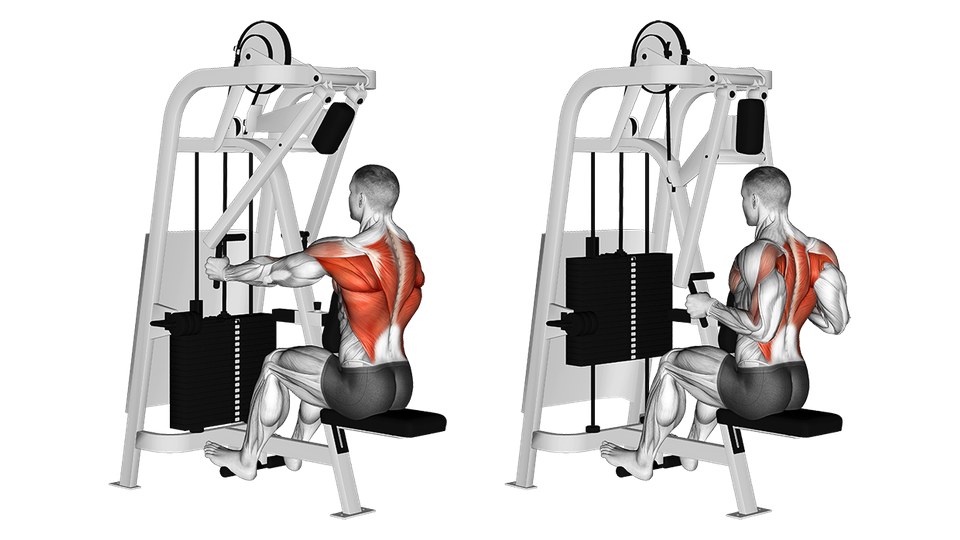
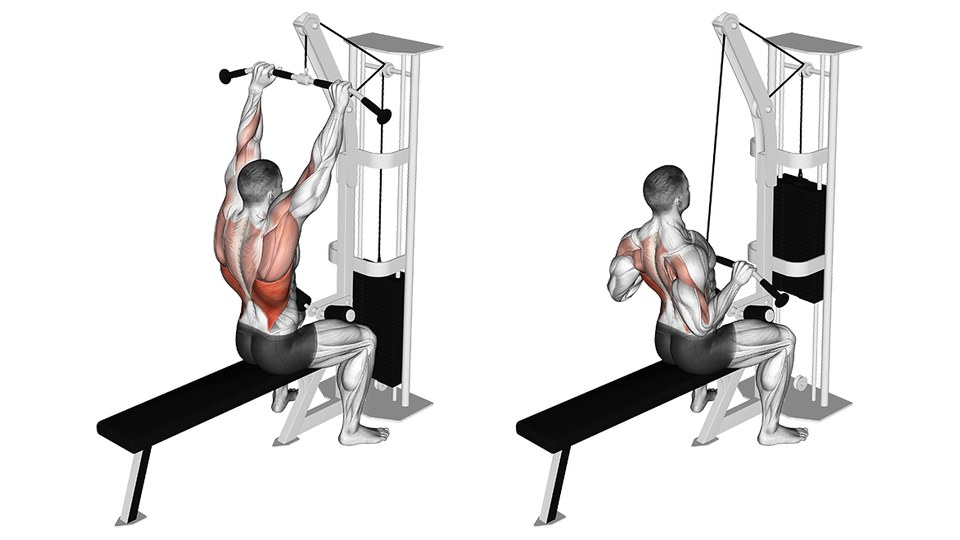
- Single-arm high row — Pulls one lever at a time while the chest stays supported.
Related tools
Frequently asked questions
What muscles does a high row work?
It trains the latissimus dorsi, middle and lower trapezius, rhomboids and rear deltoids. The biceps, brachialis and brachioradialis assist by bending the elbows.
How is a high row different from a machine row?
A high row starts with the handles elevated and pulls them down and back. A standard machine row usually pulls more horizontally toward the torso.
Where should the handles finish?
They should finish near the upper torso when the elbows have moved behind you and the shoulder blades have drawn back. The exact point depends on the machine's lever path.
Should my chest leave the pad?
No. Keep the chest supported through the pull and return. If you need to lean back to finish, reduce the load or adjust the seat.
Can I do high rows one arm at a time?
Yes, if the machine has independent levers. Keep the torso square against the pad and use the same range on each side.