
Kettlebell front squat
Also called double kettlebell front squat, double kettlebell squat.
What is a kettlebell front squat?
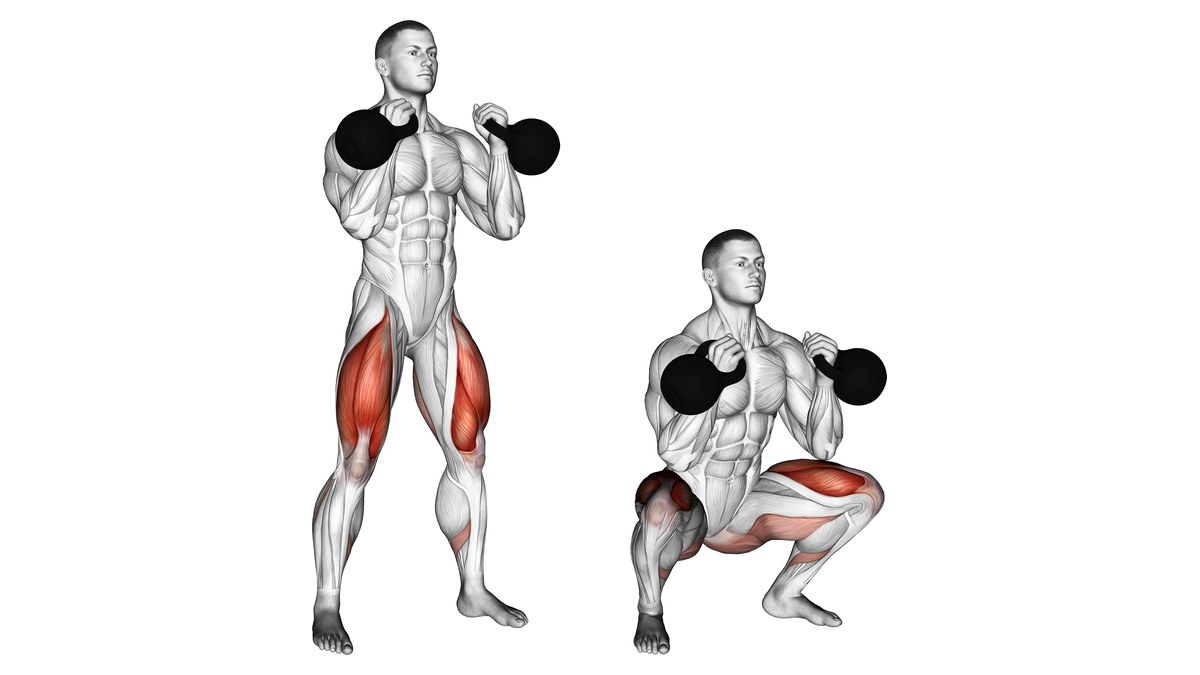
A kettlebell front squat is a squat with two kettlebells held in the front rack, one against each forearm near the shoulder. Keep the bells there while you bend your knees and hips, then stand. This guide covers the double-bell version, which trains the quadriceps and gluteus maximus.
How do you perform a kettlebell front squat?
Set up
- Choose two equal kettlebells you can clean and lower under control. Place them just ahead of you, stand wide enough for both to pass between your legs, then hinge and grip the handles.
- Hike the bells back between your legs, then drive your hips forward to stand. Bend your elbows and guide the handles around your hands so the bells settle against your forearms rather than flipping onto them.
- Bring your upper arms close to your torso with your hands near your shoulders and wrists straight. Keep your fingers clear of the gap between the handles, adjust to a comfortable squat stance and brace your midsection.
Execution
- Bend your knees and hips together to descend, letting your knees travel in line with your toes while the bells stay close to your chest.
- Turn around at a depth where both feet stay planted and you can keep your torso and the two bells steady.
- Push through the floor and extend your knees and hips to stand. Finish tall with the bells still in the rack, then reset before the next rep.
- After your last rep, guide the bells out of the rack into a controlled backswing, hinge as they pass between your legs, then place them on the floor in front of you. Keep holding the handles until both bells are down.
Common mistakes
Starting the squat before the bells have settled
Complete the clean and find a still rack before bending into the squat. If the bells keep striking your forearms or pulling you forward, use a lighter pair and practise the clean separately.
Copying a barbell rack with the elbows lifted high
Keep the kettlebells supported against your forearms with your upper arms close to your body. You do not need to hold the elbows horizontal as you would to support a barbell across the shoulders.
Dropping lower after the rack starts to slip
Use the range where you can keep your feet and hold steady. End the set and park the bells before adjusting your hands, rather than trying to catch a moving weight at the bottom.
Where it fits in a session
Use it as the squat in a kettlebell session or as additional squat work after your main lift.
Pick a pair you can get into position, squat with and put down without rushing. Practise the double clean separately before combining it with loaded squats. Keep the two-bell version separate in your training log from goblet, single-rack and barbell squats.
Muscles worked
Primary
Secondary
- None listed in this guide
Schematic surface view. Some muscles are partly visible or not shown.
The quadriceps extend your knees, while the gluteus maximus helps extend your hips as you rise. These are the main leg muscles named here, rather than a complete list of every muscle involved in supporting the bells.
Variations
- Front squatSupports a barbell across the fronts of the shoulders instead of two kettlebells against the forearms.

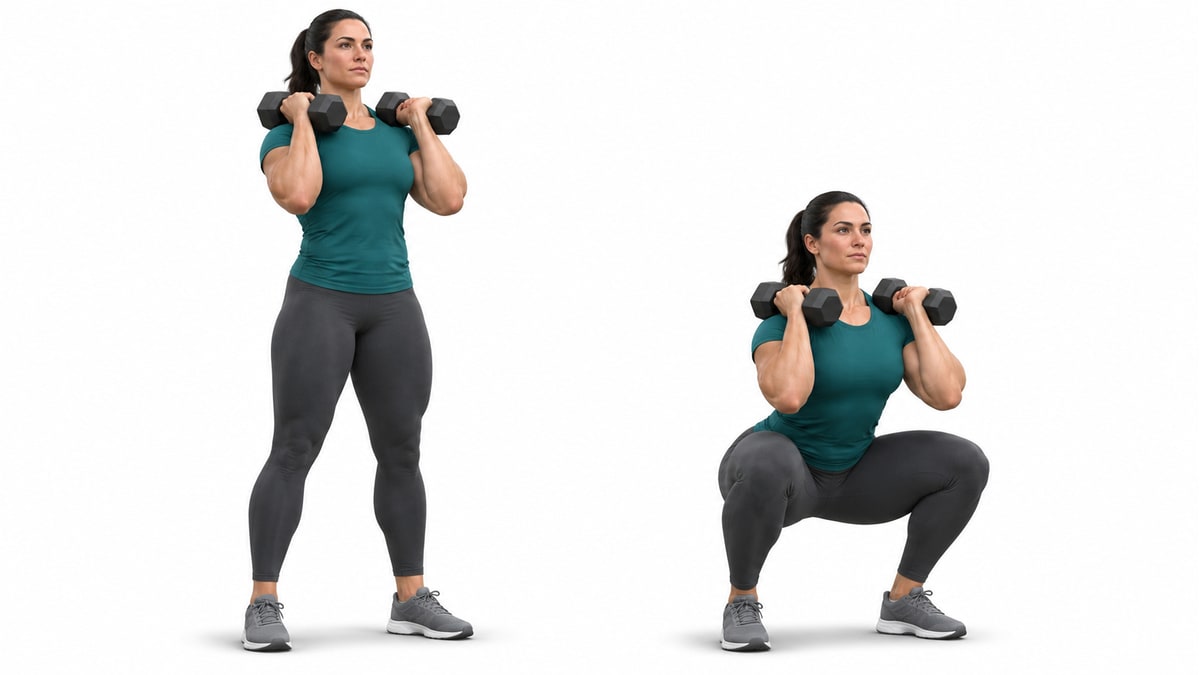
- Dumbbell front squatUses two dumbbells at the shoulders, with a different contact point and handle position.
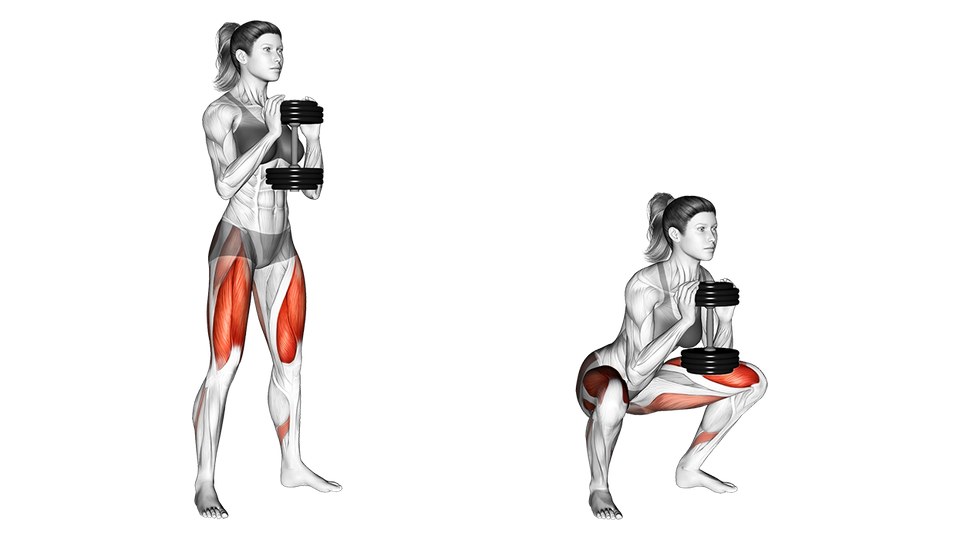
- Goblet squatHolds one dumbbell or kettlebell centrally with both hands. It is a different hold from the two-bell rack.
Related tools
Frequently asked questions
What muscles does a kettlebell front squat work?
The main leg muscles named in this guide are the quadriceps and gluteus maximus. They help straighten the knees and hips as you stand. The muscle list is not a ranking of growth or a claim that supporting the kettlebells isolates any one trunk muscle.
Is a kettlebell front squat the same as a goblet squat?
No. This version has two kettlebells in the front rack, with one hand on each handle and the bell bodies against the forearms. A goblet squat has one weight held centrally with both hands. Keep those holds distinct when choosing instructions and recording your training.
Can I do it with one kettlebell?
A single-rack squat is a separate option: hold one kettlebell at one shoulder and repeat on the other side. It differs from the two-bell setup shown here. Holding one bell in both hands at the middle of your chest is a goblet squat instead.
How deep should I squat?
Use a depth where your whole feet stay down and your torso and rack remain controlled. The illustration shows a deep squat; it is not a requirement to match that position. Adjust your stance and load rather than forcing a deeper rep after your hold changes.
What if I cannot clean two kettlebells comfortably?
Practise the clean with a lighter load before adding squat repetitions. You can use a bodyweight or goblet squat while learning the rack and how to park the bells. Do not choose the pair only by what your legs can squat; getting it up and down is part of the set.
Sources
- Betts JG et al. Anatomy and Physiology 2e, 11.6: Appendicular muscles of the pelvic girdle and lower limbs. OpenStax, 2022. https://openstax.org/books/anatomy-and-physiology-2e/pages/11-6-appendicular-muscles-of-the-pelvic-girdle-and-lower-limbs