Rack pull alternatives

Conventional and trap-bar deadlifts provide floor-start pulls when rack supports are unavailable. A Romanian deadlift offers a broader hip hinge that begins from standing.

The original is a partial barbell pull from matched rack supports below the knees. None of these choices retains that supported start height; if the partial rack task matters, a floor pull or standing hinge does not replace it.

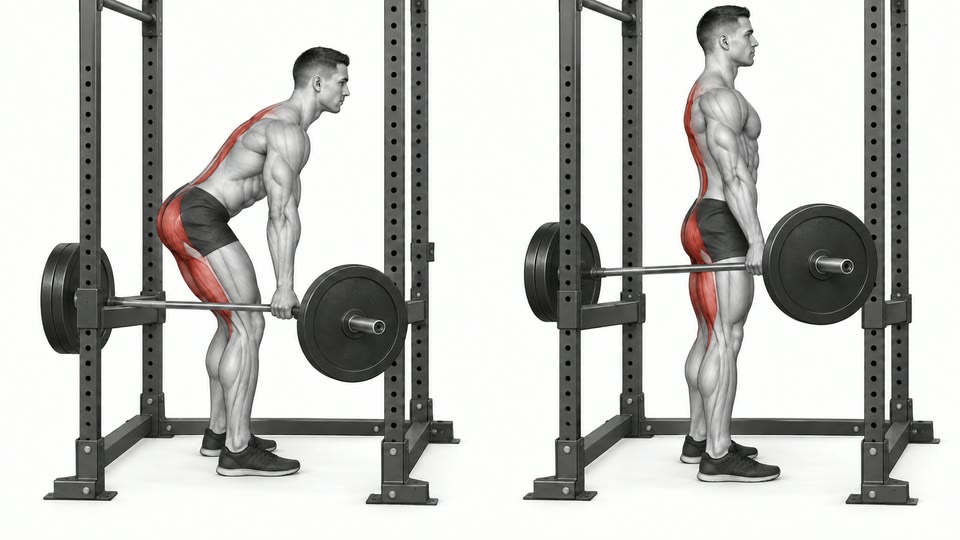
Anatomical illustration of rack pulls in two side-view positions: a barbell resting on power-rack safety arms below the knees, then held at the thighs, with the glutes and back highlighted.
What equipment can you use?

Choose everything you have. Some exercises need two items, such as dumbbells and a flat bench. Choose floor space for options without equipment.

Your replacements

Choose your equipment above to see replacements.

Compare all alternatives

These options need different equipment. Use the finder above to show only the setups you can use.

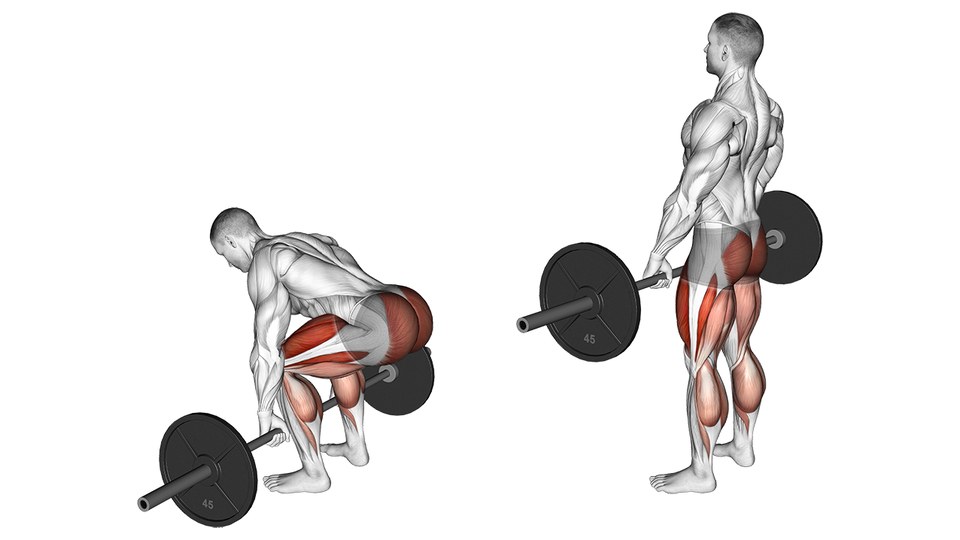
  • Anatomical illustration of a barefoot male figure performing a conventional barbell deadlift, drawn twice side by side against white. On the left he is at the start: hips back, knees bent, torso angled forward over a loaded barbell held in a double-overhand grip with both palms facing him, arms straight and hands just outside his knees. The glutes and the backs of both thighs are shaded red. On the right he stands upright at lockout, seen from behind, the bar held at arm's length across the front of his thighs; the shading is on the glutes, the backs of both thighs and the calves, with a faint wash over the upper back and rear shoulders. The lower back is not shaded in either frame, and the fronts of the thighs are not in view.

    Similar movement

    Conventional deadlift

    You need: Barbell and plates

    Why it fits
    Offers a barbell pull from a stationary start.
    What changes
    Start with both plates on the floor instead of rack pins. The lower start adds range and changes the knee and hip positions; choose a separate load and reset on the floor between reps.
    See exercise guide
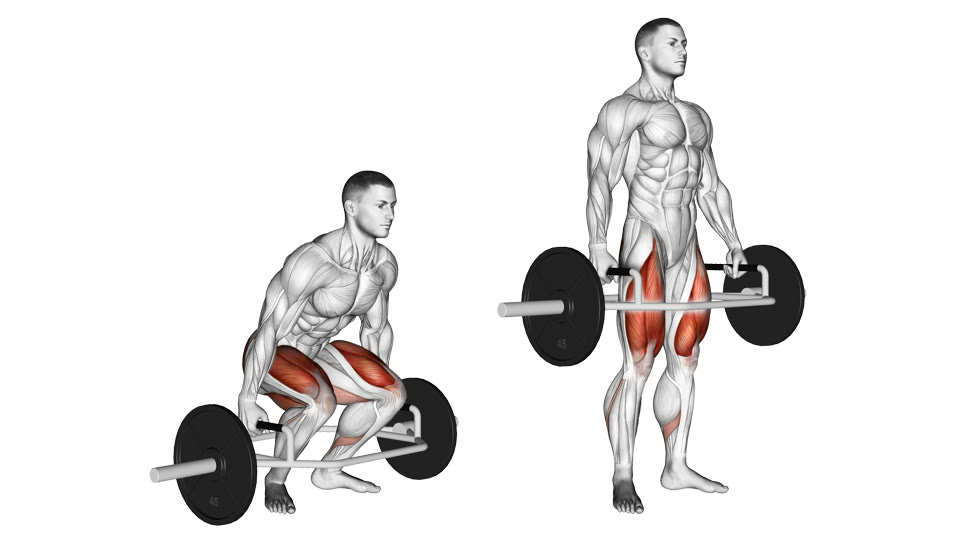
  • Two-frame front three-quarter illustration of a man standing inside a loaded hexagonal trap bar, lifting it from the floor with bent hips and knees to an upright lockout.

    Similar movement

    Trap bar deadlift

    You need: Trap bar and plates

    Why it fits
    Offers a floor-start pull with hip and knee extension.
    What changes
    Stand inside the trap bar and use its neutral handles beside you. The guide’s raised handles still start with the plates on the floor; handle position and starting height differ from the rack pull.
    See exercise guide
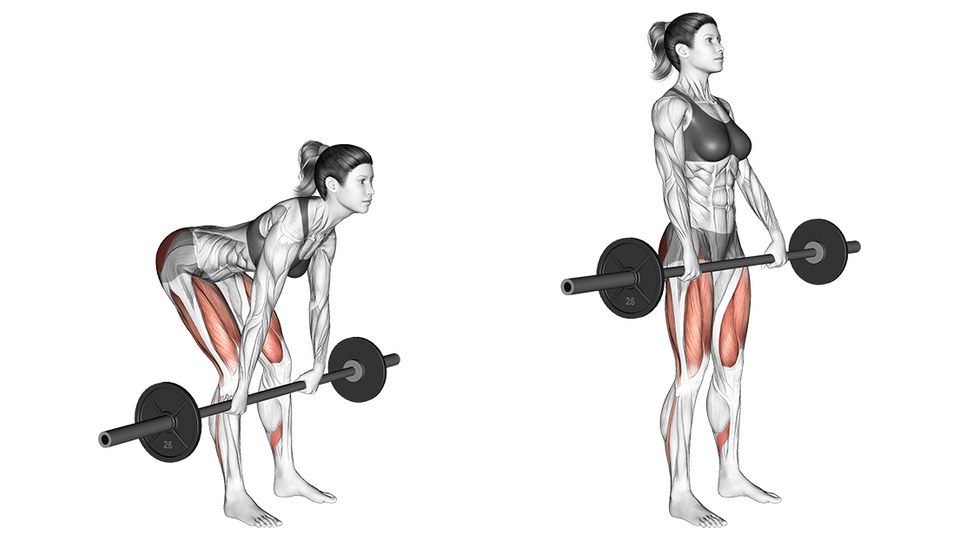
  • Two frames of the same anatomical figure, a woman, performing a barbell Romanian deadlift, shown from the side against white. Left: the bottom of the rep, hips pushed back, torso close to horizontal, knees clearly bent rather than locked, arms hanging straight with the bar at about knee height just in front of the shins. Right: the finish, standing tall and upright with the bar held at the hips. The barbell carries one plate a side. Highlighted in red on both frames are the glutes and the hamstrings down the back of the thigh, with the shading continuing into the calf; in the standing frame the fronts of the thighs and the forearms are shaded as well. The lower back is left unshaded in both.

    Different movement

    Romanian deadlift

    You need: Barbell and plates

    Why it fits
    Offers a broader standing hip-hinge option.
    What changes
    Begin with the bar at the thighs, keep a soft knee bend steady and reverse at your controlled hinge limit. There is no supported dead start or floor reset; this does not preserve a partial rack pull.
    See exercise guide
See the original exercise guide

How we choose replacements

These are curated alternatives, chosen for the movement and the job the exercise does in a workout. A shared muscle group is not enough. Read what changes before choosing: support, range of motion, balance and resistance can all differ. If your goal is to improve a specific lift, alternatives do not replace practice of that lift.

Explore alternatives by exercise