Rear delt row
Also called dumbbell rear delt row, rear-delt dumbbell row, one-arm rear delt row.
What is a rear delt row?
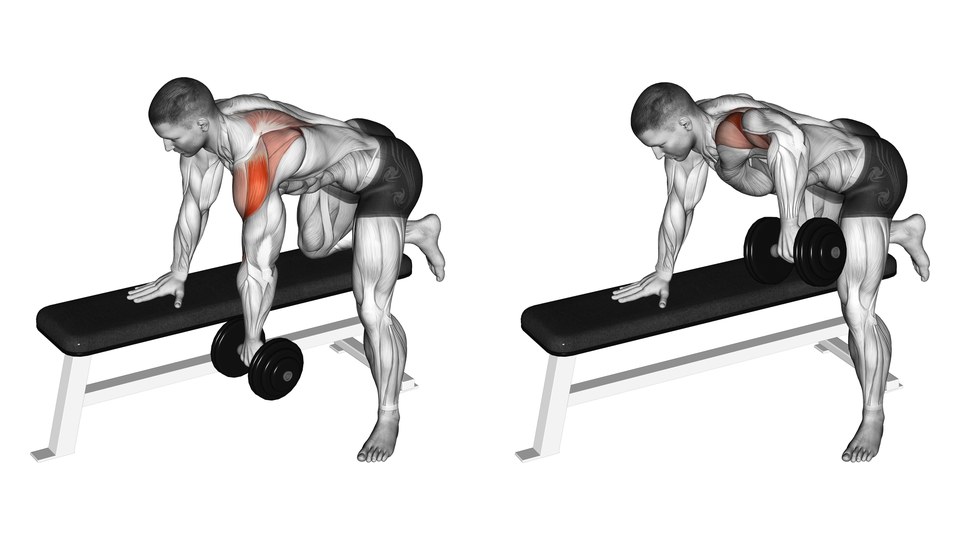
The rear delt row is a one-arm dumbbell row in which the working elbow travels out to the side instead of staying close to the ribs. Brace the other hand and knee on a bench, hold the torso still, and row the upper arm wide to train the rear shoulder and middle back.
How do you perform a rear delt row?
Set up
- Place your non-working hand and knee on a flat bench, with the other foot planted beside it.
- Hold a dumbbell in the free hand and let that arm hang below the shoulder with the palm facing the bench.
- Set your torso close to horizontal, brace your midsection and keep both shoulders facing the floor.
Execution
- Lead with the working elbow and pull it out to the side as the dumbbell rises beneath it.
- Stop when the upper arm is roughly level with the torso, without shrugging or turning your chest away from the bench.
- Lower the dumbbell until the arm hangs again. Finish the set, then repeat with the other side.
Common mistakes
Pulling the elbow close to the ribs
That path turns the movement toward a standard dumbbell row instead of the wide rear-delt row covered here.
Using the torso to lift the dumbbell
Twisting away from the bench lets body movement finish a repetition that the working arm could not control.
Shrugging for extra height
Raising the shoulder toward the ear changes the finish. Stop when the upper arm reaches the torso line without the neck tightening.
Where it fits in a session
As rear-shoulder accessory work after heavier rows or presses.
Choose a load that preserves the wide elbow path without twisting or shrugging. Keep the same bench position on both sides before adding weight.
Muscles worked
Primary
Secondary
Schematic surface view. Some muscles are partly visible or not shown.
The back of the shoulder is the main target, with the trapezius assisting the wide row.
Variations
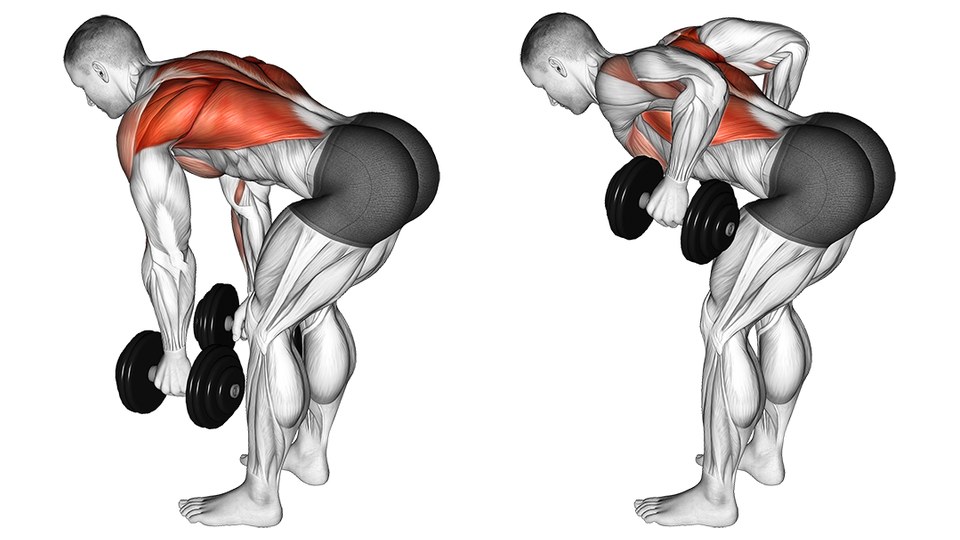
- Two-dumbbell rear delt row — Uses both arms together from an unsupported hip hinge.
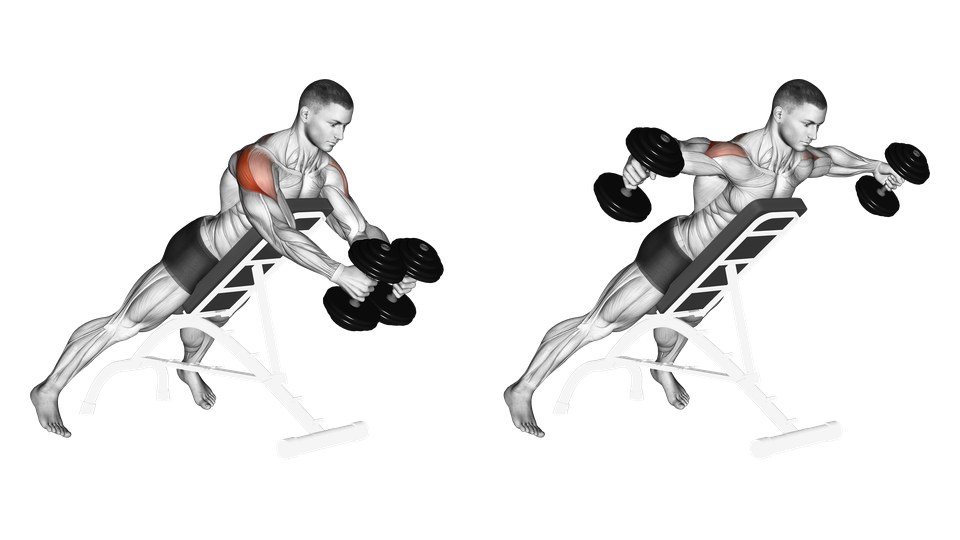
- Chest-supported rear delt row — Lies face-down on an incline bench and rows both elbows out to the sides.
Frequently asked questions
What muscles does a rear delt row work?
It mainly trains the posterior deltoid at the back of the shoulder. The trapezius assists the wide row.
How is a rear delt row different from a dumbbell row?
The rear-delt version brings the elbow out to the side. A standard dumbbell row keeps the elbow closer to the ribs and pulls toward the hip or lower torso.
How high should the elbow go?
Stop when the upper arm is roughly level with the torso. Do not keep lifting by shrugging the shoulder or turning the chest away from the bench.
Should your hand and knee be on the bench?
Yes for the version covered here. The non-working hand and knee provide the brace shown in the illustration, while the foot on the working side stays on the floor.
Is a rear delt row the same as a rear delt fly?
No. Both use a wide upper-arm path, but the row bends the elbow as the dumbbell rises. A fly keeps the elbow at a small, nearly fixed bend.