
Reverse dumbbell curl
Also called dumbbell reverse curl, overhand dumbbell curl.
What is a reverse dumbbell curl?
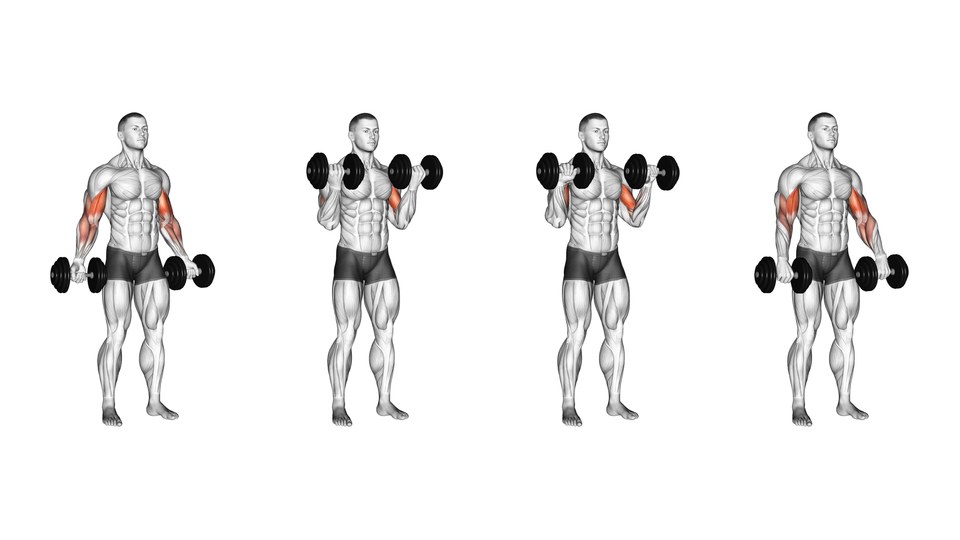
A reverse dumbbell curl is a standing curl with a dumbbell in each hand and an overhand grip. Keep that grip as you bend and straighten your elbows. Each hand holds its own weight, unlike a reverse curl with both hands on one bar.
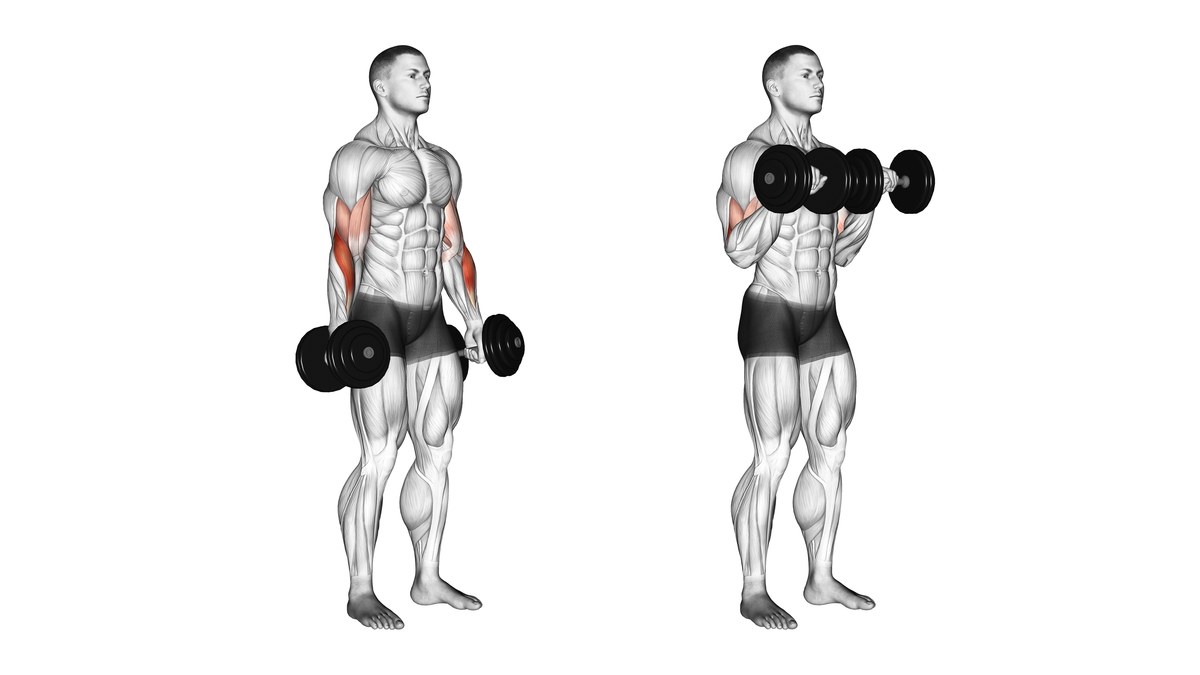
How do you perform a reverse dumbbell curl?
Set up
- Stand with your feet comfortably apart, holding a light dumbbell in each hand in front of your thighs, palms toward your legs.
- Wrap your thumbs around the handles and settle your elbows beside your torso, with your wrists straight.
Execution
- Bend both elbows to bring the dumbbells upward, keeping your knuckles over the handles.
- Stop the lift before you need to swing your body or carry your elbows forward.
- Bring the weights back down steadily, keeping the same overhand grip.
- Finish with your arms straight and the dumbbells still, then begin the next rep.
Common mistakes
Turning the palms up as the weights rise
Keep the same overhand grip for the whole rep. If you cannot maintain it, try lighter dumbbells rather than changing the curl halfway through.
Bending the wrists to finish the curl
End the lift while your hands and forearms are still aligned. Raising the weights farther is not the goal of the rep.
Throwing the dumbbells upward
Reduce the load if you need a hip drive or a backward lean. Start each rep with the weights still and your torso upright.
Where it fits in a session
Use it where your session calls for a curl with an overhand grip.
Choose the load for clean repetitions with the same grip from start to finish. Keep your reverse dumbbell curl weights separate from your bar or palms-up curl records.
Muscles worked
Primary
Secondary
- None listed in this guide
Schematic surface view. Some muscles are partly visible or not shown.
These muscles bend the elbow. They are listed together without ranking their contribution to an overhand curl.
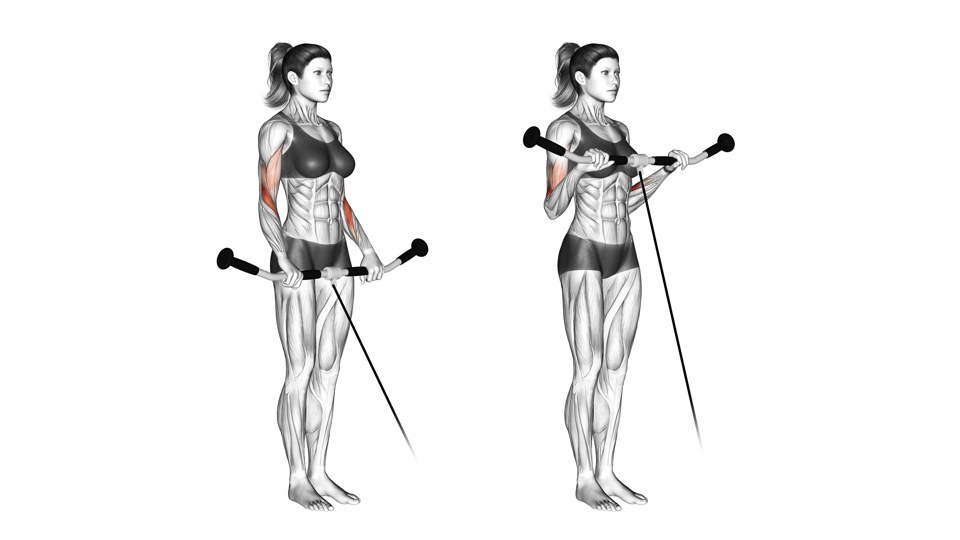
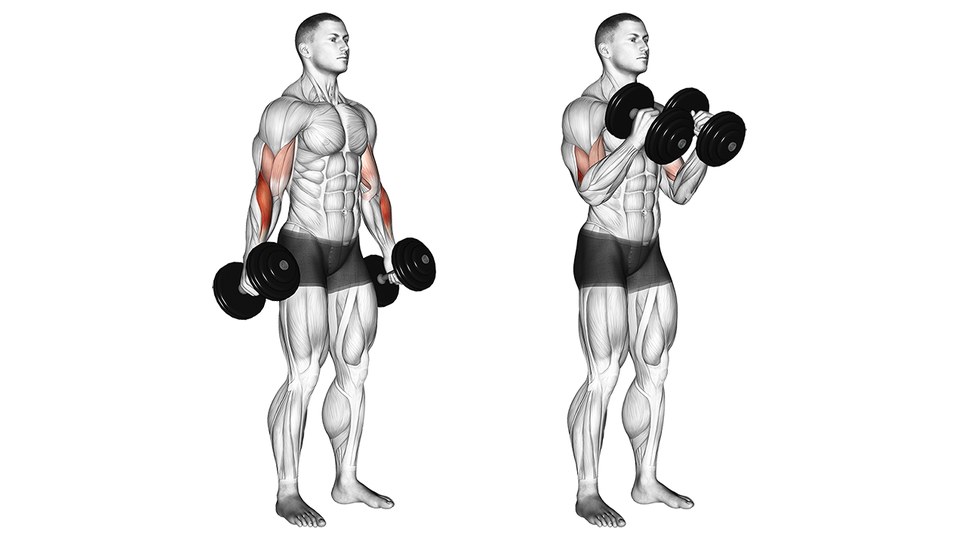
Variations
Frequently asked questions
What muscles does a reverse dumbbell curl work?
The brachioradialis, brachialis and biceps brachii contribute to bending the elbow. The overhand grip does not make this a wrist curl; your wrists stay straight as the elbows move.
Should my palms turn during the curl?
Keep the overhand grip on the way up and down. Turning the palms up for the lift changes the version described here; a Zottman curl deliberately uses different grips for lifting and lowering.
Can I alternate arms?
Yes. The illustration shows both arms curling together, but you can complete a rep with one arm and then the other. Keep the same overhand grip on each side and avoid twisting your torso.
How is this different from a barbell reverse curl?
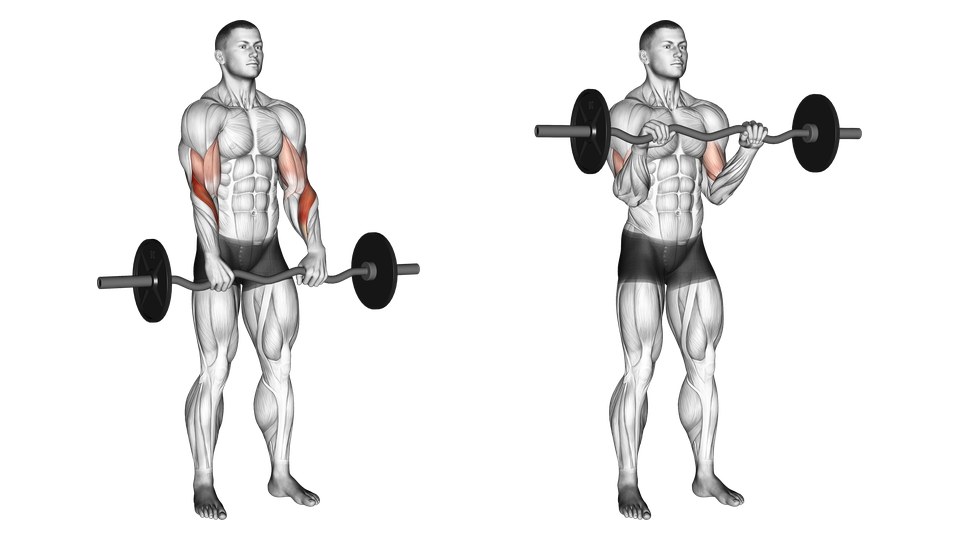
Dumbbells give each hand its own weight and path. A barbell or EZ-bar links the hands around one shared weight. Record them as separate exercises rather than comparing the loads directly.
Sources
- Lung BE; Ekblad J; Bisogno M. Anatomy, Shoulder and Upper Limb, Forearm Brachioradialis Muscle. StatPearls. https://www.ncbi.nlm.nih.gov/sites/books/NBK526110/
- Plantz MA; Bordoni B. Anatomy, Shoulder and Upper Limb, Brachialis Muscle. StatPearls. https://www.ncbi.nlm.nih.gov/sites/books/NBK551630/
- Tiwana MS; Charlick M; Varacallo MA. Anatomy, Shoulder and Upper Limb, Biceps Muscle. StatPearls. https://www.ncbi.nlm.nih.gov/sites/books/NBK519538/