
Seated dumbbell lateral raise
Also called seated lateral raise, seated dumbbell side raise.
What is a seated dumbbell lateral raise?
A seated dumbbell lateral raise lifts two dumbbells out to your sides while you sit upright on a bench. The seat changes your base of support; the arms still follow a lateral-raise path. This guide uses a flat bench without a backrest.
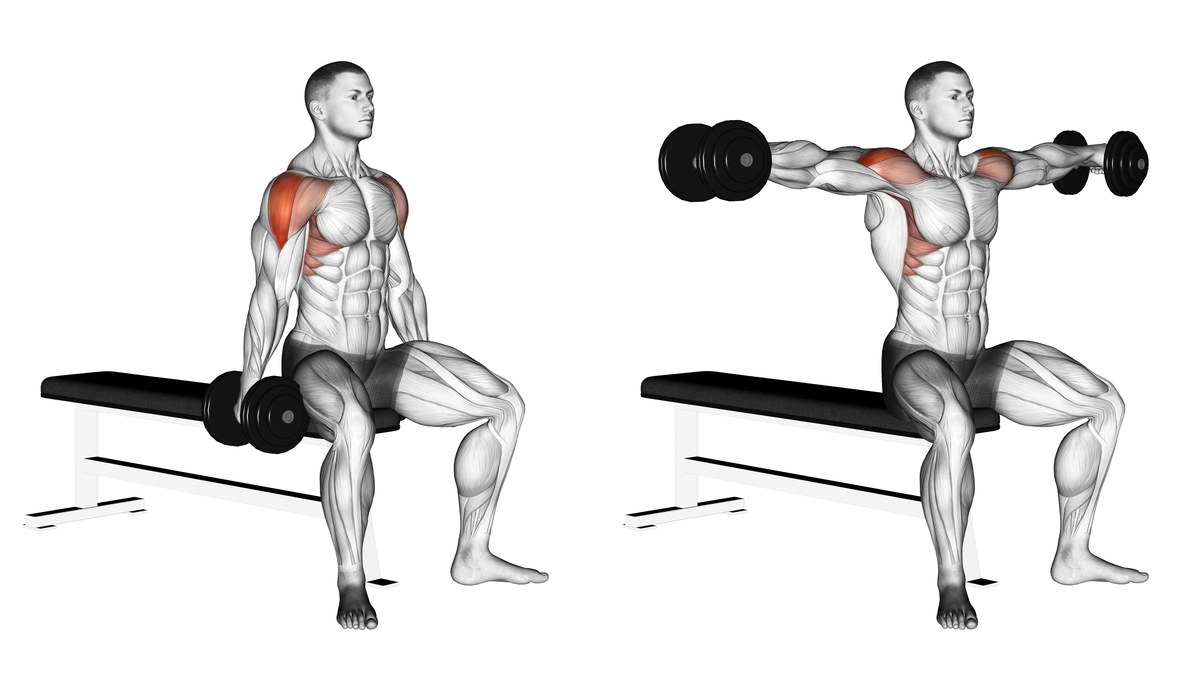
How do you perform a seated dumbbell lateral raise?
Set up
- Sit near the end of a stable flat bench with your feet planted and a light dumbbell beside each thigh.
- Sit tall, let your arms hang clear of the seat and keep a small bend in both elbows. Start with your palms facing your legs.
Execution
- Raise your arms out and a little forward of your sides, keeping your torso in the same position.
- Stop around shoulder height, with your hands level with or slightly below your elbows. Keep the small elbow bend unchanged.
- Lower until the dumbbells hang clear of the bench again. Begin the next repetition without rocking backward.
Common mistakes
Rocking on the bench
Sitting does not prevent torso swing. Reduce the weight if you have to lean back to start each repetition.
Catching the dumbbells on the seat
Move nearer the end of the bench so both weights can descend beside it without clipping the padding.
Curling the weights upward
Hold the same small elbow bend rather than bending more as the dumbbells rise.
Where it fits in a session
Use it as shoulder accessory work where a bench is available.
Choose weights that allow a still seated torso and a repeatable arm path. Compare progress using the same bench position and finish height.
Muscles worked
Primary
Secondary
- None listed in this guide
Schematic surface view. Some muscles are partly visible or not shown.
The side deltoids raise the arms out to the sides.
Variations
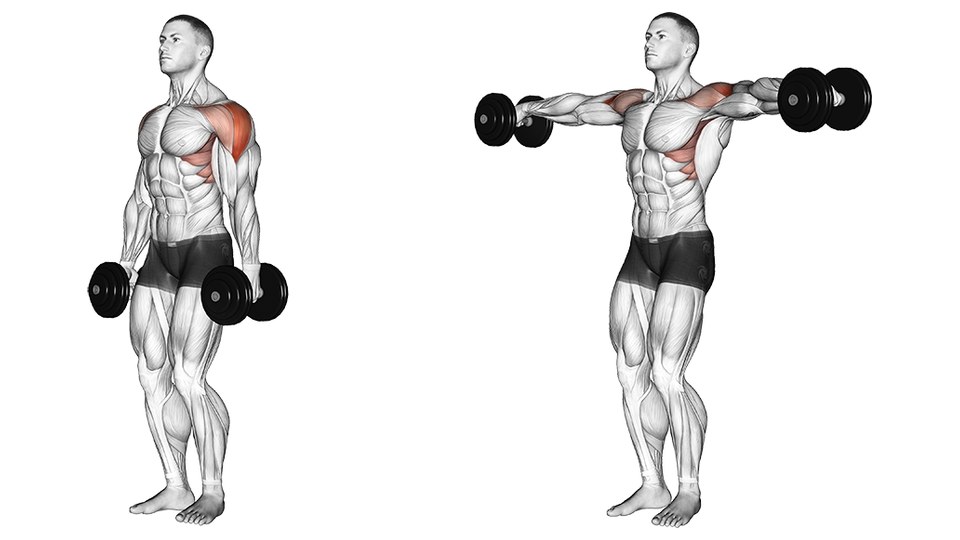
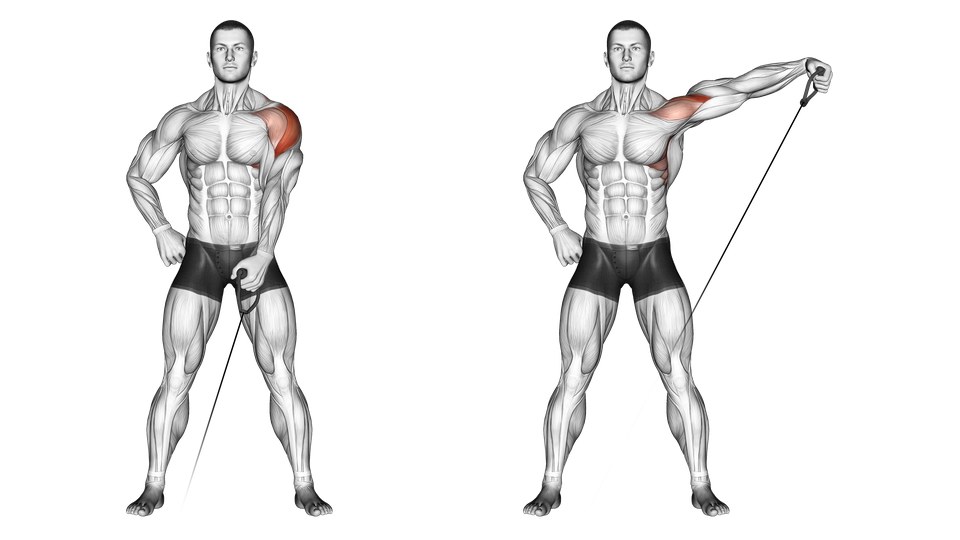
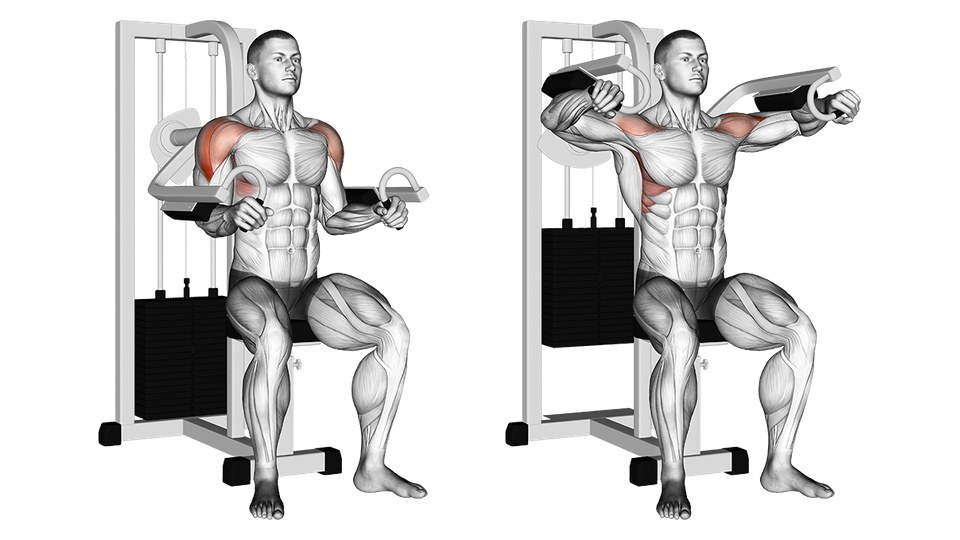
Frequently asked questions
Does sitting stop you from cheating a lateral raise?
It removes standing leg drive, but you can still rock your torso. Keep your seated position still and lower the load if the weights only move when you lean.
Should you use a backrest?
This guide uses a flat bench without a backrest. You can use an upright back pad for support, but record that setup consistently rather than switching between them within comparisons.
How high should the dumbbells go?
Use about shoulder height as the endpoint. Stop lower if you cannot reach it comfortably without changing your posture.
Are seated raises the same as standing raises?
The shoulder action is similar, but the seated base is a distinct setup. It is reasonable to keep a separate training history for each.
Sources
- Elzanie A; Varacallo MA. Anatomy, Shoulder and Upper Limb, Deltoid Muscle. StatPearls. https://www.ncbi.nlm.nih.gov/sites/books/NBK537056/