
Seated hammer curl
Also called seated dumbbell hammer curl, seated neutral-grip curl.
What is a seated hammer curl?
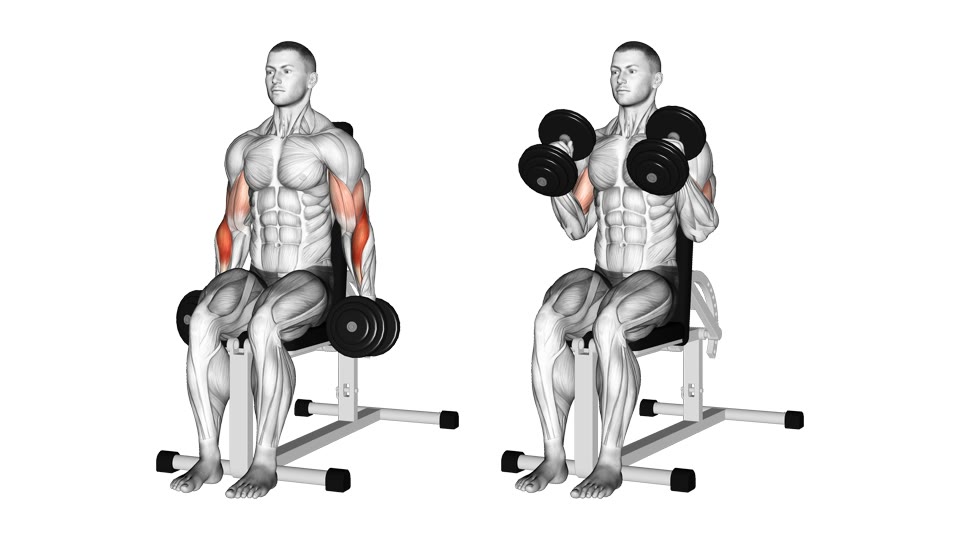
A seated hammer curl is a dumbbell curl performed on a bench with a neutral grip, palms facing each other and thumbs up. Sitting removes most room to swing the torso while the brachialis, brachioradialis and biceps bend the elbows.
How do you perform a seated hammer curl?
Set up
- Sit tall on a bench with a dumbbell in each hand, arms hanging beside you and palms facing inward.
- Plant your feet, brace your trunk and keep the wrists straight with the thumbs pointing forward.
Execution
- Curl the dumbbells toward the shoulders by bending the elbows while the upper arms stay near your sides.
- Stop at the natural top of the curl without bending the wrists or leaning back.
- Lower under control until the arms are straight, then repeat together or one side at a time.
Common mistakes
Leaning back to start the rep
Use less load and keep the torso against the same seated position throughout the set.
Rotating into a palm-up curl
Keep the thumbs pointing up to maintain a neutral grip throughout the rep.
Bending the wrists
Keep each wrist stacked with the forearm instead of curling the dumbbell with the hand.
Where it fits in a session
Use it after compound pulling or with other arm isolation work.
The bench limits momentum, so choose a load that keeps the torso and wrists still through the full range.
Muscles worked
Primary
Secondary
- None listed in this guide
Schematic surface view. Some muscles are partly visible or not shown.
All three elbow flexors work in a neutral-grip curl; the seated setup removes most room for torso swing without isolating one muscle.
Variations
- Incline hammer curl — Uses an inclined bench with the upper arms hanging behind the torso.
Related tools
Frequently asked questions
What muscles do seated hammer curls work?
They train the brachialis, brachioradialis and biceps brachii, the three muscles that flex the elbow.
Are seated hammer curls different from standing hammer curls?
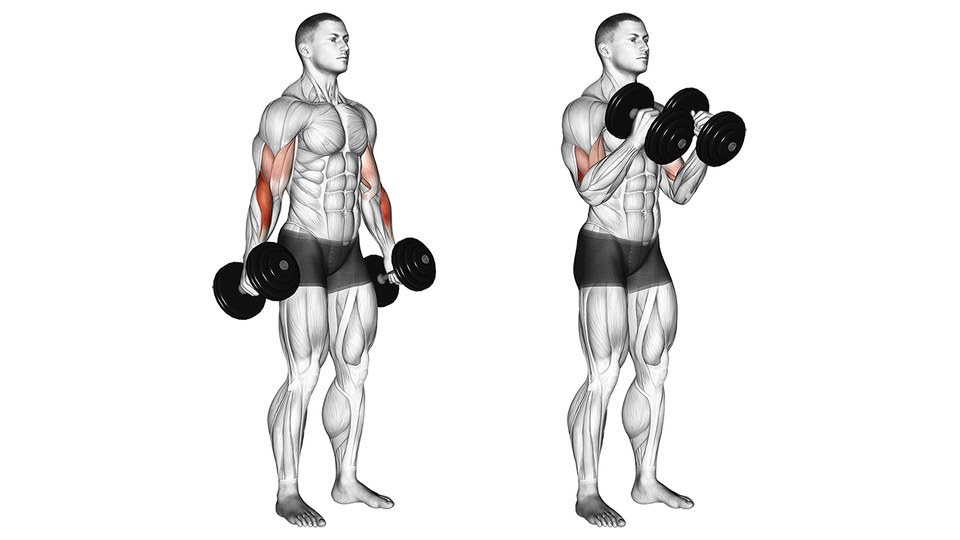
The grip and elbow action are the same, but sitting reduces the option to swing the torso and is commonly logged as its own setup.
Should you curl both dumbbells together?
Either together or alternating is valid. Keep the neutral grip and the same seated posture whichever timing you choose.
Should your arms straighten at the bottom?
Lower to straight arms under control without letting the shoulders tip forward or the dumbbells pull the wrists out of line.