
Incline hammer curl
Also called incline dumbbell hammer curl, incline neutral-grip curl, hammer curl on incline bench.
What is an incline hammer curl?
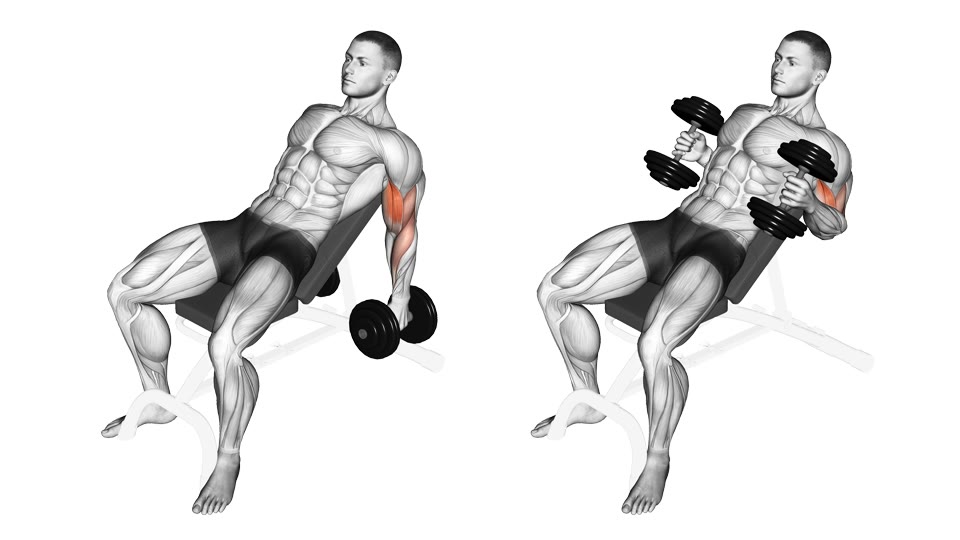
An incline hammer curl is a neutral-grip dumbbell curl performed while reclining on an incline bench. The bench keeps the torso back and lets the upper arms hang behind it while the brachialis, brachioradialis and biceps bend the elbows.
How do you perform an incline hammer curl?
Set up
- Set a bench to a moderate incline and sit back with a dumbbell in each hand.
- Let the arms hang straight behind the line of the torso with the palms facing inward and the thumbs pointing forward.
- Plant your feet, keep the shoulders against the bench and hold the wrists straight.
Execution
- Curl the dumbbells toward the shoulders by bending the elbows while the upper arms stay hanging in place.
- Stop at the natural top of the curl without bringing the elbows forward or bending the wrists.
- Lower under control until the arms are straight, then repeat together or one side at a time.
Common mistakes
Bringing the elbows forward
Use less load and keep the upper arms hanging behind the torso instead of turning the top into a shoulder movement.
Rotating into a palm-up curl
Keep the thumbs pointing up so the grip stays neutral throughout the repetition.
Lifting the shoulders from the bench
Keep the upper back settled so the incline position remains the same from the first repetition to the last.
Where it fits in a session
Use it after compound pulling or with other arm isolation work.
Choose a load that lets the upper arms remain behind the torso and the shoulders stay against the bench through the full range.
Muscles worked
Primary
Secondary
- None listed in this guide
Schematic surface view. Some muscles are partly visible or not shown.
All three elbow flexors work in a neutral-grip curl; the incline bench holds the torso back and starts the upper arms behind it without isolating one muscle.
Variations
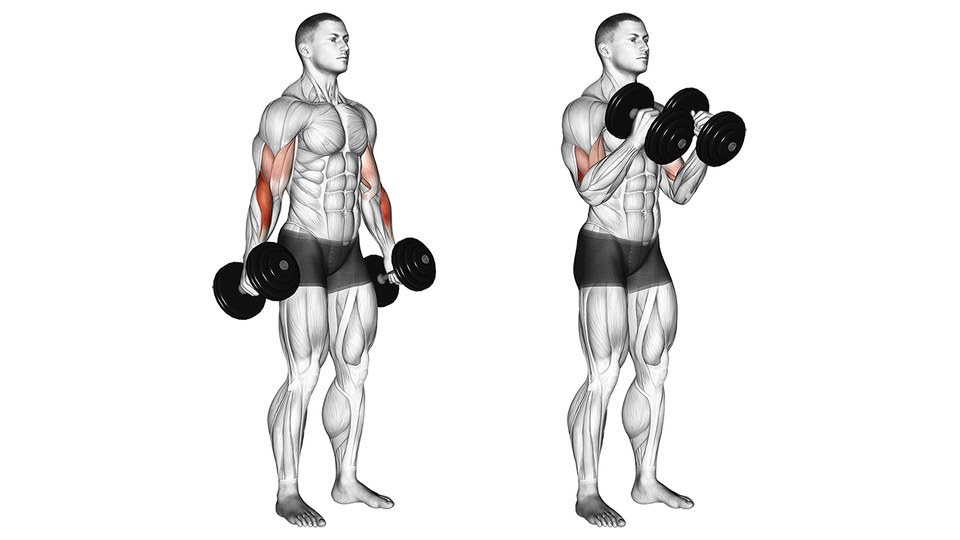
- Seated hammer curl — Uses an upright bench, so the upper arms hang beside rather than behind the torso.
Related tools
Frequently asked questions
What muscles do incline hammer curls work?
They train the brachialis, brachioradialis and biceps brachii, the three muscles that flex the elbow.
How is an incline hammer curl different from a standing hammer curl?
The grip and elbow action are the same, but the incline bench holds the torso back and places the upper arms behind it at the bottom.
What bench angle should I use?
Use a moderate incline that supports the back while letting the arms hang freely behind the torso. A very upright bench makes the setup more like a seated hammer curl.
Should you curl both dumbbells together?
Either together or alternating is valid. Keep the neutral grip and the same reclined posture whichever timing you choose.
Should your arms straighten at the bottom?
Lower to straight arms under control without letting the shoulders tip forward or the dumbbells pull the wrists out of line.