
Barbell thruster
What is a barbell thruster?
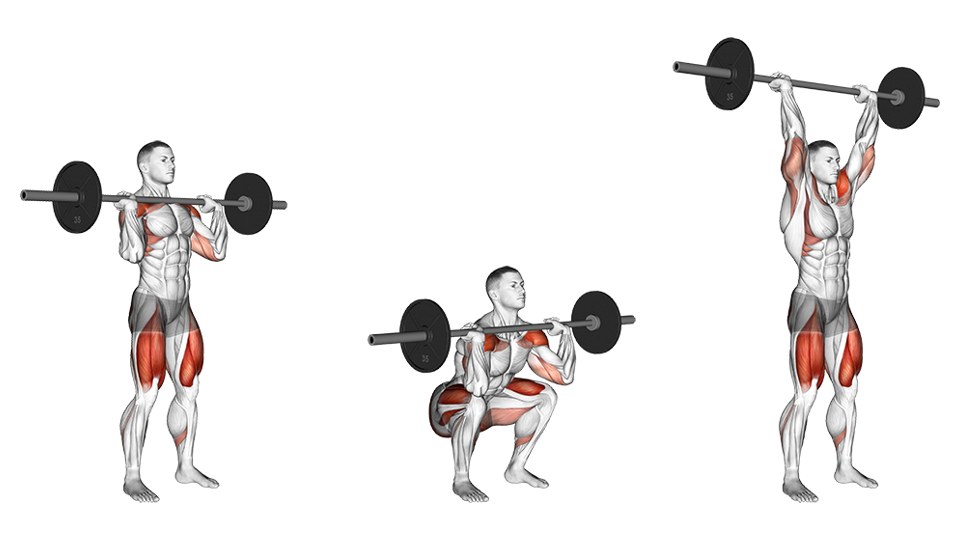
A barbell thruster joins a front squat to an overhead press in one continuous rise. Stand from the squat and use that upward drive to send the bar overhead, then return it to the shoulders for the next repetition.
How do you perform a barbell thruster?
Set up
- Set rack hooks just below shoulder height and clear space overhead. Use a light bar while learning the transition.
- Unrack with the bar supported on the front of your shoulders, hands just outside them. Step back and settle your feet into a squat stance.
Execution
- Brace and descend into a full front squat while keeping the bar supported and your feet planted. Use a deliberately reduced range if you are scaling the movement.
- Stand from the squat and continue the upward drive into the press, moving your face out of the bar’s path.
- Finish with straight arms and legs, bar balanced above your shoulders and feet.
- Lower to the shoulders under control, reset your support and begin the next squat. Rack the bar after the set.
Common mistakes
Pressing from the bottom of the squat
Let the legs initiate the rise and finish the press as you approach standing, keeping the squat-to-press transition continuous.
Adding a second knee bend overhead
That changes the lift into a jerk-style catch; reduce the load to finish the thruster with straight legs.
Where it fits in a session
Practise the squat-to-press transition before adding it to the conditioning work planned for the session.
Choose a load you can move through the same continuous rise. End the set if you need a second knee bend or lose the front-rack position.
Muscles worked
Primary
Secondary
- None listed in this guide
Schematic surface view. Some muscles are partly visible or not shown.
Variations
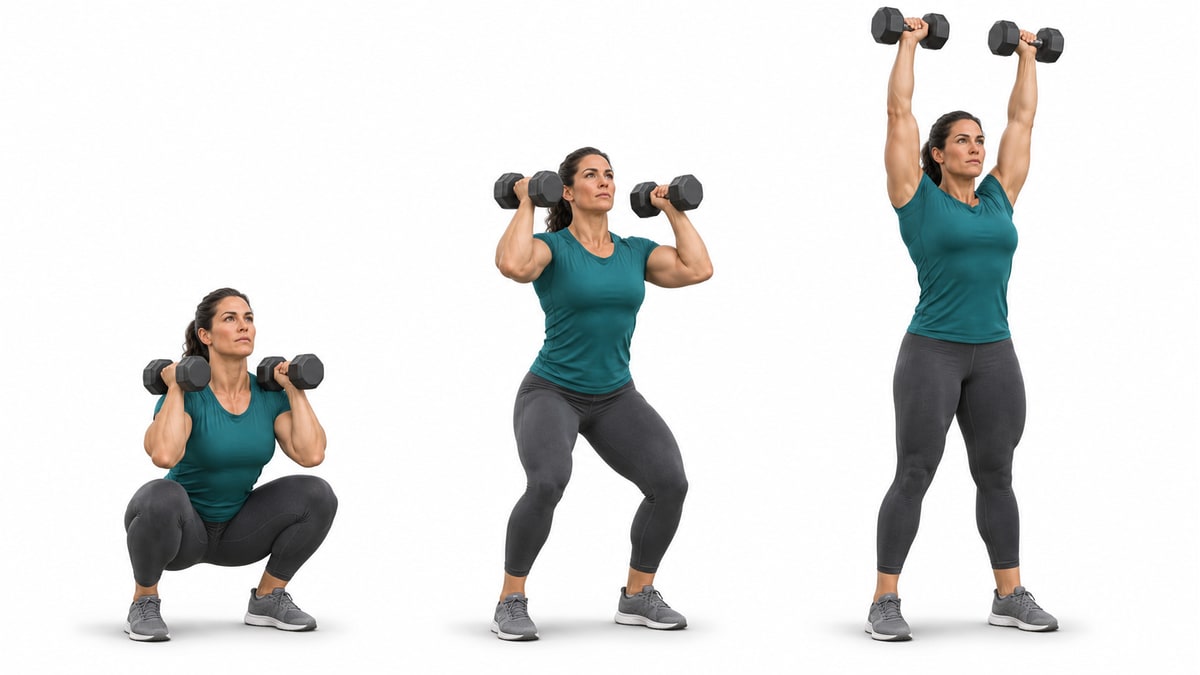
- Dumbbell thrusterUses two separate dumbbells at the shoulders and presses both overhead in the same continuous squat-to-press rise.
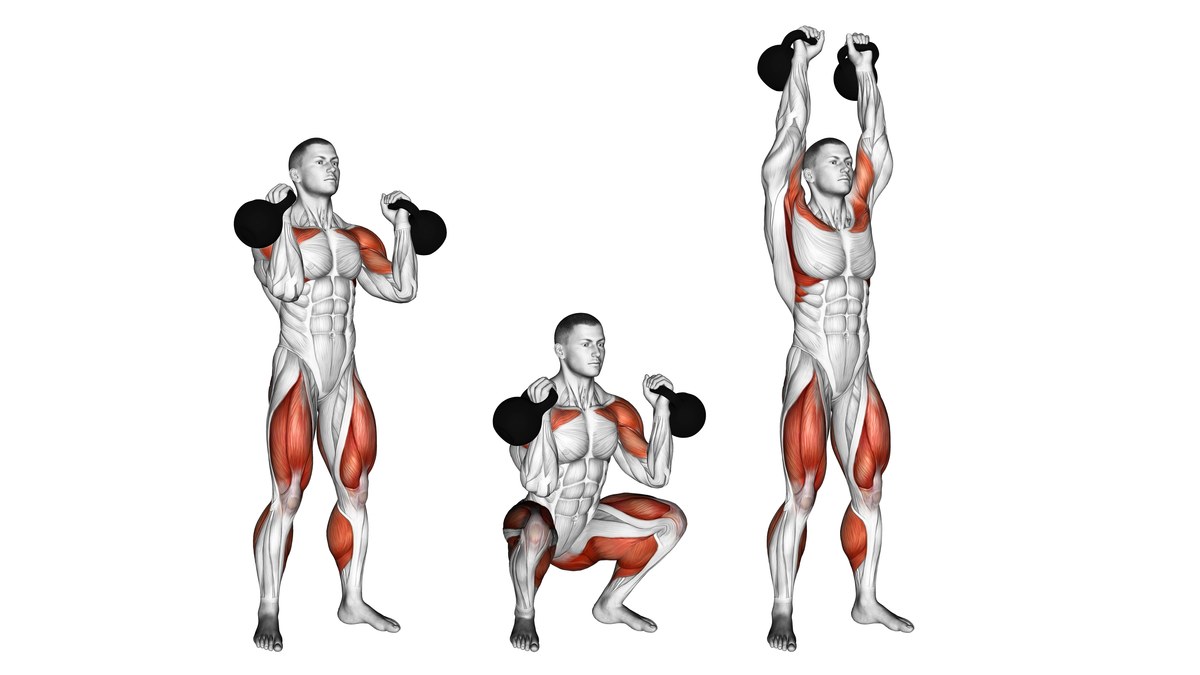
- Kettlebell thrusterUses two shoulder-racked kettlebells for the full squat and continuous overhead press.

Frequently asked questions
Can I start with dumbbells?
A dumbbell thruster is another option, with a weight at each shoulder. Learn its start and lowering separately.
How does it differ from a push press?
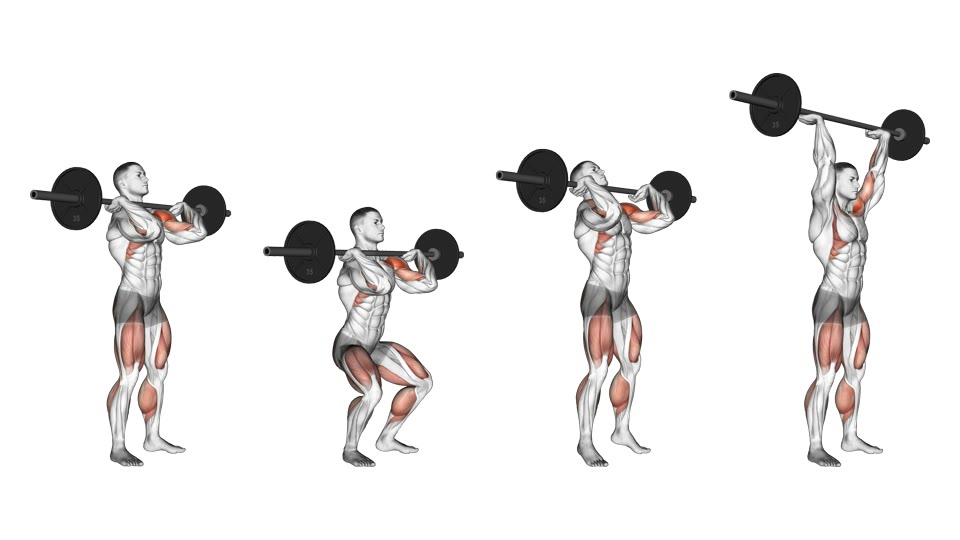
The thruster begins with a full front squat. A push press starts with a short dip.
Sources
- J. Gordon Betts et al.. Anatomy and Physiology 2e: Appendicular muscles of the pelvic girdle and lower limbs. 2022. https://openstax.org/books/anatomy-and-physiology-2e/pages/11-6-appendicular-muscles-of-the-pelvic-girdle-and-lower-limbs
- Mohammed A. Miniato; Prashanth Anand; Matthew A. Varacallo. Anatomy, Shoulder and Upper Limb, Shoulder. 2023. https://www.ncbi.nlm.nih.gov/sites/books/NBK536933/