
Weighted crunch
Also called weighted crunches, weighted abdominal crunch.
What is a weighted crunch?
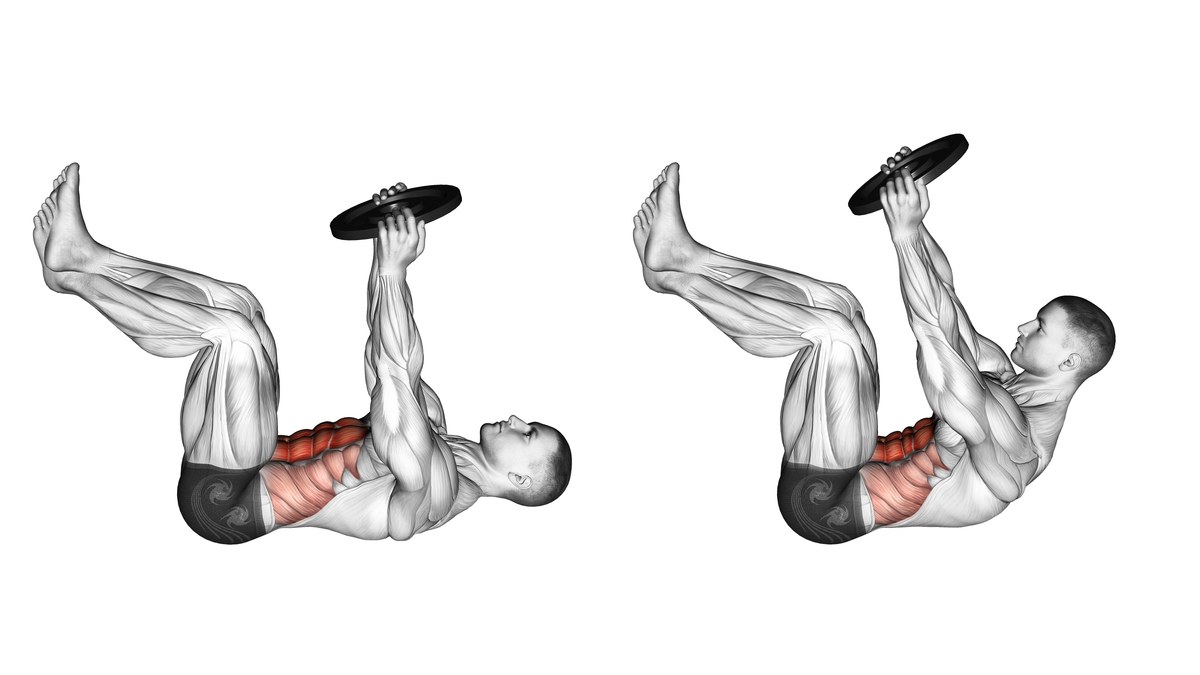
A weighted crunch is a floor crunch performed while holding a weight plate. Curl your head and shoulder blades up while your pelvis stays on the mat, then lower again. It mainly trains the rectus abdominis, with the obliques assisting. The movement stays a short trunk curl rather than continuing into a full sit-up.
How do you perform a weighted crunch?
Set up
- Lie back on a mat with a light plate held securely against your chest in both hands.
- Lift the plate above your chest with your arms nearly straight, keeping it clear of your face.
- Raise your feet and bend your hips and knees until your thighs are nearly upright and your shins roughly level. Settle your pelvis and lower back on the mat.
Execution
- Breathe out and curl your upper back up, bringing your ribs toward your pelvis while the plate rises with your torso.
- Stop when your shoulder blades clear the mat. Keep your pelvis down, your legs still and the bend in your elbows unchanged.
- Lower your upper back gently to the mat, then repeat. When the set ends, put your feet down and bring the plate to your chest before sitting up.
Common mistakes
Throwing the plate forward
A swing can lift the weight while your upper back barely moves. Use a lighter plate and keep the same arm position as you curl and lower.
Rocking the knees toward the chest
Moving the legs back and forth makes it difficult to repeat the same trunk curl. Put your feet on the floor if holding them up distracts you from moving your upper back.
Trying to reach a sitting position
You have passed the intended finish once you lift the whole torso away from the mat. Keep the repetition short enough that your pelvis and lower back stay down, even if that means using less weight.
Where it fits in a session
Add it to your abdominal work after the main exercises in the session.
Begin with bodyweight if you cannot curl and lower without rocking. Choose a plate you can hold securely for every planned repetition. Build up clean repetitions within your chosen range before making a small load increase, and keep the same plate position when comparing sessions.
Muscles worked
Primary
Secondary
Schematic surface view. Some muscles are partly visible or not shown.
The rectus abdominis bends the trunk forward, with the obliques assisting. Adding a plate does not make this a different muscle group from a bodyweight crunch.
Variations
- CrunchRemove the plate to practise the upper-back curl before adding load.
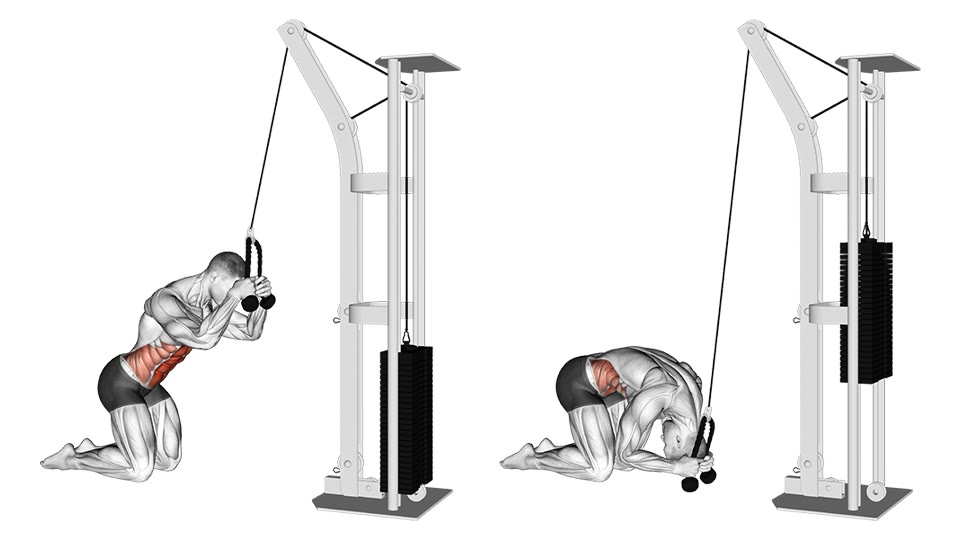
- Cable crunchCurl from a kneeling position against a high cable instead of holding a plate while lying on the floor. Record its stack load separately.
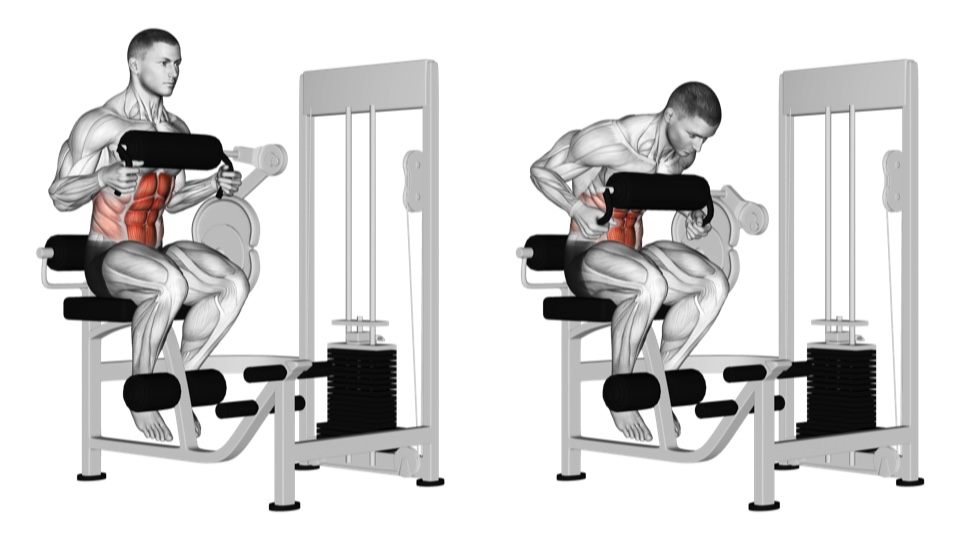
- Machine crunchUses an abdominal machine with its own seat, pads and resistance settings. Keep a separate training history for that setup.
Frequently asked questions
What muscles do weighted crunches work?
The main target is the rectus abdominis, the muscle running down the front of the abdomen. The internal and external obliques assist the trunk curl. These are also the muscles trained by a bodyweight crunch.
Is a weighted crunch the same as a weighted sit-up?
No. A crunch stops with the shoulder blades lifted and the pelvis and lower back still down. A sit-up continues until much more of the torso leaves the floor. Keep separate training records for the two movements.
Do my feet have to stay in the air?
No. The illustration shows bent knees with the feet raised, but you can keep your feet flat with your knees bent instead. Choose a position that lets you keep the legs still and repeat the same upper-back curl. Start with your feet down if the raised position is awkward.
Where should I hold the plate?
The illustration shows it above the chest with the arms nearly straight. Holding it securely against the chest is another option. Choose a position you can control, keep the plate clear of your face and use that same position throughout the set and between comparisons.
How much weight should I start with?
First practise without a plate. Then try a light plate and check that the upper back still curls and lowers without an arm swing or a knee rock. If you cannot keep the same movement for your planned reps, reduce the load. There is no need to match someone else's plate size.
Can I use cable crunches instead?
Yes, if that setup suits your training. A cable crunch uses a high pulley while you kneel; a weighted floor crunch uses a plate in your hands. Learn the cable setup separately and log its stack weight as a different exercise rather than comparing it directly with your plate.
Sources
- Flynn W, Vickerton P. Anatomy, Abdomen and Pelvis: Abdominal Wall. StatPearls. Updated July 24, 2023. https://www.ncbi.nlm.nih.gov/sites/books/NBK551649/
- Varacallo MA, Scharbach S, Al-Dhahir MA. Anatomy, Anterolateral Abdominal Wall Muscles. StatPearls. Updated July 24, 2023. https://www.ncbi.nlm.nih.gov/sites/books/NBK470334/