T-bar row alternatives

A barbell row keeps standing, unsupported horizontal pulling. Chest-supported dumbbell, seated cable and machine rows offer other torso-support setups.

The original uses a fixed, plate-loaded T-bar station while holding a hip hinge. A free bar changes the path; adding a seat or chest pad changes support. Choose each load independently.

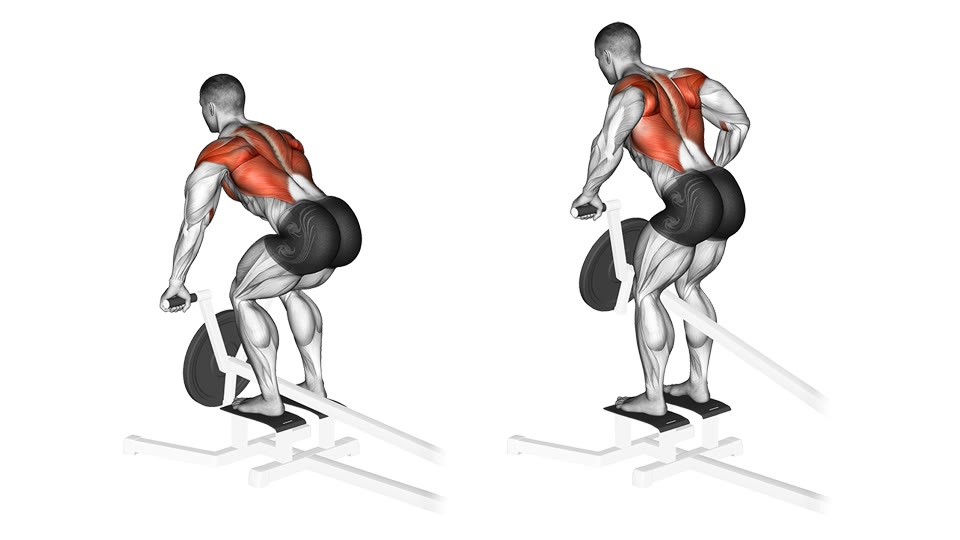
Rear-view anatomical illustration of a plate-loaded T-bar row before and after the handle reaches the torso, with the upper and middle back highlighted.
What equipment can you use?

Choose everything you have. Some exercises need two items, such as dumbbells and a flat bench. Choose floor space for options without equipment.

Your replacements

Choose your equipment above to see replacements.

Compare all alternatives

These options need different equipment. Use the finder above to show only the setups you can use.

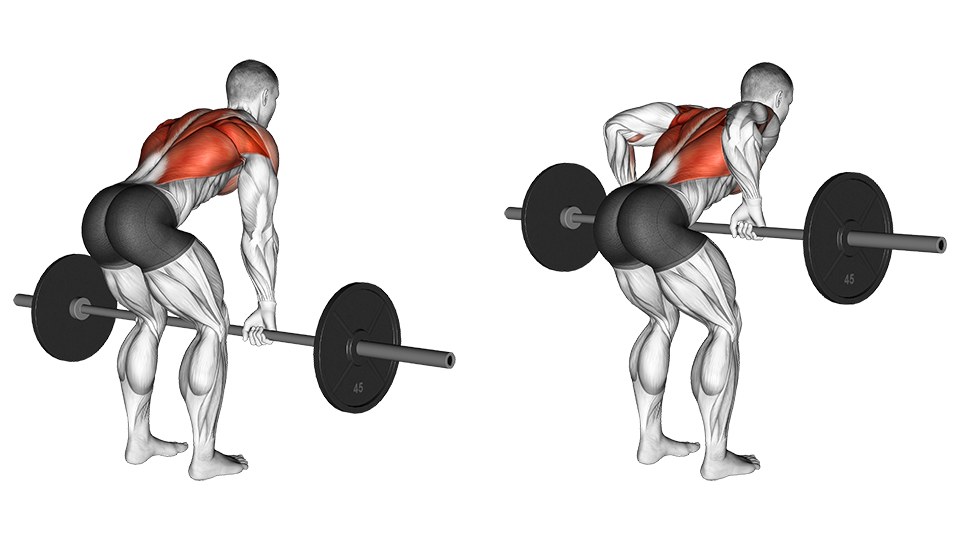
  • Two frames of an anatomical illustration of a barbell bent-over row, side by side on white. A male figure with the skin removed over the back is hinged at the hips with the knees bent and the torso folded to roughly forty-five degrees, holding a barbell with an overhand shoulder-width grip; the bar carries one large plate a side, marked 45. In the left frame the arms hang straight down and the bar is at about knee height. In the right frame the bar has been pulled up to the lower ribs and the elbows are drawn back past the ribcage. In both frames the highlighted muscles are shaded red across the whole upper and middle back — the trapezius, the rhomboids between the shoulder blades, the rear shoulder and the upper latissimus dorsi — while the arms, legs and lower back are left plain.

    Similar movement

    Barbell bent-over row

    You need: Barbell and plates

    Why it fits
    Keeps a two-arm row while the torso holds a hip hinge.
    What changes
    A free bar replaces the station’s fixed lever and handles. The written guide holds the torso close to horizontal even though its illustration is more upright; follow the controlled written setup.
    See exercise guide
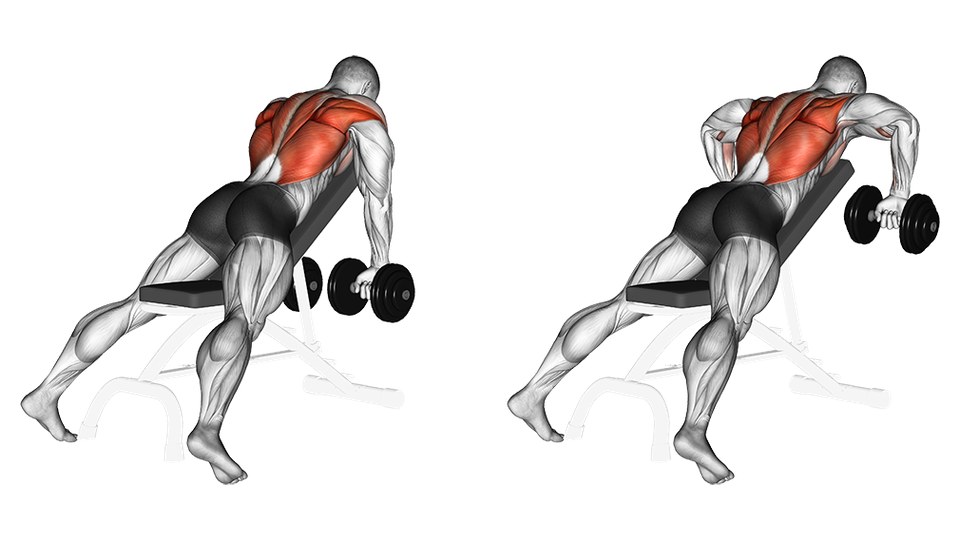
  • Anatomical illustration of a man rowing two dumbbells while lying chest-down on an incline bench, with the upper and middle back highlighted.

    Similar movement

    Chest-supported row

    You need: Dumbbells + Adjustable bench with incline and upright settings

    Why it fits
    Keeps two-arm horizontal pulling with free weights.
    What changes
    Lie chest-down on an incline bench instead of holding an unsupported standing hinge. The chest stays on the pad while two independent dumbbells move.
    See exercise guide
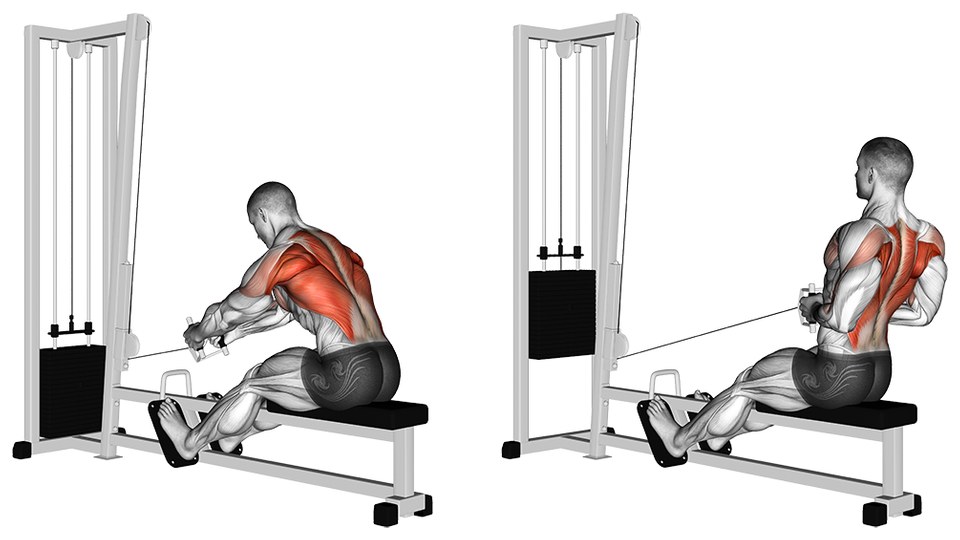
  • Anatomical illustration of a seated cable row in two frames, side by side. In both, a muscle-anatomy figure sits on a flat bench facing a low pulley on a weight-stack tower, feet braced on the machine's footplate and knees slightly bent, holding a short straight bar with a narrow overhand grip. In the left frame the arms are straight out in front and the shoulders reach forward; in the right frame the bar has been drawn in to the midsection with the elbows back past the ribs and the shoulder blades pulled together. Red highlighting in both frames covers the back of the shoulder and the muscles across the upper and middle back either side of the spine, spreading down the outer back in the finish frame.

    Similar movement

    Seated cable row

    You need: Low cable row station with seat, footplate and handle

    Why it fits
    Keeps a two-arm horizontal pull using a close handle.
    What changes
    Sit facing a low pulley with the feet braced and torso upright. The instructions use a neutral handle although the illustration shows an overhand bar; a stack replaces the fixed plate-loaded lever.
    See exercise guide
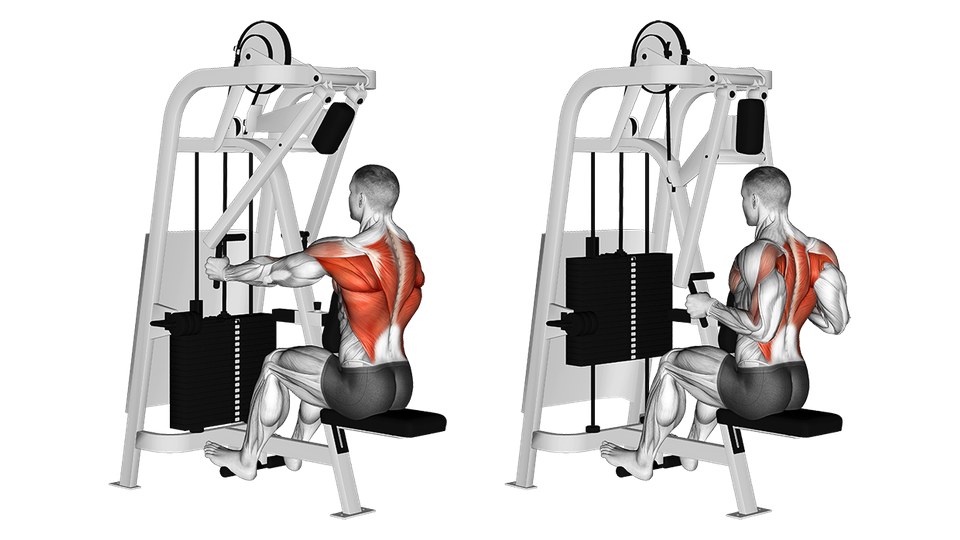
  • Anatomical illustration of a man performing a seated lever machine row, with the upper and middle back highlighted.

    Similar movement

    Machine row

    You need: Seated row machine

    Why it fits
    Keeps a guided two-arm horizontal pull.
    What changes
    A seated lever row replaces the standing T-bar platform and hinge. Adjust the seat and chest pad if present; the guided handle path and working load are specific to that machine.
    See exercise guide
See the original exercise guide

How we choose replacements

These are curated alternatives, chosen for the movement and the job the exercise does in a workout. A shared muscle group is not enough. Read what changes before choosing: support, range of motion, balance and resistance can all differ. If your goal is to improve a specific lift, alternatives do not replace practice of that lift.

Explore alternatives by exercise