Lying leg raise alternatives

Hanging leg raises retain moving-leg work. Reverse crunches and dead bugs offer other floor-based core options, with different pelvic movement or limb coordination.

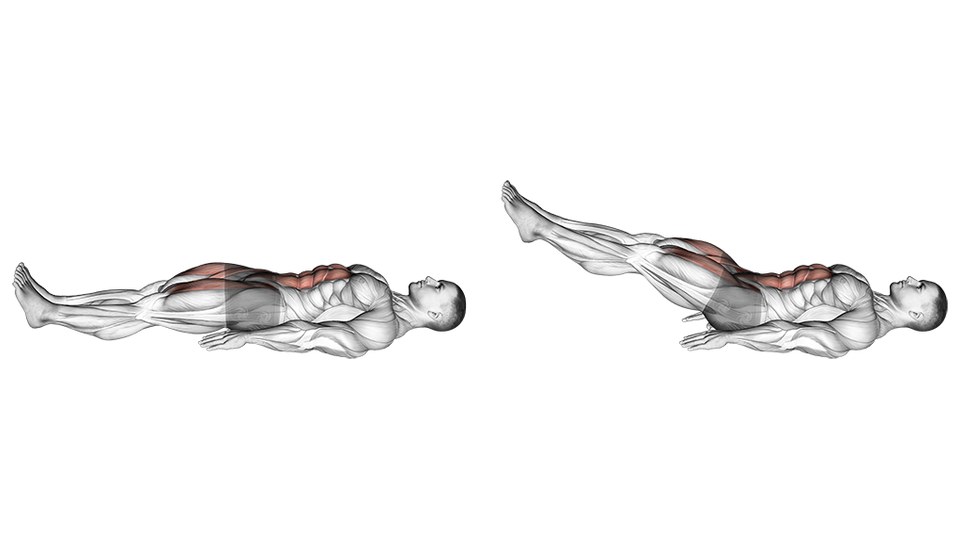
The guide raises both legs toward vertical and stops lowering when the lower back starts to lift. Its illustration shows a lower, partial raise and a floor-resting start; follow the written range control rather than copying those endpoints.

Two frames of an anatomical figure lying face up on the floor, side by side on a white background, with no equipment drawn. In the left frame the legs are straight and together, resting flat on the floor with the arms down at the sides. In the right frame the same figure has raised both straight legs together to roughly thirty degrees above the floor, well short of vertical, with the hands flat on the floor beside the hips. In both frames the abdominal wall along the front and side of the torso is shaded red; the hip flexors at the front of the hip are not coloured.
What equipment can you use?

Choose everything you have. Some exercises need two items, such as dumbbells and a flat bench. Choose floor space for options without equipment.

Your replacements

Choose your equipment above to see replacements.

Compare all alternatives

These options need different equipment. Use the finder above to show only the setups you can use.

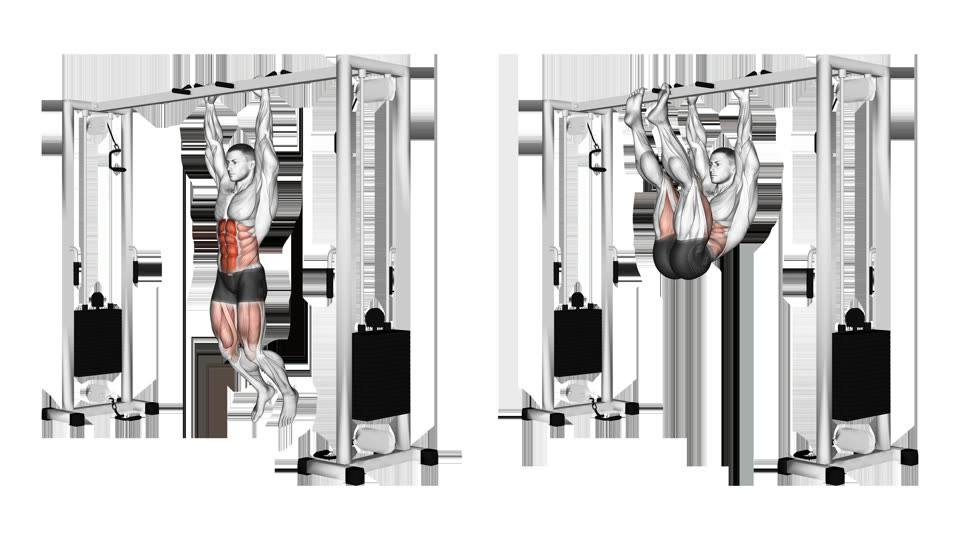
  • Anatomical illustration of a straight-leg hanging leg raise shown from a dead hang to feet near the bar, with the abdominal wall and hip flexors highlighted.

    Similar movement

    Hanging leg raise

    You need: Pull-up bar

    Why it fits
    Keeps controlled leg raising while the trunk stays braced.
    What changes
    You hang from a high bar instead of lying on the floor. The guide adds a pelvic curl at the top; grip, hanging support and swing control change the task.
    See exercise guide
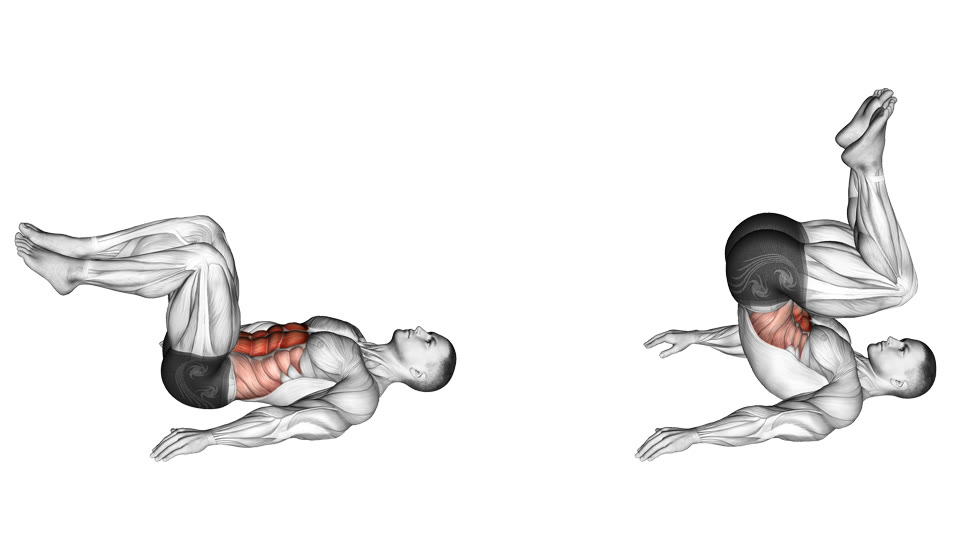
  • Two-frame side-view illustration of a man lying on his back with bent knees, then curling his pelvis so his hips lift and his knees travel toward his chest, with the abdominal wall highlighted.

    Different movement

    Reverse crunch

    You need: Floor space (no equipment)

    Why it fits
    Offers a floor-based core exercise with controlled movement of the pelvis.
    What changes
    Bent knees stay near right angles while the pelvis rolls toward the ribs and lifts slightly. This replaces the core slot rather than copying the straight-leg hip-flexion movement.
    See exercise guide
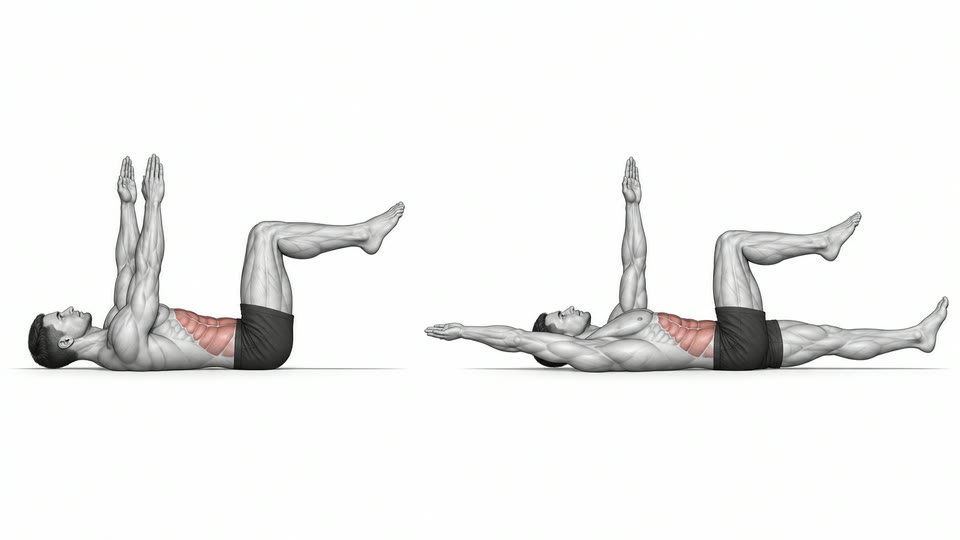
  • Anatomical illustration of a dead bug in two side-view positions: arms and knees raised at the start, then one arm overhead as the opposite leg extends, with the abdominals highlighted.

    Different movement

    Dead bug

    You need: Floor space (no equipment)

    Why it fits
    Offers floor-based trunk control while the limbs move.
    What changes
    The guide reaches one arm and the opposite leg away, then changes sides. It does not raise both legs together; limit each reach before the lower back lifts.
    See exercise guide
See the original exercise guide

How we choose replacements

These are curated alternatives, chosen for the movement and the job the exercise does in a workout. A shared muscle group is not enough. Read what changes before choosing: support, range of motion, balance and resistance can all differ. If your goal is to improve a specific lift, alternatives do not replace practice of that lift.

Explore alternatives by exercise