Overhead cable triceps extension alternatives

An overhead EZ-bar extension or anchored band extension keeps elbow extension with the arms raised. Lying extensions and pushdowns change the upper-arm position.

Keep an overhead option when raised upper arms are the purpose of the slot. Other elbow-extension exercises train through a different shoulder position and require their own load.

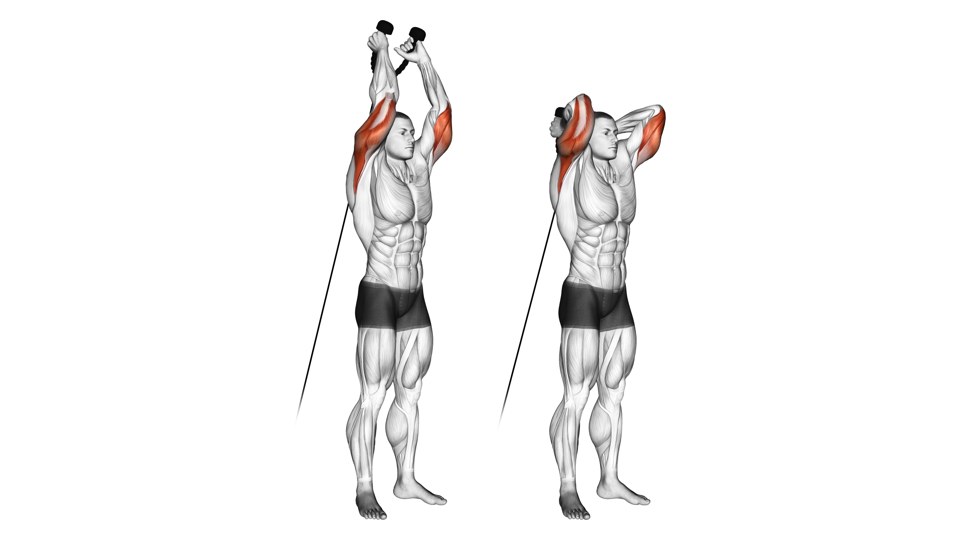
Anatomical illustration of a man performing a standing low-pulley rope overhead triceps extension, with his hands above his head in one frame and behind it in the other, and the triceps highlighted.
What equipment can you use?

Choose everything you have. Some exercises need two items, such as dumbbells and a flat bench. Choose floor space for options without equipment.

Your replacements

Choose your equipment above to see replacements.

Compare all alternatives

These options need different equipment. Use the finder above to show only the setups you can use.

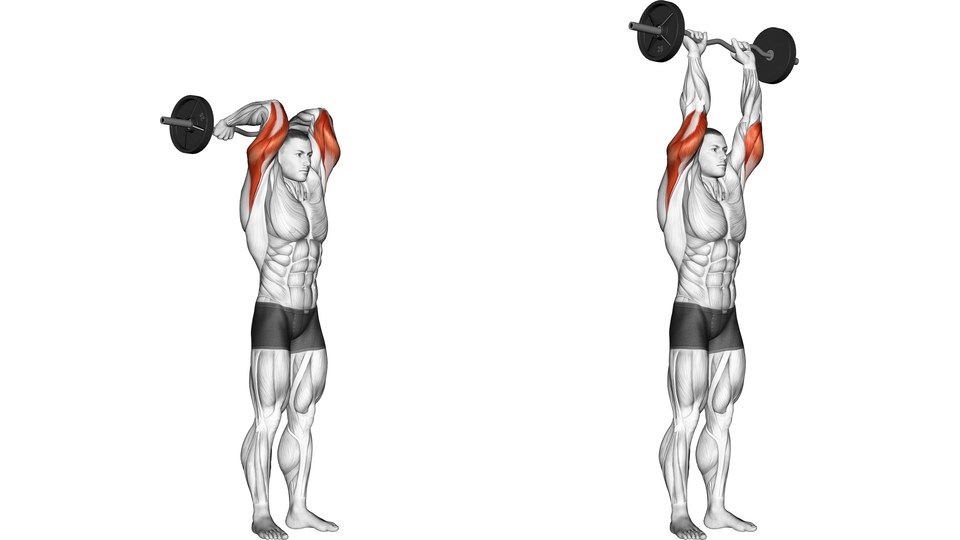
  • Anatomical illustration of a man performing a standing overhead triceps extension with an EZ-bar in two frames, with the triceps highlighted red.

    Similar movement

    Overhead triceps extension

    You need: EZ bar and plates

    Why it fits
    Keeps elbow extension with the upper arms beside the head.
    What changes
    The linked standing guide uses an EZ bar rather than a rope and low cable. Gravity replaces the cable’s pull; choose a weight you can position and lower behind your head.
    See exercise guide
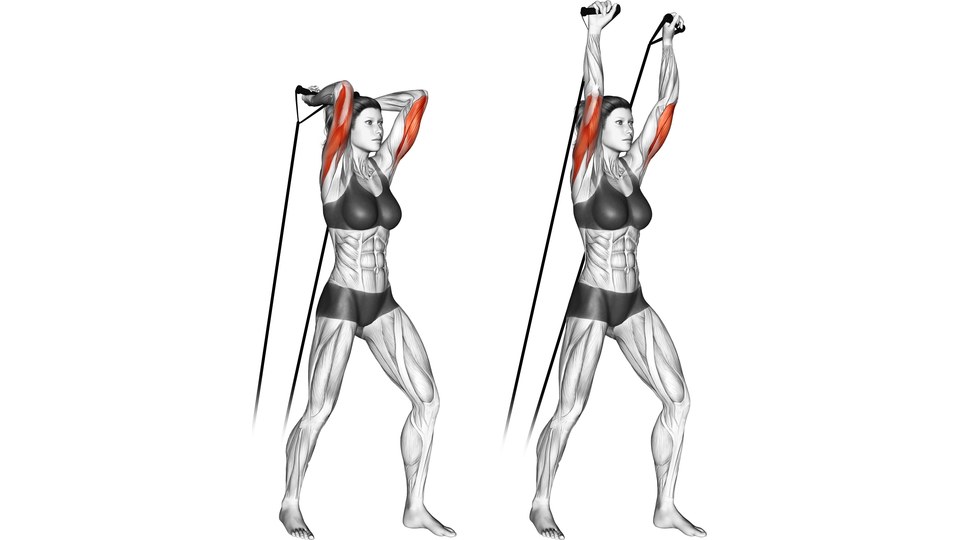
  • Female anatomical model extending both elbows overhead against a band from a split stance, with the triceps shaded red.

    Similar movement

    Band triceps extension

    You need: Resistance band + Pair of compatible resistance-band handles + Secure low band anchor

    Why it fits
    Keeps a standing overhead elbow-extension action.
    What changes
    A band with handles attaches to a secure low anchor behind you. Band tension changes with stretch; keep the band clear of your head and check the attachment.
    See exercise guide
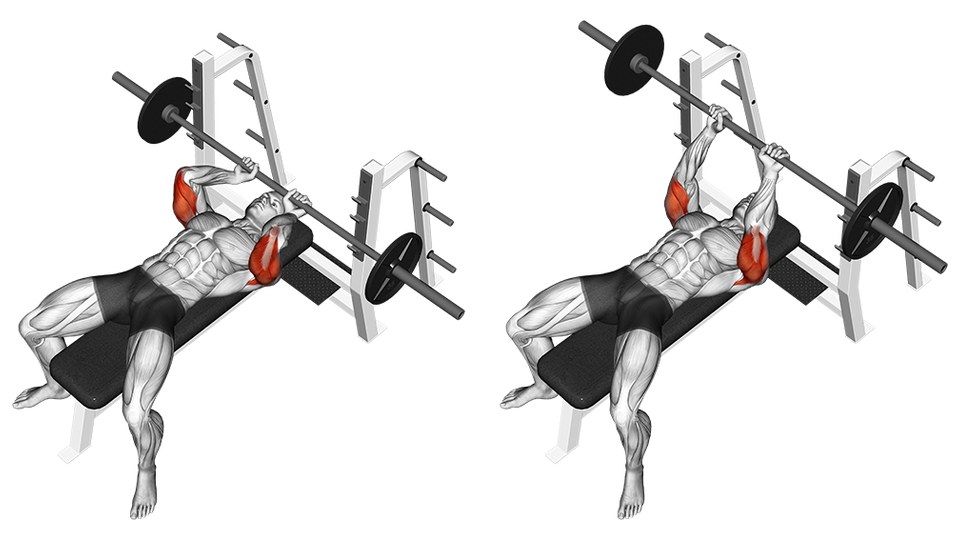
  • Anatomical illustration of a lying barbell triceps extension, two frames side by side. A man lies face up on a flat bench set inside an upright rack, feet flat on the floor, holding a loaded barbell with a close overhand grip. In the left frame the elbows are bent and the bar is lowered toward his forehead, the upper arms angled back over his head; in the right frame the arms are pressed to straight above his chest. Skin is cut away to show the muscles, and in both frames the triceps along the back of each upper arm is shaded red while everything else stays grey.

    Similar movement

    Lying triceps extension

    You need: EZ bar and plates + Flat bench or Barbell and plates + Flat bench

    Why it fits
    Keeps resisted elbow extension with both hands sharing a bar.
    What changes
    The linked guide lies on a flat bench with the upper arms directed upward. That shoulder position differs from standing with the arms overhead; establish a separate load.
    See exercise guide
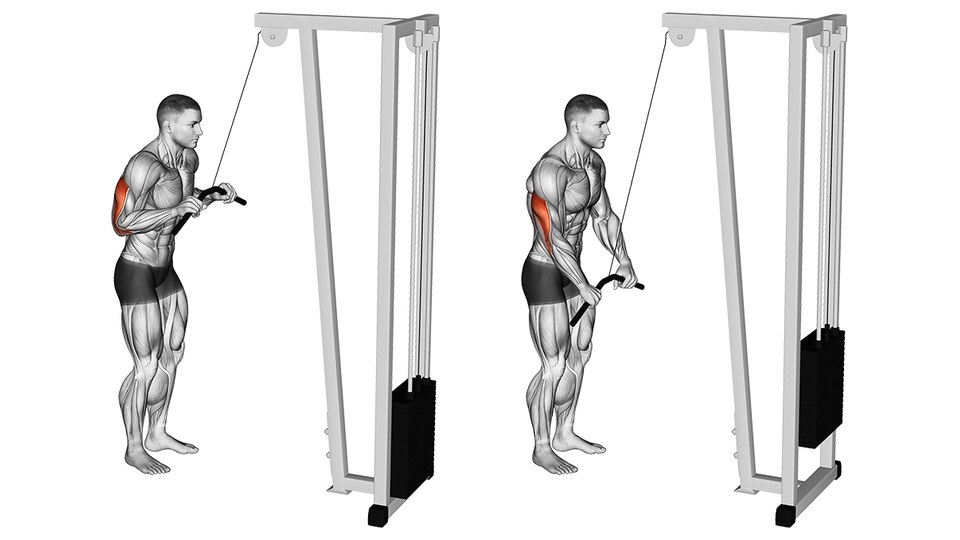
  • Anatomical illustration of a cable triceps pushdown, drawn as two frames side by side on white. A muscle-anatomy figure in shorts stands facing a cable tower, seen from his left side, holding a black angled bar with an overhand grip on a cable running from a pulley at the top of the tower. In the left frame the elbows are bent past a right angle and the bar is at chest height, with the weight stack down. In the right frame the elbows are straight and the bar is down at the front of the thighs, with the stack raised. In both frames the upper arm stays down at the side and the back of the near upper arm is highlighted in red, from the shoulder to the elbow — the triceps.

    Similar movement

    Triceps pushdown

    You need: Adjustable cable pulley set high + Cable rope attachment or Adjustable cable pulley set high + Short cable bar attachment

    Why it fits
    Keeps resisted elbow extension on a cable station.
    What changes
    The upper arms remain beside your torso instead of raised beside the head. Use a high pulley and appropriate attachment; the shoulder position and cable direction change.
    See exercise guide
See the original exercise guide

How we choose replacements

These are curated alternatives, chosen for the movement and the job the exercise does in a workout. A shared muscle group is not enough. Read what changes before choosing: support, range of motion, balance and resistance can all differ. If your goal is to improve a specific lift, alternatives do not replace practice of that lift.

Explore alternatives by exercise