Dumbbell fly alternatives

A machine chest fly or cable crossover keeps a chest-fly action. A dumbbell bench press uses the same basic equipment for a broader compound press.

A fly keeps the elbow bend nearly fixed. Switching to a press changes the exercise’s joint actions, while machines and cables change support and resistance direction.

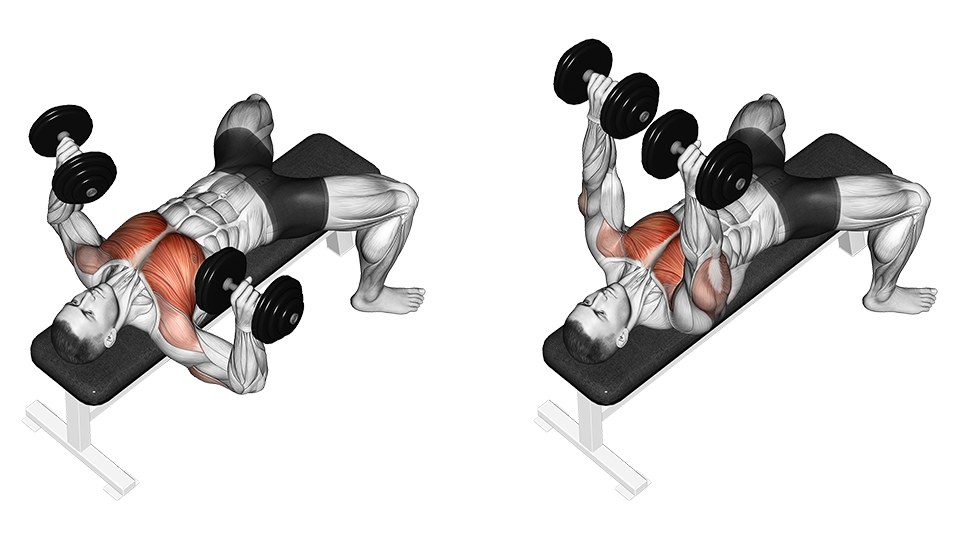
Two-frame anatomical illustration of a flat-bench dumbbell fly on a white background. In the left frame, a man lies on a flat bench with his feet on the floor and holds a dumbbell in each hand. His arms are open wide at chest level with a small bend in both elbows and his palms facing inward. In the right frame, the same man has brought the dumbbells together above his chest while keeping the slight elbow bend. The pectoralis major is shaded bright red in both frames. Lighter shading also appears over the front of the shoulders, biceps and parts of the forearms.
What equipment can you use?

Choose everything you have. Some exercises need two items, such as dumbbells and a flat bench. Choose floor space for options without equipment.

Your replacements

Choose your equipment above to see replacements.

Compare all alternatives

These options need different equipment. Use the finder above to show only the setups you can use.

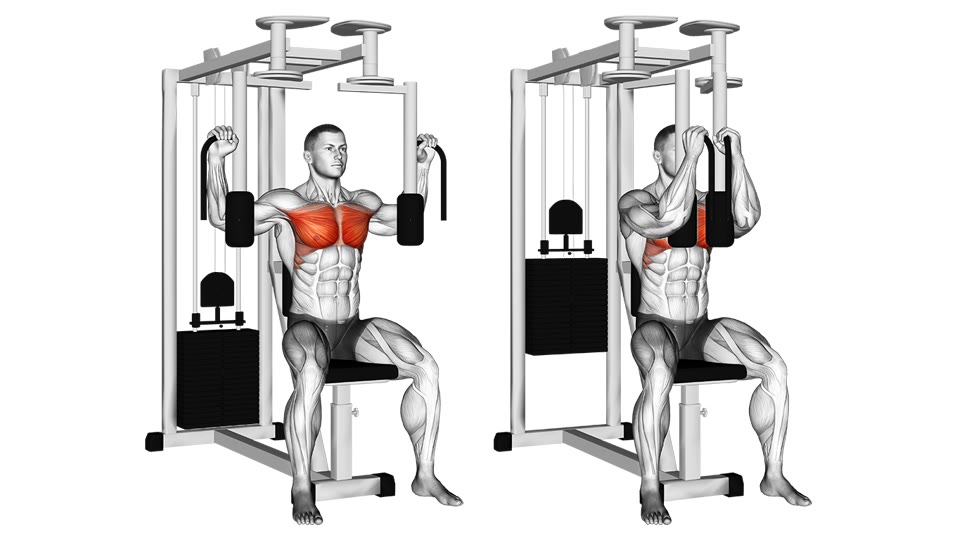
  • Anatomical illustration of a seated pec deck fly before and after the arm pads move together, with the chest highlighted.

    Similar movement

    Machine chest fly

    You need: Seated chest fly machine with forearm pads

    Why it fits
    Keeps a wide chest-fly action with the torso supported.
    What changes
    The linked guide uses seated forearm pads rather than free weights. The machine guides the arm arc and has its own load scale.
    See exercise guide
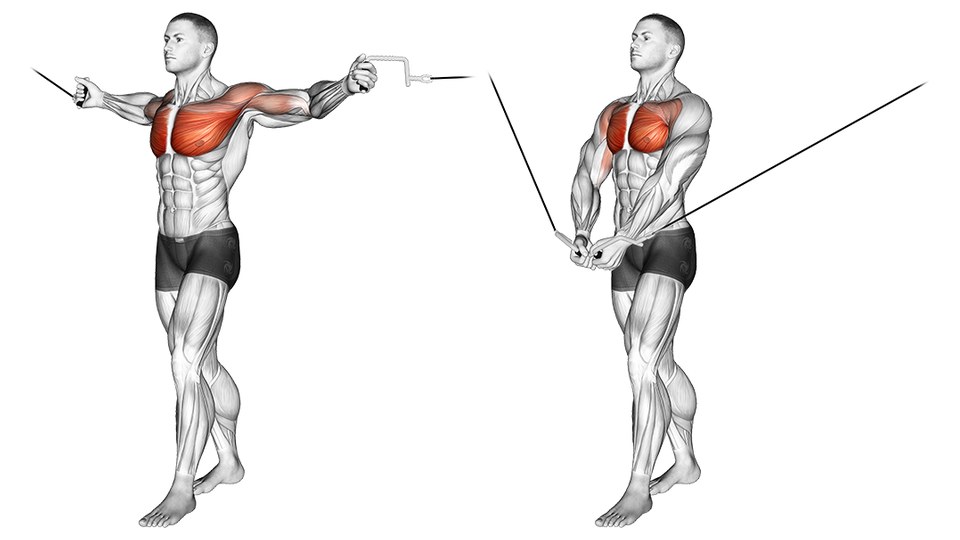
  • Two frames of a standing cable crossover, side by side. A muscular figure stands in a split stance, one foot forward and flat and the rear heel lifted, torso upright, holding a handle in each hand. The machine itself is not drawn: each cable runs up and away out of the frame, so the two high pulleys are implied rather than shown, and there is no upright or weight stack in the picture. In the left frame the arms are open wide at shoulder height with the cables taut and the elbows slightly bent. In the right frame the arms have swept down and forward along a wide arc so the two handles meet in front of the hips, the elbow bend unchanged. The chest is shaded red in both frames, across the whole of the pectoral muscle rather than an upper or lower portion; the rest of the body is drawn in grey.

    Similar movement

    Cable crossover

    You need: Two adjustable cable pulleys set high + Pair of single cable handles

    Why it fits
    Keeps a chest fly with a small, fixed elbow bend.
    What changes
    Stand between two high pulleys and sweep the handles down toward the hips. Both pulleys and handles are required; the standing path differs from a flat-bench fly.
    See exercise guide
  • Anatomical illustration of a flat dumbbell bench press in two frames, side by side on white. In the left frame the lifter lies on a flat bench at the bottom of the rep, palms facing forward, elbows out and down so the upper arms sit at about the line of the torso and the dumbbells are level with the chest. In the right frame the same lifter is at lockout, arms straight overhead with the dumbbells close together above the shoulders. Both figures are drawn with the skin removed to show the muscles, and the chest is shaded red in both frames, with the back of the upper arm picked out in the lockout frame. Feet are flat on the floor and the shoulder blades stay on the bench.

    Different movement

    Dumbbell bench press

    You need: Dumbbells + Flat bench

    Why it fits
    Can fill a broader compound pressing slot with dumbbells and a flat bench.
    What changes
    The elbows bend and straighten instead of staying nearly fixed. A press shares the work with elbow extension, so it is not the same chest-fly exercise or working load.
    See exercise guide
See the original exercise guide

How we choose replacements

These are curated alternatives, chosen for the movement and the job the exercise does in a workout. A shared muscle group is not enough. Read what changes before choosing: support, range of motion, balance and resistance can all differ. If your goal is to improve a specific lift, alternatives do not replace practice of that lift.

Explore alternatives by exercise