Pull-up alternatives

An assisted pull-up or lat pulldown offers adjustable vertical pulling. Chin-ups change the grip, a band pulldown uses an anchor, and a dumbbell row offers a broader horizontal-pulling option.

Equipment availability does not tell you whether an unassisted bodyweight pull is manageable. Keep vertical pulling when that is the purpose of the slot; a row changes the direction.

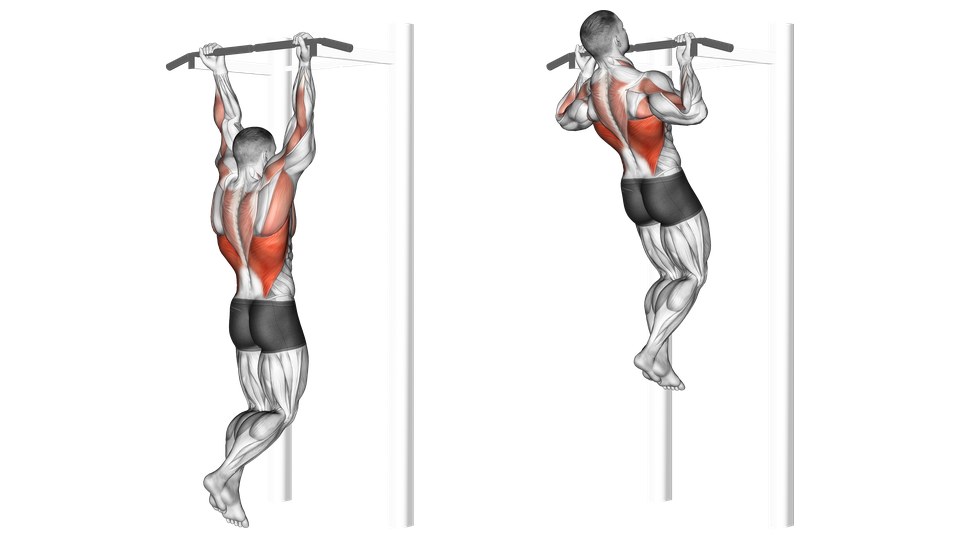
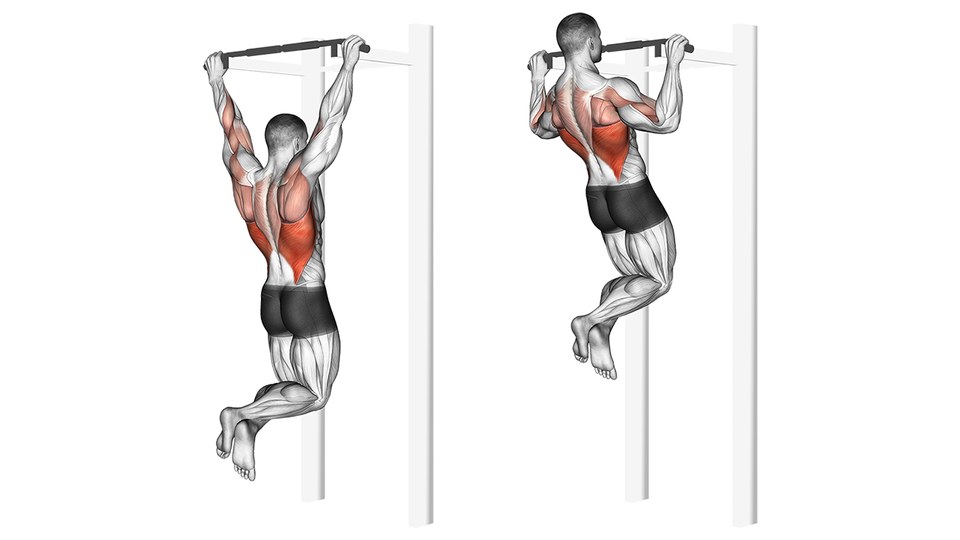
Two frames of an anatomical illustration of a wide-grip pull-up, seen from behind, side by side on white. Left: the man hangs at full stretch from a bar fixed between two uprights, arms straight overhead, hands well outside shoulder width, palms facing away, knees bent and the feet tucked up behind him. Right: the top of the rep, chin level with the bar, elbows bent and driven down and out. Highlighted in red in both frames is the whole back of the pulling chain rather than one muscle — the fan of the latissimus dorsi down the ribs, the teres and rear-shoulder region under the armpit, and the muscles between and around the shoulder blades, which light up most strongly in the top-position frame. The backs of the upper arms are shaded too; the biceps and forearms face away from the viewer and cannot be seen, and the front of the body is not visible from this angle.
What equipment can you use?

Choose everything you have. Some exercises need two items, such as dumbbells and a flat bench. Choose floor space for options without equipment.

Your replacements

Choose your equipment above to see replacements.

Compare all alternatives

These options need different equipment. Use the finder above to show only the setups you can use.

  • Two rear-view anatomical illustrations of a man using a counterweighted assisted pull-up machine on a white background. In the left frame he is near the top of the repetition with his elbows bent and his chin close to the angled handles. In the right frame his arms are straight overhead and his body and the black knee pad are lower. Both knees stay on the pad in both frames, and the silver machine frame and black weight stack are visible. Red shading covers the latissimus dorsi along the sides of his back, the upper and middle back, the rear shoulders, and parts of the upper arms and forearms; his lower body is unshaded.

    Similar movement

    Assisted pull-up

    You need: Assisted pull-up machine

    Why it fits
    Keeps an overhand bodyweight pull with a counterweighted pad providing support.
    What changes
    More assistance reduces the bodyweight you must lift. The pad moves with you; follow the guide for getting on and off, and log assistance separately from added weight.
    See exercise guide
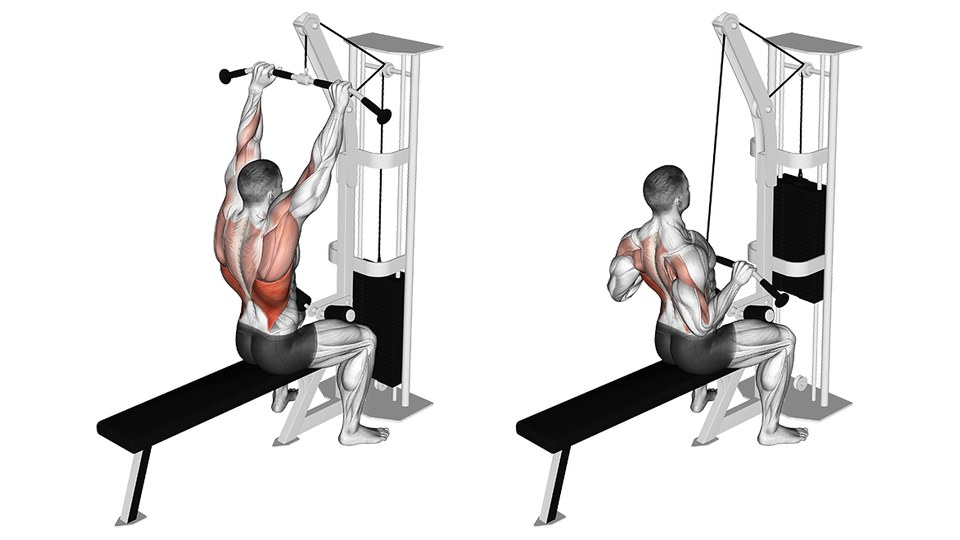
  • Two frames of an anatomical illustration of a seated cable lat pulldown, seen from behind. On the left the lifter sits on a flat bench facing a weight-stack machine with both arms straight overhead, gripping a wide cambered lat bar overhand at more than shoulder width; the bar hangs from a single cable over the head. On the right the bar has been pulled down in front of the head to shoulder height, elbows driven down and out to the sides, the middle of the bar hidden by the head and shoulders because it passes in front of the body. Shaded in red across both frames: the latissimus dorsi sweeping from the lower back up to the armpit, the teres major and the muscles between the shoulder blades, the whole trapezius from the neck down to mid-back, the rear shoulders and the upper arms. The spinal column strip and the legs are left unshaded.

    Similar movement

    Lat pulldown

    You need: Lat pulldown station with bar, seat and thigh pad

    Why it fits
    Keeps an overhand vertical pull with an adjustable external load.
    What changes
    You sit beneath a thigh pad and pull a bar to your upper chest instead of raising your body to a fixed bar. The stack load does not equal your pull-up load.
    See exercise guide
  • Two rear-view anatomical illustrations of a man performing an underhand chin-up on a fixed bar against a white background. In the left frame he hangs with straight arms and hands about shoulder width apart, the backs of his hands facing the viewer because his palms face him. In the right frame his elbows are bent beside his torso and his chin reaches the bar. His knees stay slightly bent and his feet overlap behind him in both positions. Red shading covers the latissimus dorsi along both sides of the back, the upper and middle back around the shoulder blades, the rear shoulders, and the upper-arm and forearm areas around the elbow flexors; the legs are unshaded.

    Similar movement

    Chin-up

    You need: Pull-up bar

    Why it fits
    Keeps an unassisted vertical bodyweight pull to a bar.
    What changes
    Your palms face you rather than away. It still requires lifting your bodyweight and is not automatically an easier option for everyone.
    See exercise guide
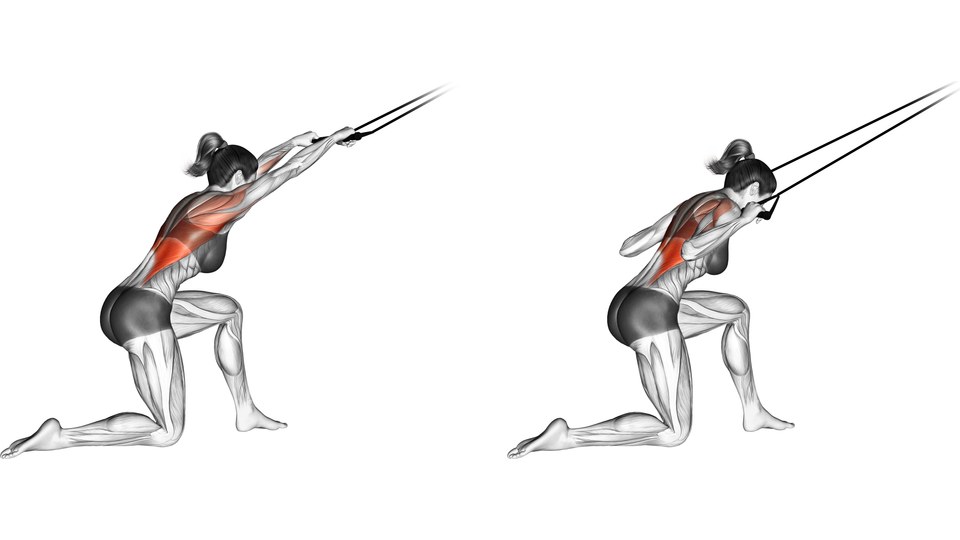
  • Female anatomical model performing a half-kneeling band pulldown in two frames, with the back muscles shaded red.

    Similar movement

    Band lat pulldown

    You need: Resistance band + Pair of compatible resistance-band handles + Secure high band anchor + Padded floor mat

    Why it fits
    Keeps an overhead pulling action using a securely anchored band.
    What changes
    The band stretches as you pull instead of supporting your body. Follow the linked half-kneeling setup and check the high anchor before starting.
    See exercise guide
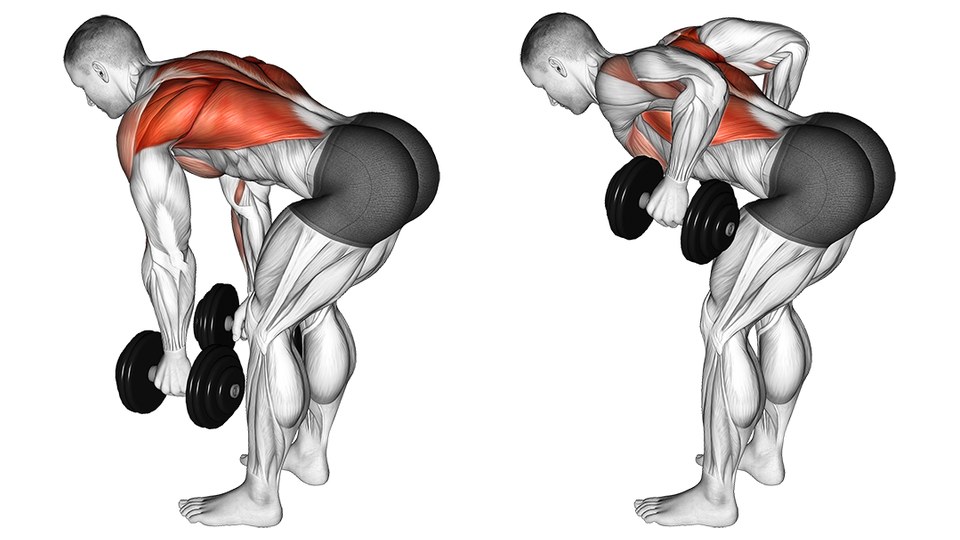
  • Anatomical illustration of a bent-over row with a dumbbell in each hand, shown twice side by side on a white background. The figure is a muscle model seen from behind and slightly above, hinged at the hips with the torso close to parallel to the floor and the knees softly bent, bare feet flat, holding a plate-loaded dumbbell in each hand with a neutral grip. In the left frame the arms hang straight down at the bottom of the rep; in the right frame both dumbbells have been pulled up to the sides of the ribcage with the elbows behind the body. Shaded red in both frames are the upper back muscles across both sides — the latissimus dorsi sweeping up the back, the trapezius and the muscles between the shoulder blades, and the rear of the shoulder — with a strip of the forearm coloured in the left frame. No bench appears; the lifter is standing.

    Different movement

    Dumbbell row

    You need: Dumbbells + Flat bench

    Why it fits
    Can fill a broader back-training slot with a supported one-arm pull.
    What changes
    The pull is horizontal rather than vertical. Follow the guide’s hand-and-knee bench setup for one arm at a time; its illustration shows a two-arm variant. Train both sides and select a fresh dumbbell load.
    See exercise guide
See the original exercise guide

How we choose replacements

These are curated alternatives, chosen for the movement and the job the exercise does in a workout. A shared muscle group is not enough. Read what changes before choosing: support, range of motion, balance and resistance can all differ. If your goal is to improve a specific lift, alternatives do not replace practice of that lift.

Explore alternatives by exercise