Bulgarian split squat alternatives

Dumbbell split squats, reverse lunges and step ups offer other ways to train one leg at a time. A leg press is a broader supported, two-leg option.

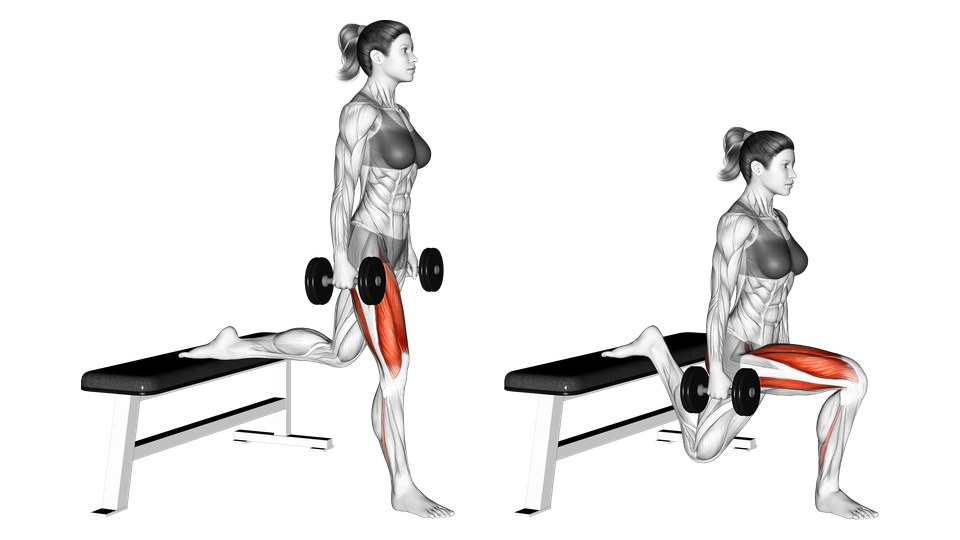
The original raises the rear foot on a bench. Keeping it on the floor, stepping backward or stepping onto a platform changes balance, range and how much the rear leg contributes.

Anatomical illustration of a woman performing a dumbbell Bulgarian split squat with her rear foot on a bench and front thigh muscles highlighted.
What equipment can you use?

Choose everything you have. Some exercises need two items, such as dumbbells and a flat bench. Choose floor space for options without equipment.

Your replacements

Choose your equipment above to see replacements.

Compare all alternatives

These options need different equipment. Use the finder above to show only the setups you can use.

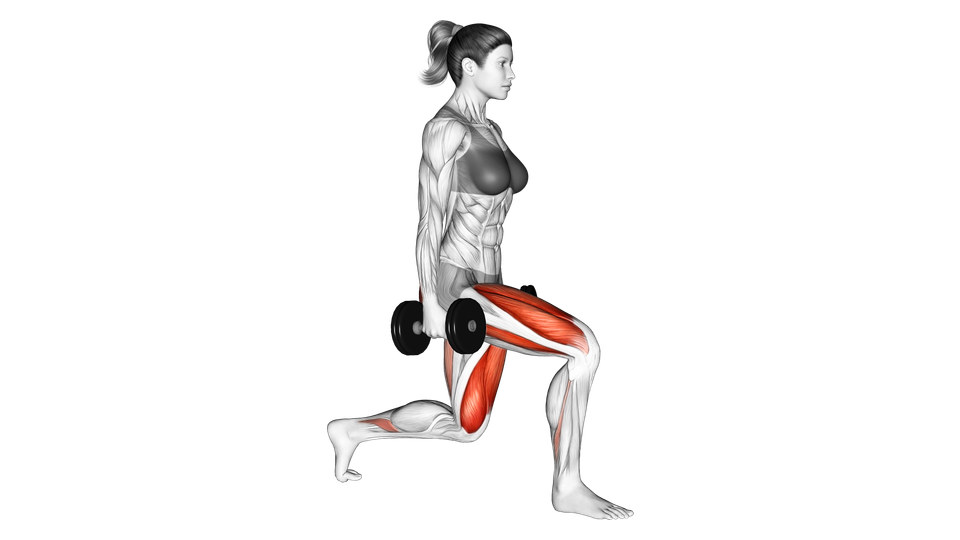
  • Side-view anatomical illustration of the bottom position of a dumbbell split squat, with a dumbbell held at each side, both feet on the floor and the thigh muscles highlighted.

    Similar movement

    Dumbbell split squat

    You need: Dumbbells

    Why it fits
    Keeps a stationary split-stance exercise with dumbbells at your sides.
    What changes
    Both feet stay on the floor instead of supporting the rear foot on a bench. Set the stance for a controlled depth and complete the same planned work on both sides.
    See exercise guide
  • Similar movement

    Reverse lunges

    You need: Floor space (no equipment)

    Why it fits
    Keeps a front-leg-focused split-stance lowering and rising action.
    What changes
    The linked guide is unloaded and steps backward on each rep. The stance moves instead of remaining fixed, and it does not preserve the original dumbbell load.
    See exercise guide
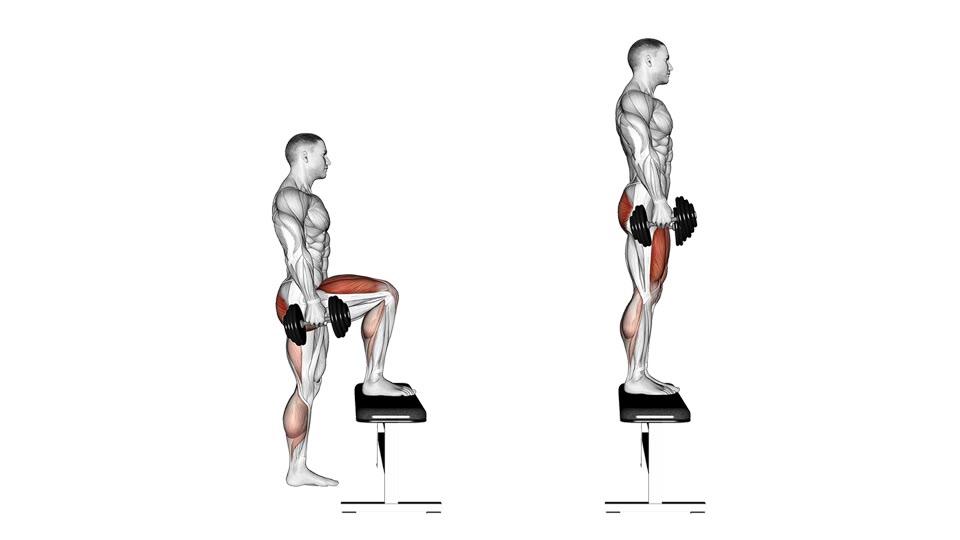
  • Side-view anatomical illustration of a dumbbell step up before and after standing on a platform, with the thighs and glutes highlighted.

    Similar movement

    Step ups

    You need: Dumbbells + Stable raised step supporting the whole foot

    Why it fits
    Keeps leg work performed one side at a time.
    What changes
    You stand onto a raised platform rather than lowering in a split stance. The linked guide holds dumbbells; support the whole lead foot and control the descent.
    See exercise guide
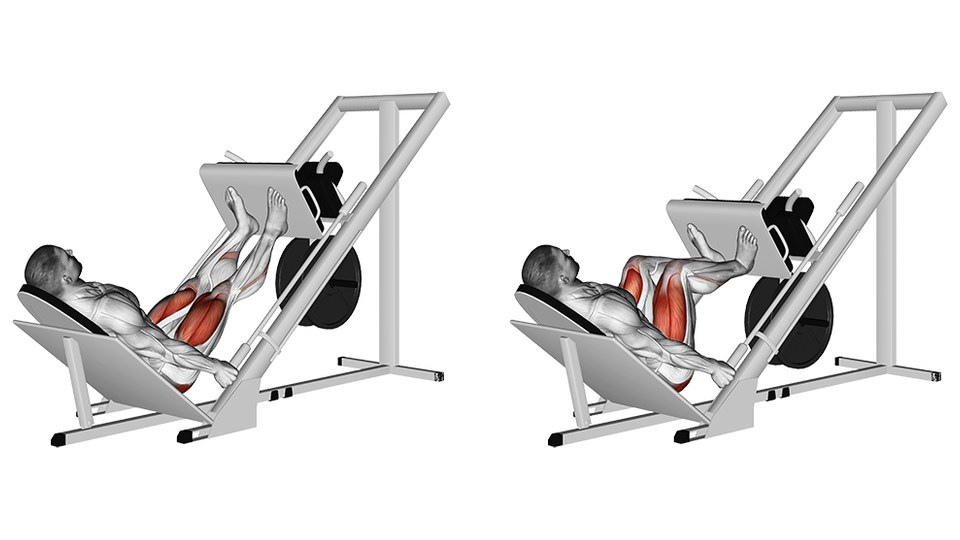
  • Anatomical illustration of a 45-degree sled leg press, shown as two frames side by side. In both, a grey muscle-anatomy figure lies back on the angled seat of a plate-loaded sled machine with a weight plate on the carriage and both feet flat on the footplate. On the left the legs are almost straight at the top of the push, the sled high on the rails; on the right the carriage has come down and the knees are bent past a right angle, thighs close to the chest. The muscles of the thighs are highlighted in red along their whole length, the upper inner thigh at the hip most strongly; the buttocks are pressed against the pad and are not visible.

    Different movement

    Leg press

    You need: 45-degree leg press with a suitable calf-press footplate

    Why it fits
    Can fill a broader leg-training slot with back support.
    What changes
    The linked guide presses with both legs together. It removes the split stance and rear-foot elevation, so it is not a substitute for unilateral balance practice.
    See exercise guide
See the original exercise guide

How we choose replacements

These are curated alternatives, chosen for the movement and the job the exercise does in a workout. A shared muscle group is not enough. Read what changes before choosing: support, range of motion, balance and resistance can all differ. If your goal is to improve a specific lift, alternatives do not replace practice of that lift.

Explore alternatives by exercise