Goblet squat alternatives

Bodyweight, front and back squats keep a two-leg squat. A dumbbell split squat can fill a broader leg-training slot when you want to work one side at a time.

Holding one dumbbell at your chest is part of the original setup. Removing it, moving the load to a bar or using a split stance changes load limits and balance.

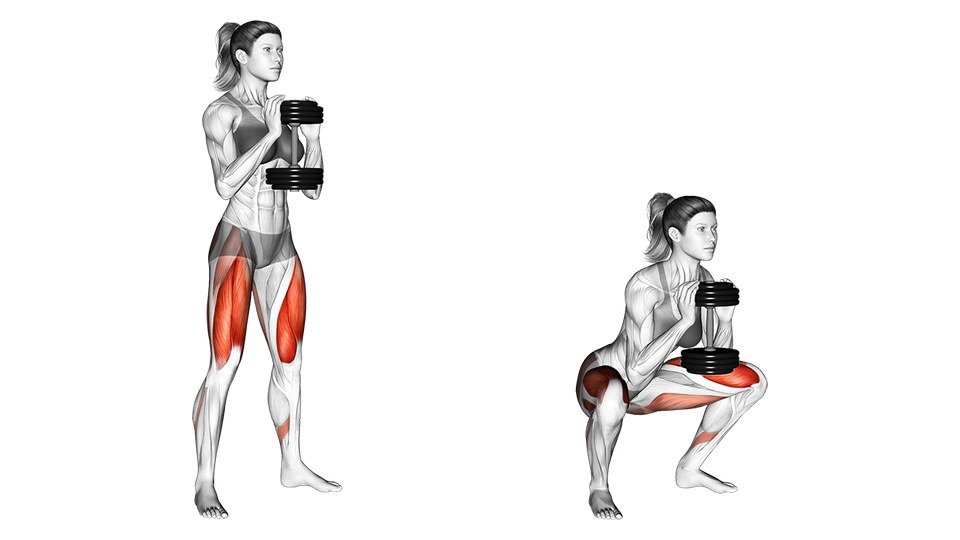
Anatomical illustration of a woman holding one dumbbell at her chest while performing a goblet squat, with the thighs and glutes highlighted.
What equipment can you use?

Choose everything you have. Some exercises need two items, such as dumbbells and a flat bench. Choose floor space for options without equipment.

Your replacements

Choose your equipment above to see replacements.

Compare all alternatives

These options need different equipment. Use the finder above to show only the setups you can use.

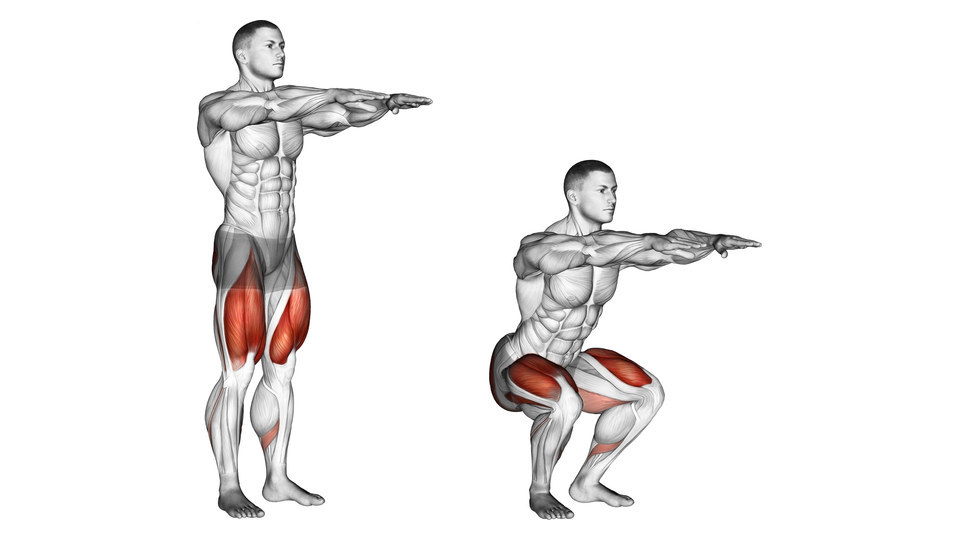
  • Two-frame anatomical illustration of a bodyweight squat on a white background. On the left, a man stands with his feet a little wider than his hips, toes turned slightly out and both arms extended forward at shoulder height. On the right, the same man is in a deep squat with his heels planted, knees bent outward over his feet, hips below his knees and torso leaning forward while his arms remain extended. No equipment or external weight is shown. The quadriceps, glute area, inner thighs and part of the lower legs are highlighted red.

    Similar movement

    Bodyweight squat

    You need: Floor space (no equipment)

    Why it fits
    Keeps a two-leg squat without having to hold a weight.
    What changes
    There is no external load at the chest. It may be too light for a loaded strength slot; choose a controlled range rather than assuming the same repetitions provide the same demand.
    See exercise guide
  • Two anatomical illustrations of a man performing a barbell front squat against a white background. In the left frame he stands upright with a loaded bar resting across the fronts of his shoulders, fingertips under the bar and elbows pointing forward. In the right frame he holds the same front-rack position at the bottom of a deep squat, with his heels down, knees following his slightly turned-out feet and hips below knee height. The quadriceps are highlighted bright red in both frames. The glute area, inner thighs and part of the lower legs are also shaded red in the bottom frame. No squat rack, safety arms or collars are shown.

    Similar movement

    Front squat

    You need: Barbell and plates + Squat rack with safeties

    Why it fits
    Keeps a front-loaded two-leg squat.
    What changes
    The bar rests across the shoulders rather than being held in both palms. You need a front rack, suitable safeties and a load you can control in that position.
    See exercise guide
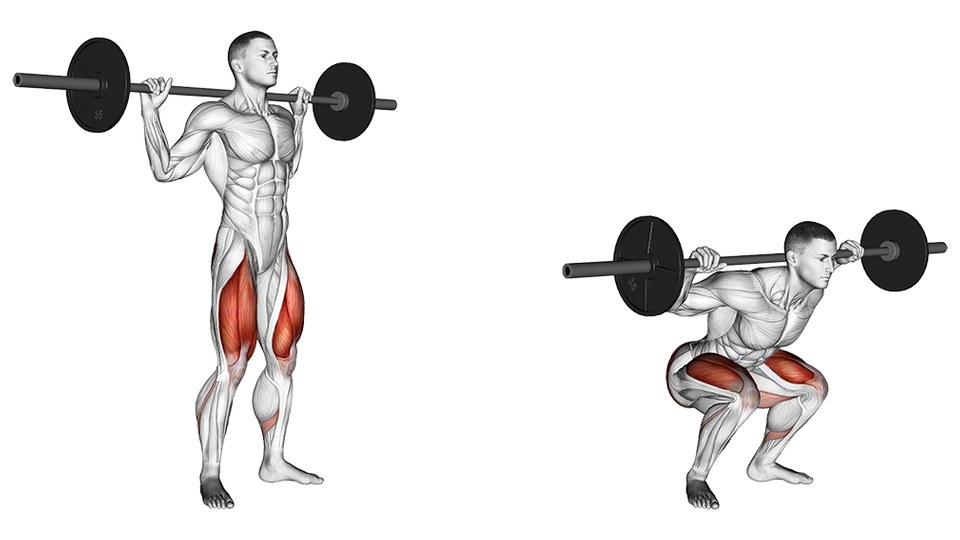
  • Two-frame anatomical illustration of a barbell back squat on a white background. On the left a muscular male figure stands upright, seen square from the front, with a loaded barbell across his upper back and both hands gripping it wide; from the front the bar's height on the back cannot be read. The fronts of both thighs are shaded red, as is a strip down the front of each shin. On the right the same figure is at the bottom of the rep, seen from the side and a little behind, hips at or below the knees in a deep squat with the feet flat and the toes turned out slightly; from this angle the red shading covers the fronts of the thighs and the inner thigh running up toward the groin. The buttock is in view in that frame and is not shaded, and nothing on the back of the thigh is shaded in either.

    Similar movement

    Barbell back squat

    You need: Barbell and plates + Squat rack with safeties

    Why it fits
    Keeps a two-leg squat with an external load.
    What changes
    The bar moves to the upper back and requires unracking and re-racking. Load position and torso demands differ from a chest-held dumbbell.
    See exercise guide
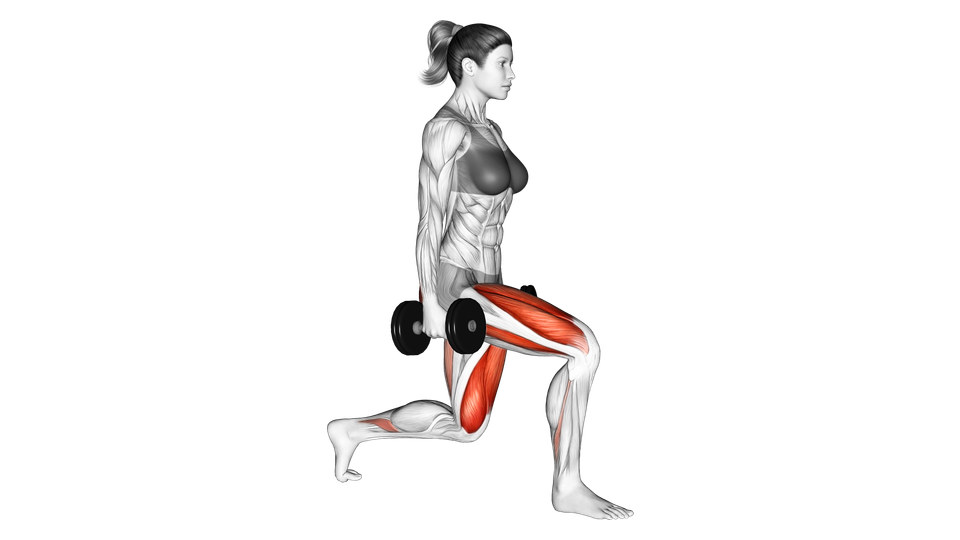
  • Side-view anatomical illustration of the bottom position of a dumbbell split squat, with a dumbbell held at each side, both feet on the floor and the thigh muscles highlighted.

    Different movement

    Dumbbell split squat

    You need: Dumbbells

    Why it fits
    Can fill a broader leg-training slot using dumbbells and a stationary stance.
    What changes
    One leg works at a time with the weights hanging at your sides. Both feet remain on the floor; complete work on each side instead of copying a two-leg set.
    See exercise guide
See the original exercise guide

How we choose replacements

These are curated alternatives, chosen for the movement and the job the exercise does in a workout. A shared muscle group is not enough. Read what changes before choosing: support, range of motion, balance and resistance can all differ. If your goal is to improve a specific lift, alternatives do not replace practice of that lift.

Explore alternatives by exercise