Lunge alternatives

Reverse lunges and walking lunges keep a stepping lunge. Dumbbell split squats and Bulgarian split squats offer a stationary stance instead.

The original is a forward lunge that returns to standing. Check whether the replacement is unloaded, moving or stationary, and count work on each leg.

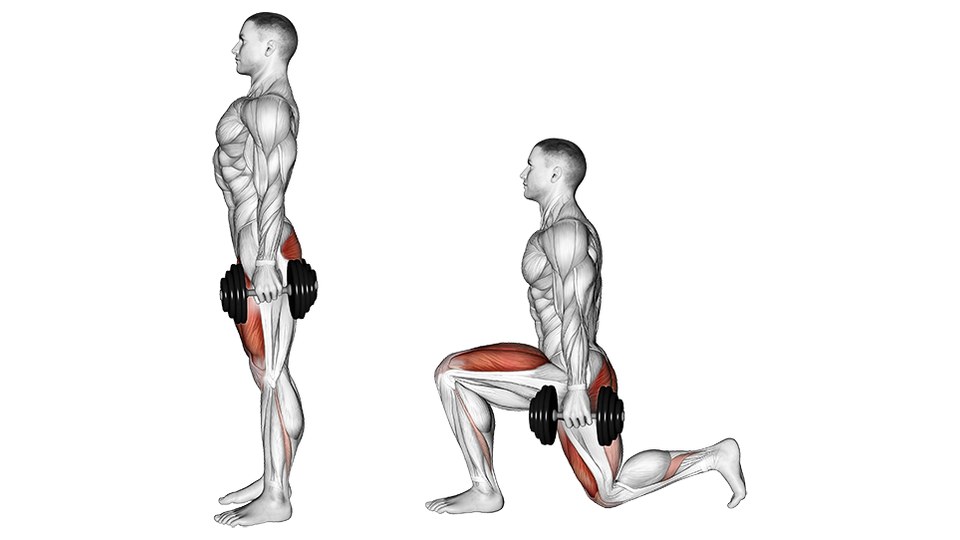
Two frames of an anatomical illustration of a dumbbell lunge, side by side on a white background, both seen in profile. On the left the figure stands upright with a dumbbell hanging in each hand at his sides, feet together, the quadriceps shaded red down the front of the thigh and a narrower red strip running down the front of the shin. On the right he is at the bottom of the rep: front knee bent to about a right angle with the shin near vertical, back leg trailing behind with the back knee just above the floor and the heel lifted, torso upright, dumbbells still hanging at his sides. The red shading there covers the quadriceps of both the leading and the trailing thigh. The buttock is in view at this angle and is not shaded.
What equipment can you use?

Choose everything you have. Some exercises need two items, such as dumbbells and a flat bench. Choose floor space for options without equipment.

Your replacements

Choose your equipment above to see replacements.

Compare all alternatives

These options need different equipment. Use the finder above to show only the setups you can use.

  • Similar movement

    Reverse lunges

    You need: Floor space (no equipment)

    Why it fits
    Keeps a stepping split-stance exercise with the front leg doing the main work.
    What changes
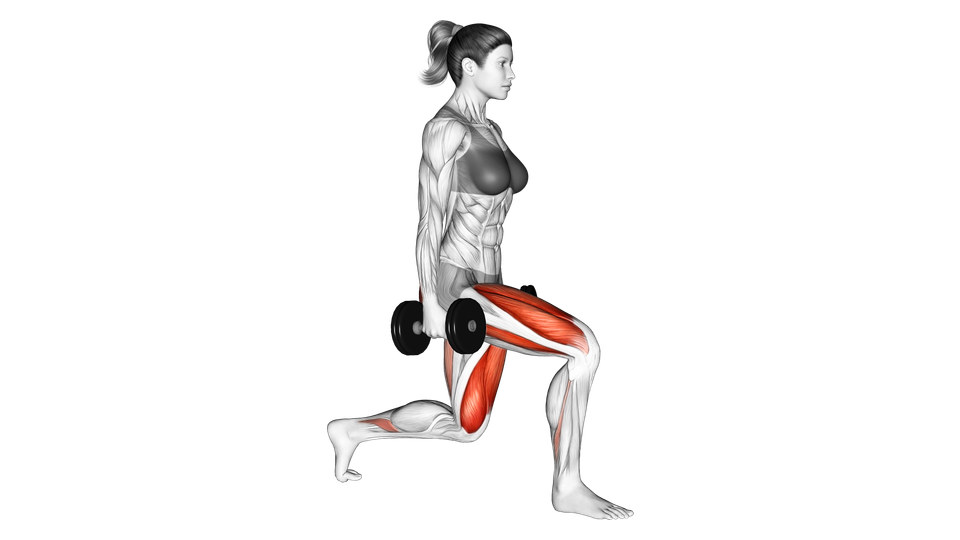
    You step backward rather than forward. The linked guide uses bodyweight, so it does not reproduce a dumbbell-loaded lunge set.
    See exercise guide
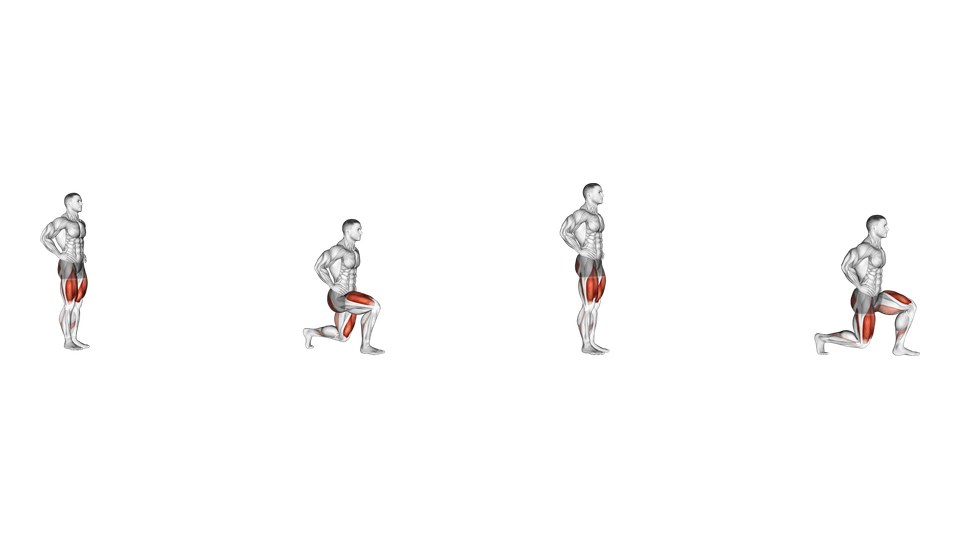
  • Anatomical illustration showing four side-view phases of bodyweight walking lunges, with the thighs and glutes highlighted.

    Similar movement

    Walking lunges

    You need: Floor space (no equipment)

    Why it fits
    Keeps alternating forward steps and split-stance lowering.
    What changes
    You move directly into the next step instead of returning to the original spot. The linked guide is unloaded and needs a clear, level path.
    See exercise guide
  • Side-view anatomical illustration of the bottom position of a dumbbell split squat, with a dumbbell held at each side, both feet on the floor and the thigh muscles highlighted.

    Similar movement

    Dumbbell split squat

    You need: Dumbbells

    Why it fits
    Keeps loaded split-stance leg work using dumbbells.
    What changes
    The feet remain in place through the set. You do not practise stepping out and back; finish the planned repetitions on each side.
    See exercise guide
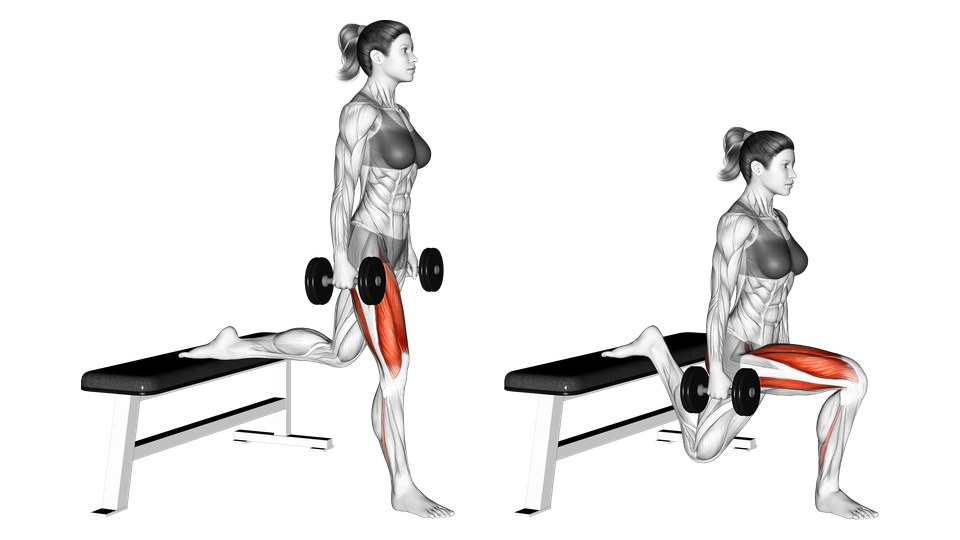
  • Anatomical illustration of a woman performing a dumbbell Bulgarian split squat with her rear foot on a bench and front thigh muscles highlighted.

    Similar movement

    Bulgarian split squat

    You need: Dumbbells + Flat bench

    Why it fits
    Keeps split-stance leg work with dumbbells at your sides.
    What changes
    The rear foot rests on a stable bench instead of stepping on the floor. This changes balance and rear-leg support; set a fresh stance and load.
    See exercise guide
See the original exercise guide

How we choose replacements

These are curated alternatives, chosen for the movement and the job the exercise does in a workout. A shared muscle group is not enough. Read what changes before choosing: support, range of motion, balance and resistance can all differ. If your goal is to improve a specific lift, alternatives do not replace practice of that lift.

Explore alternatives by exercise