Dips alternatives

Assisted dips keep the parallel-bar movement with counterweighted support. A seated machine dip offers a guided downward press; bench presses, push-ups and pushdowns fill broader pressing or elbow-extension slots.

Choose an assisted dip when keeping the body-between-bars movement matters. Other presses change the path or torso support; a pushdown keeps only resisted elbow extension.

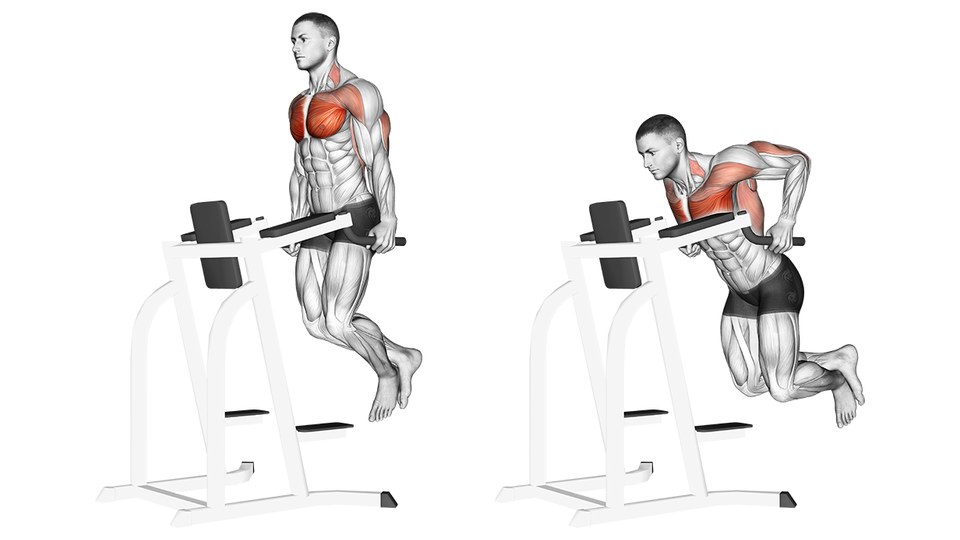
Anatomical illustration of a dip on a padded dip station, shown as two frames side by side on white. On the left, the lifter is at the top of the rep: arms straight on the handles, torso upright, legs hanging with the ankles loosely crossed, and the chest and front of the shoulders shaded red. On the right, the same lifter is at the bottom of the rep seen from behind and to the side: the torso leans forward, the elbows are bent to roughly a right angle and travel back behind the body, the knees are bent, and the backs of the upper arms and the shoulders are shaded red. The rest of the body is drawn in grey muscle detail.
What equipment can you use?

Choose everything you have. Some exercises need two items, such as dumbbells and a flat bench. Choose floor space for options without equipment.

Your replacements

Choose your equipment above to see replacements.

Compare all alternatives

These options need different equipment. Use the finder above to show only the setups you can use.

  • Two rear three-quarter anatomical illustrations of a man using a counterweighted assisted-dip machine against a white background. In the left frame he kneels high on the black assistance pad with his arms straight and hands on the parallel handles. In the right frame the pad and his body are lower, his elbows are bent behind him and his upper arms are near horizontal. The machine frame, weight stack and knee pad are visible in both frames. Dark red shading covers the triceps, with lighter red across the sides of the chest and parts of the back and shoulders.

    Similar movement

    Assisted dips

    You need: Assisted dip machine with parallel handles and knee pad

    Why it fits
    Keeps a parallel-bar dip while a counterweighted knee pad supports part of your bodyweight.
    What changes
    More assistance makes the dip lighter. Both knees stay on the moving pad; follow the guide for mounting and dismounting, and record assistance separately from added weight.
    See exercise guide
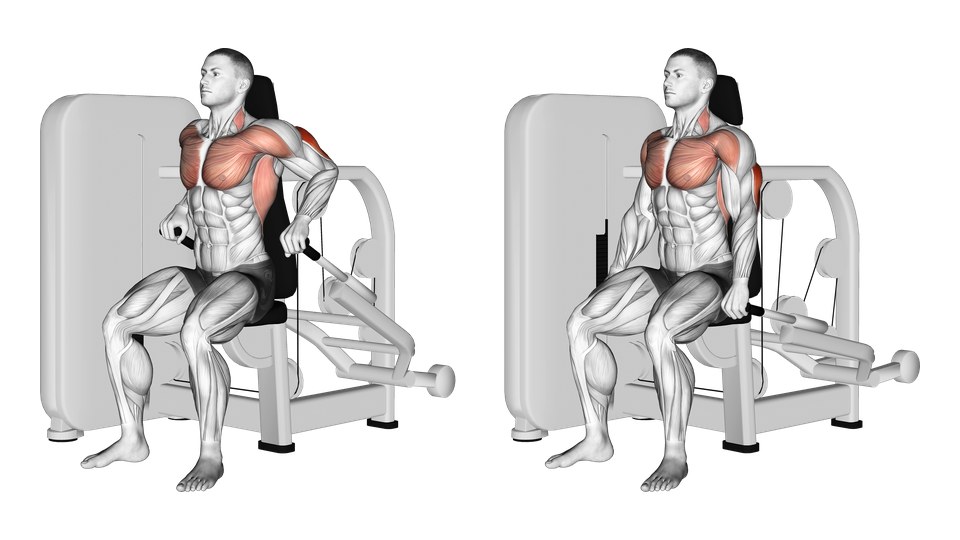
  • Anatomical illustration of a man pressing the handles down on a seated dip machine, with the triceps, chest and front shoulders highlighted.

    Similar movement

    Machine dip

    You need: Seated dip press machine

    Why it fits
    Keeps a compound downward press with the hands beside your body.
    What changes
    You sit against a back pad and press guided handles down instead of lowering your body between bars. Set the seat for a comfortable shoulder position and choose a separate machine load.
    See exercise guide
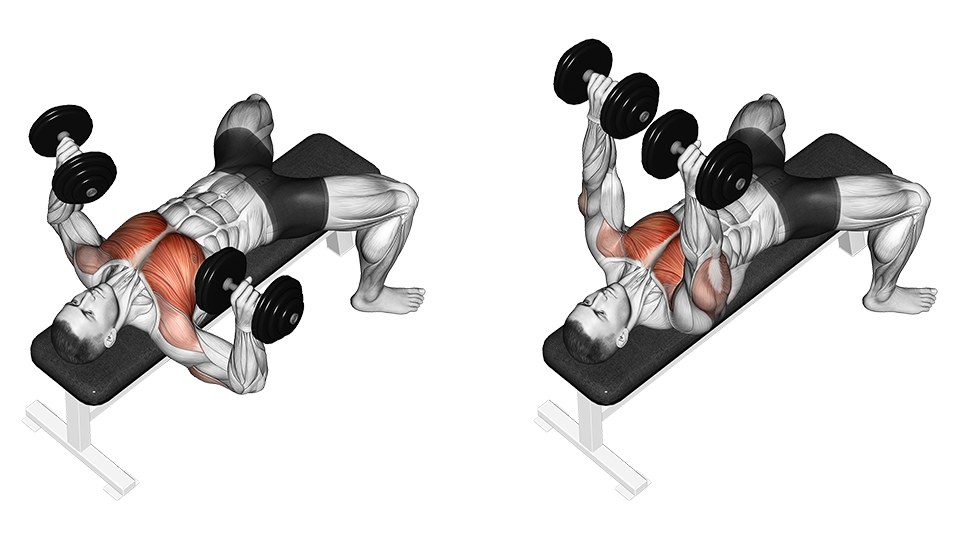
  • Anatomical illustration of a flat dumbbell bench press in two frames, side by side on white. In the left frame the lifter lies on a flat bench at the bottom of the rep, palms facing forward, elbows out and down so the upper arms sit at about the line of the torso and the dumbbells are level with the chest. In the right frame the same lifter is at lockout, arms straight overhead with the dumbbells close together above the shoulders. Both figures are drawn with the skin removed to show the muscles, and the chest is shaded red in both frames, with the back of the upper arm picked out in the lockout frame. Feet are flat on the floor and the shoulder blades stay on the bench.

    Different movement

    Dumbbell bench press

    You need: Dumbbells + Flat bench

    Why it fits
    Keeps a compound press involving both shoulder movement and elbow extension.
    What changes
    You lie on a flat bench and press weights above your chest instead of moving your body between bars. The arm path, torso support and working load change.
    See exercise guide
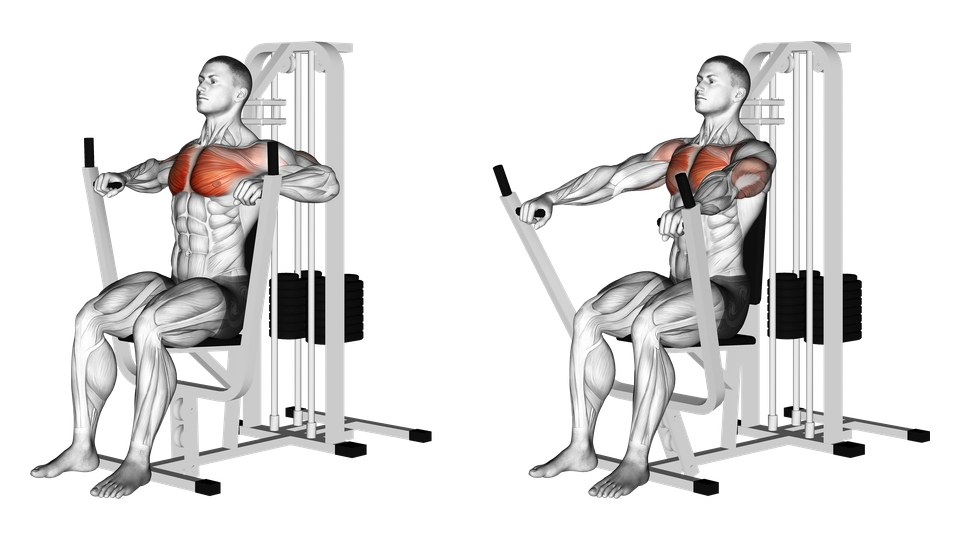
  • Anatomical illustration of a seated machine chest press at the bent-arm and extended-arm positions, with the chest, front shoulders and triceps highlighted.

    Different movement

    Chest press

    You need: Chest press machine

    Why it fits
    Offers a compound press with a supported torso and adjustable load.
    What changes
    The seated machine presses handles forward on a guided path. It does not copy the dip’s bar support or downward travel; set the seat before choosing a load.
    See exercise guide
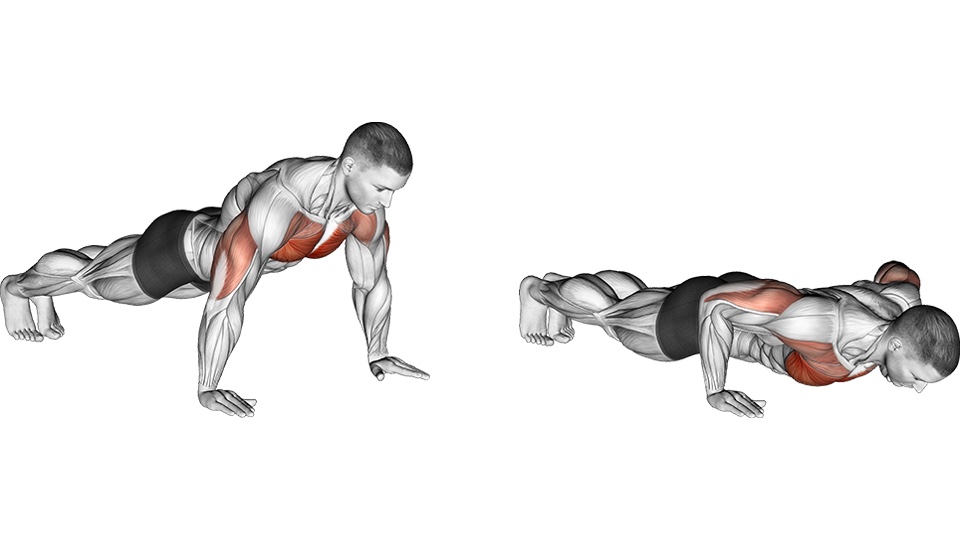
  • Two-frame anatomical illustration of a standard floor push-up. On the left, a man holds the top position on straight arms and toes with his body in one line. On the right, his elbows are bent diagonally back and his chest is close to the floor. The chest, front of the shoulders and backs of the upper arms are shaded red in both frames.

    Different movement

    Push-up

    You need: Floor space (no equipment)

    Why it fits
    Keeps a bodyweight compound press when parallel bars are unavailable.
    What changes
    Your hands and toes support you on the floor, and the body stays in one line as your chest lowers. Only part of your bodyweight is pressed, so dip repetitions do not predict push-up difficulty.
    See exercise guide
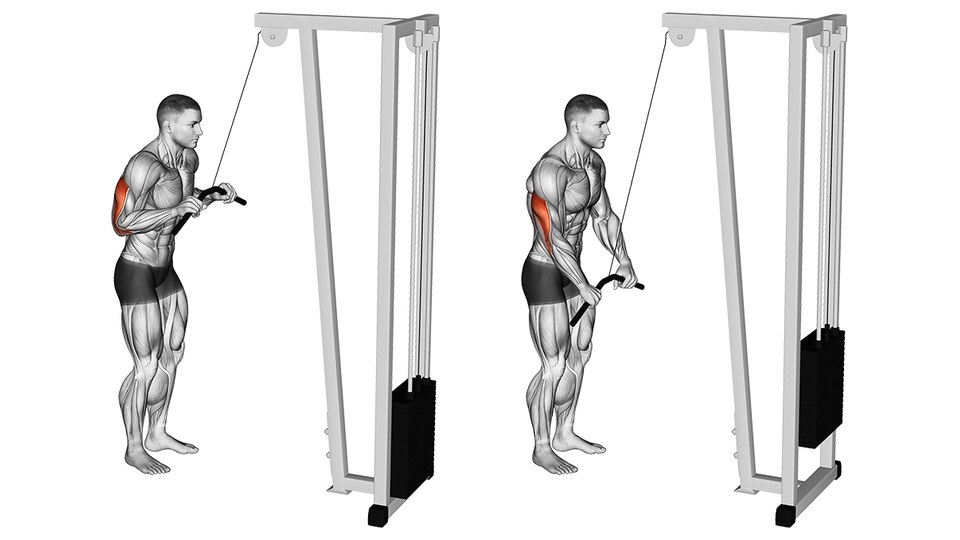
  • Anatomical illustration of a cable triceps pushdown, drawn as two frames side by side on white. A muscle-anatomy figure in shorts stands facing a cable tower, seen from his left side, holding a black angled bar with an overhand grip on a cable running from a pulley at the top of the tower. In the left frame the elbows are bent past a right angle and the bar is at chest height, with the weight stack down. In the right frame the elbows are straight and the bar is down at the front of the thighs, with the stack raised. In both frames the upper arm stays down at the side and the back of the near upper arm is highlighted in red, from the shoulder to the elbow — the triceps.

    Different movement

    Triceps pushdown

    You need: Adjustable cable pulley set high + Cable rope attachment or Adjustable cable pulley set high + Short cable bar attachment

    Why it fits
    Can replace a narrower triceps-focused slot with resisted elbow extension.
    What changes
    The upper arms stay beside your torso while the forearms move. This isolates elbow extension and leaves out the dip’s compound shoulder movement and bodyweight support.
    See exercise guide
See the original exercise guide

How we choose replacements

These are curated alternatives, chosen for the movement and the job the exercise does in a workout. A shared muscle group is not enough. Read what changes before choosing: support, range of motion, balance and resistance can all differ. If your goal is to improve a specific lift, alternatives do not replace practice of that lift.

Explore alternatives by exercise