Cable curl alternatives

Barbell, EZ-bar and dumbbell curls keep standing elbow flexion without a cable station. A band curl provides another resistance setup.

The original uses a palm-up bar attached to a low pulley. Free weights pull downward, independent hands change the set, and a band’s resistance changes with stretch.

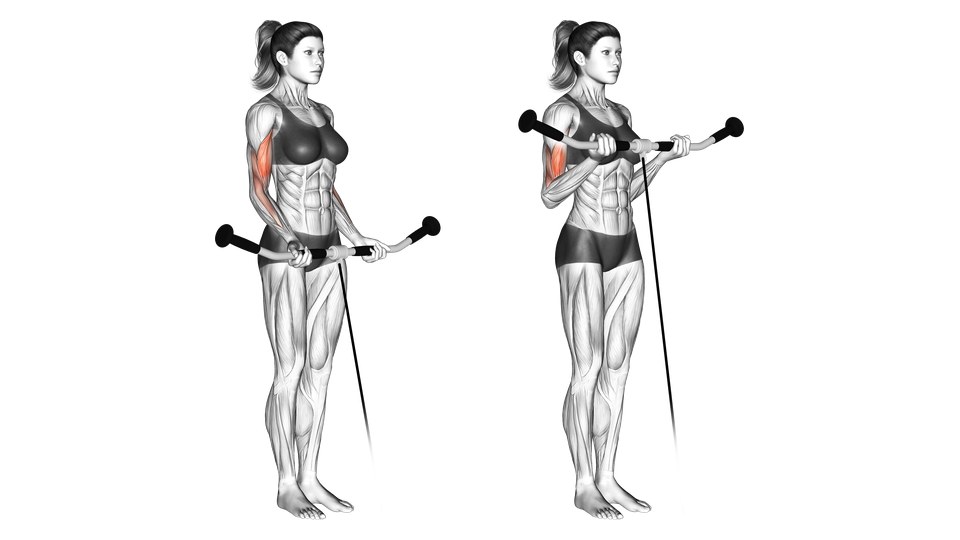
Anatomical illustration of a woman performing a standing cable curl with a curved bar, with the front upper arms highlighted.
What equipment can you use?

Choose everything you have. Some exercises need two items, such as dumbbells and a flat bench. Choose floor space for options without equipment.

Your replacements

Choose your equipment above to see replacements.

Compare all alternatives

These options need different equipment. Use the finder above to show only the setups you can use.

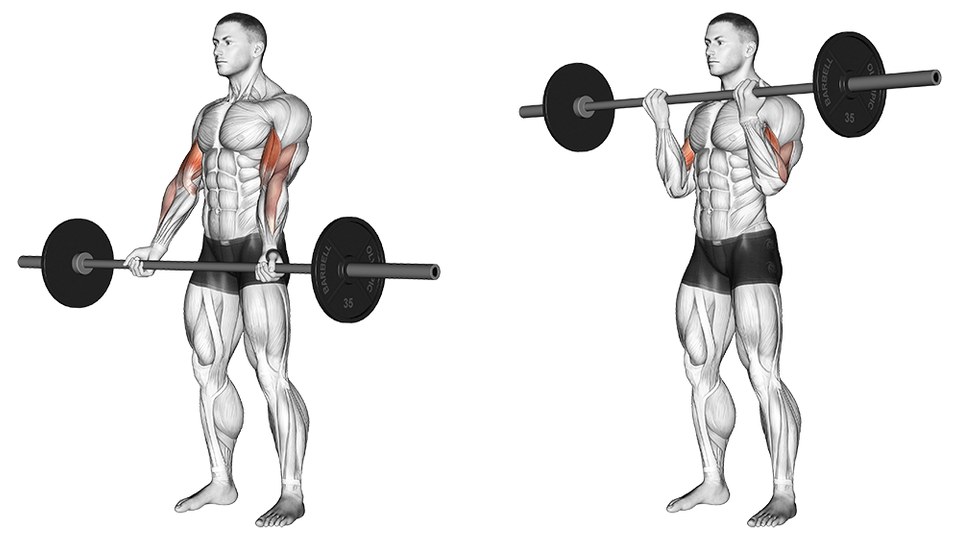
  • Anatomical illustration of a standing barbell curl in two frames on a white background. Left: a man stands upright holding a straight barbell with plates at both ends, palms forward, arms hanging straight so the bar rests against the front of the thighs. Right: the same man at the top of the rep, elbows bent and tucked beside the ribs, the bar held at upper chest and shoulder height. In both frames the front of each upper arm, from shoulder to elbow, is shaded red; the forearms are left unshaded.

    Similar movement

    Barbell biceps curl

    You need: Barbell and plates

    Why it fits
    Keeps a standing two-arm palm-up curl.
    What changes
    A free bar replaces the cable attachment. Its resistance points downward rather than toward a pulley; choose a barbell load separately from the stack setting.
    See exercise guide
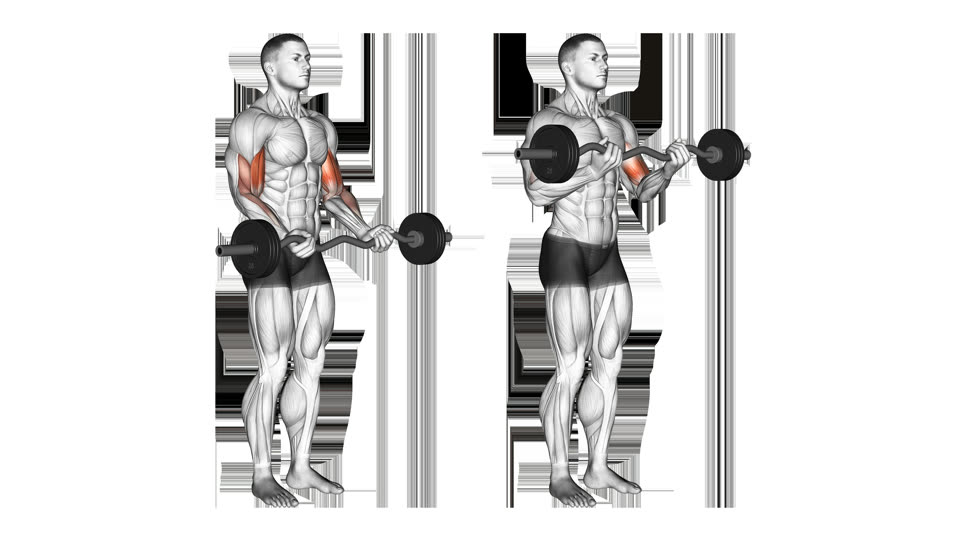
  • Anatomical illustration of a standing EZ bar curl shown with straight and bent elbows, with the front upper arms highlighted.

    Similar movement

    EZ bar curl

    You need: EZ bar and plates

    Why it fits
    Keeps a standing two-arm curl with both hands on one bar.
    What changes
    The angled grip changes wrist position and the free weight pulls downward. Choose a comfortable grip and a new working load.
    See exercise guide
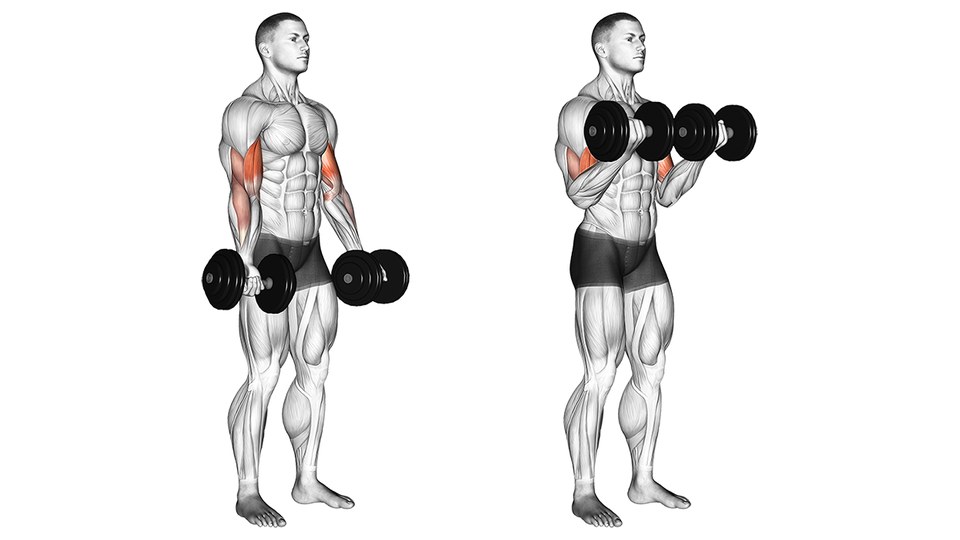
  • Anatomical illustration of a standing dumbbell biceps curl, shown in two frames side by side. On the left the man stands upright with a dumbbell in each hand at his sides, arms straight, palms turned forward. On the right both elbows are bent and both dumbbells have been curled up to shoulder height with the palms facing up. In both frames the front of each upper arm is shaded red; the forearms and the rest of the body are left in plain grey.

    Similar movement

    Dumbbell biceps curl

    You need: Dumbbells

    Why it fits
    Keeps elbow-flexion work with independent weights.
    What changes
    Each hand controls a dumbbell instead of sharing a cable bar. Use the palm-up version in the guide and record the dumbbell load separately.
    See exercise guide
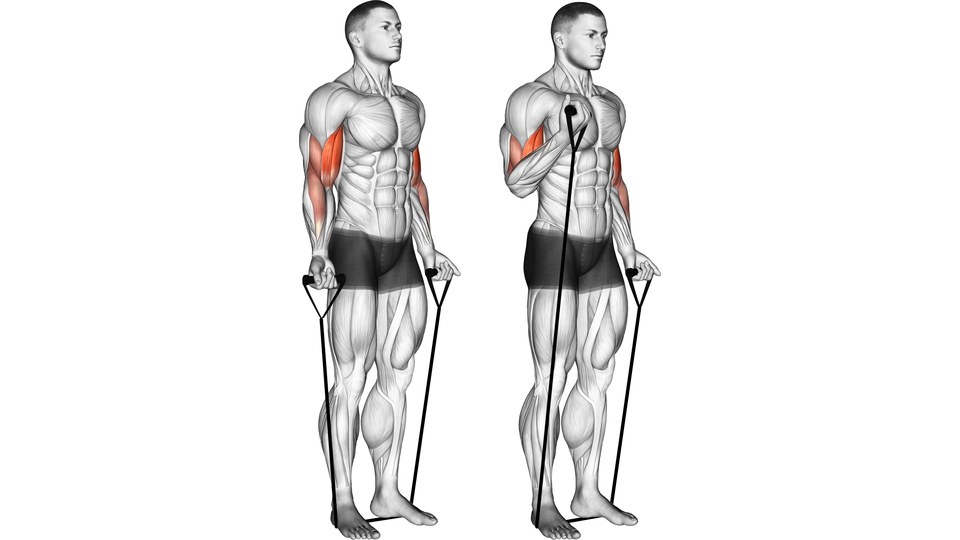
  • Male anatomical model doing an alternating band curl, with the elbow flexors shaded red and the band held under both feet.

    Similar movement

    Band biceps curl

    You need: Resistance band + Pair of compatible resistance-band handles

    Why it fits
    Offers standing elbow-flexion work with a band held beneath your feet.
    What changes
    The linked guide alternates arms with band handles. Check the band under both feet and count work per side; stretch replaces a numbered cable load.
    See exercise guide
See the original exercise guide

How we choose replacements

These are curated alternatives, chosen for the movement and the job the exercise does in a workout. A shared muscle group is not enough. Read what changes before choosing: support, range of motion, balance and resistance can all differ. If your goal is to improve a specific lift, alternatives do not replace practice of that lift.

Explore alternatives by exercise