Shrugs alternatives

Dumbbells and a low cable provide other shoulder-elevation setups when a barbell is unavailable.

Keep the arms straight and raise the shoulders vertically without rolling them. Hand position, cable direction and available loading differ, so barbell and replacement weights are not interchangeable.

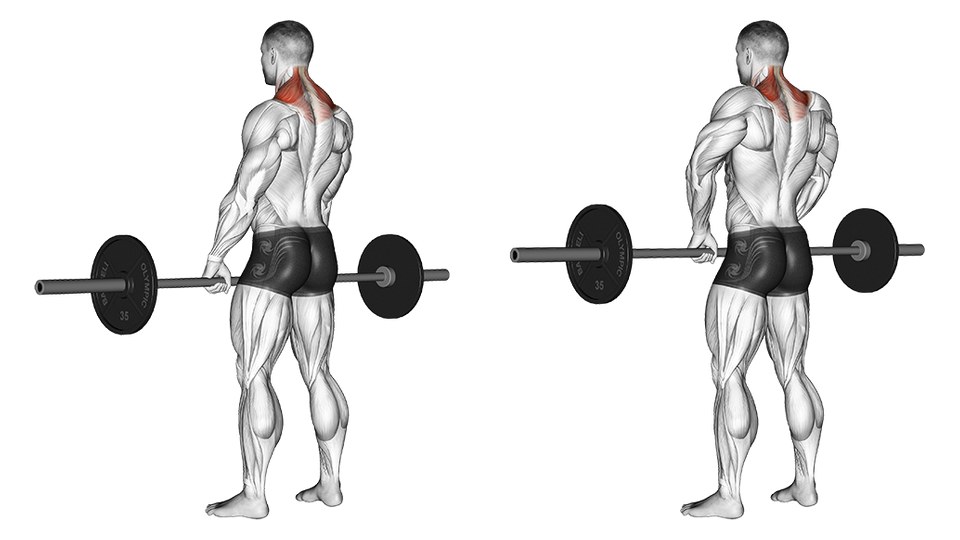
Anatomical illustration of a man performing a standing barbell shrug, with the upper trapezius highlighted.
What equipment can you use?

Choose everything you have. Some exercises need two items, such as dumbbells and a flat bench. Choose floor space for options without equipment.

Your replacements

Choose your equipment above to see replacements.

Compare all alternatives

These options need different equipment. Use the finder above to show only the setups you can use.

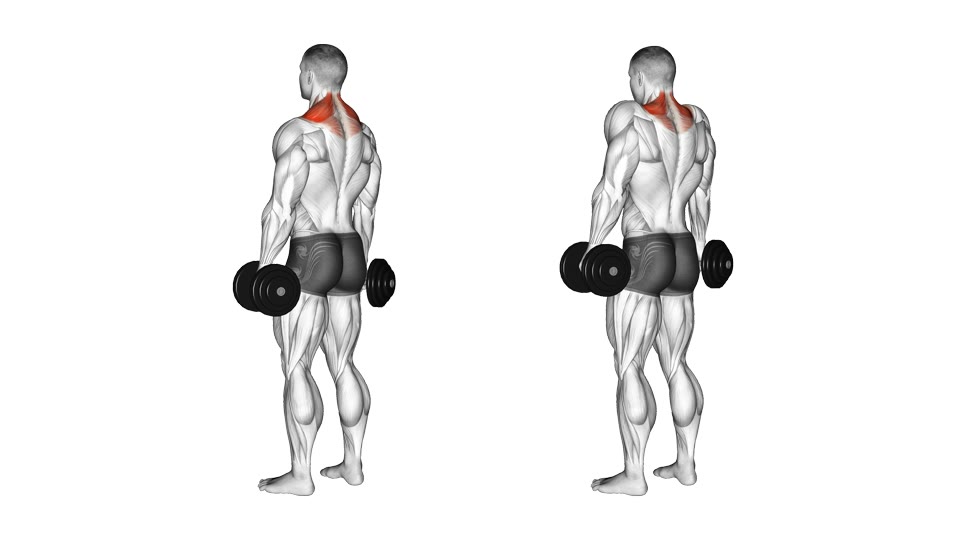
  • Two-frame rear-view anatomical illustration of a standing man holding dumbbells at his sides before and after raising his shoulders, with the upper trapezius highlighted.

    Similar movement

    Dumbbell shrug

    You need: Dumbbells

    Why it fits
    Keeps standing shoulder-blade elevation with straight arms.
    What changes
    Two dumbbells hang beside the thighs instead of one bar in front. The hands move independently; keep the head stacked and lower without bouncing.
    See exercise guide
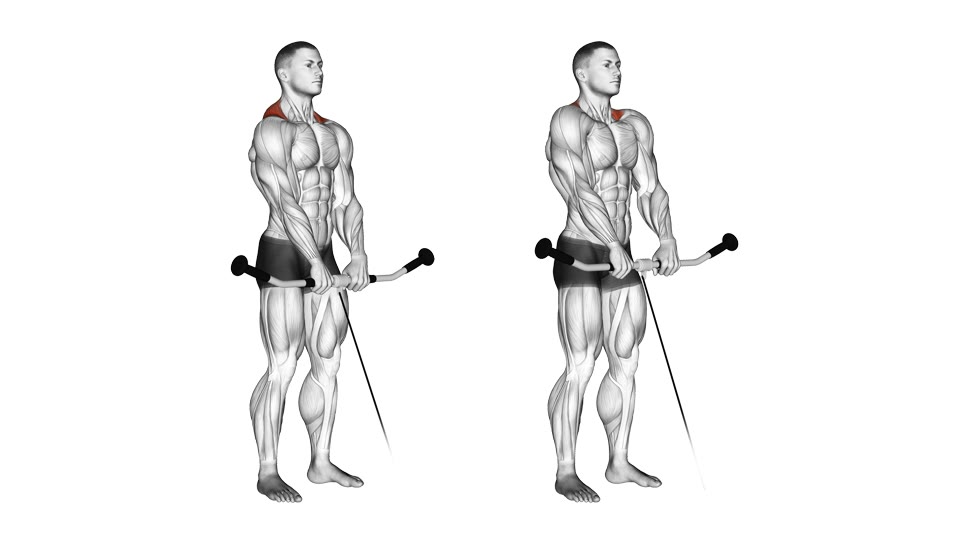
  • Two front-view anatomical frames of a man holding a curved bar from a low cable in front of his thighs, first with the shoulders lowered and then shrugged upward, with the upper trapezius highlighted.

    Similar movement

    Cable shrug

    You need: Adjustable cable pulley set low + Short cable bar attachment

    Why it fits
    Keeps a standing shrug with both hands on a bar attachment.
    What changes
    The low cable replaces the free barbell. Keep the attachment close to the front of the thighs and the stack quiet; set cable load independently.
    See exercise guide
See the original exercise guide

How we choose replacements

These are curated alternatives, chosen for the movement and the job the exercise does in a workout. A shared muscle group is not enough. Read what changes before choosing: support, range of motion, balance and resistance can all differ. If your goal is to improve a specific lift, alternatives do not replace practice of that lift.

Explore alternatives by exercise