Back extension alternatives

A reverse hyperextension changes which end of the body moves. Romanian deadlifts and good mornings offer hip-hinge work when the angled back-extension bench is unavailable.

The original guide rounds and then unrolls the spine while the hips move, stopping at a straight body line. These alternatives change that action or use a steady spine; they do not reproduce the original back movement.

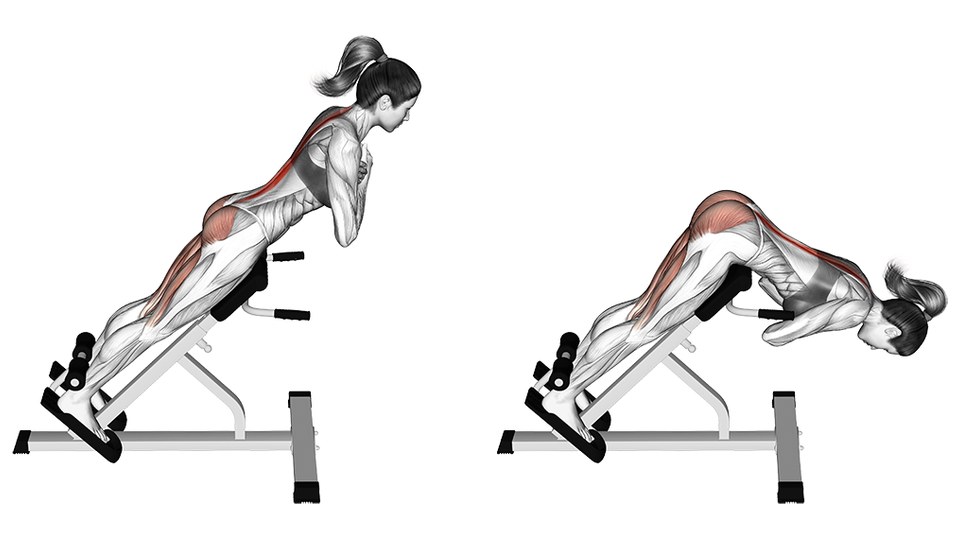
Two-frame anatomical illustration of a back extension on a 45-degree bench. A woman lies face down with her hips on the angled pad, ankles hooked under the rollers and forearms crossed in front of her chest. In the left frame she is at the top of the rep, body in a straight line from head to heels; in the right frame she has hinged at the hips and hangs down toward the floor, head lowest. In both frames the gluteus maximus and the hamstrings down the back of the thigh are shaded red, and so is a strip of muscle running up either side of the spine from the pelvis to the neck.
What equipment can you use?

Choose everything you have. Some exercises need two items, such as dumbbells and a flat bench. Choose floor space for options without equipment.

Your replacements

Choose your equipment above to see replacements.

Compare all alternatives

These options need different equipment. Use the finder above to show only the setups you can use.

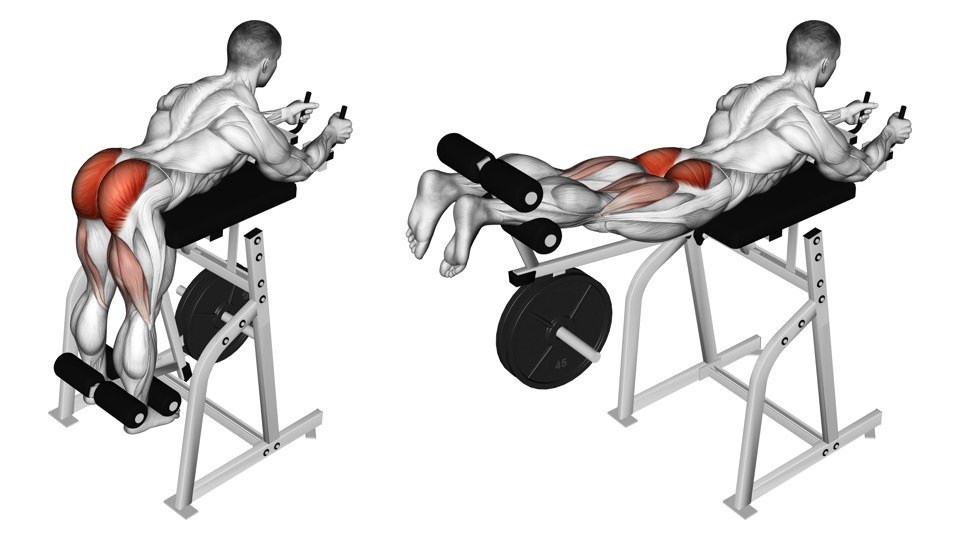
  • Rear three-quarter views of a man lying face down on a plate-loaded reverse hyper machine, with the legs hanging on the left and lifted behind him on the right. Rollers surround the lower legs; the glutes and backs of the thighs are shaded.

    Different movement

    Reverse hyperextension

    You need: Reverse hyperextension machine with pad, handles and secure lower-leg attachment

    Why it fits
    Offers supported hip-extension work with the torso resting on a pad.
    What changes
    The legs move on a lever while the torso stays supported, instead of raising and unrolling the torso on an angled bench. Secure the machine’s lower-leg attachment and stop when legs and torso line up.
    See exercise guide
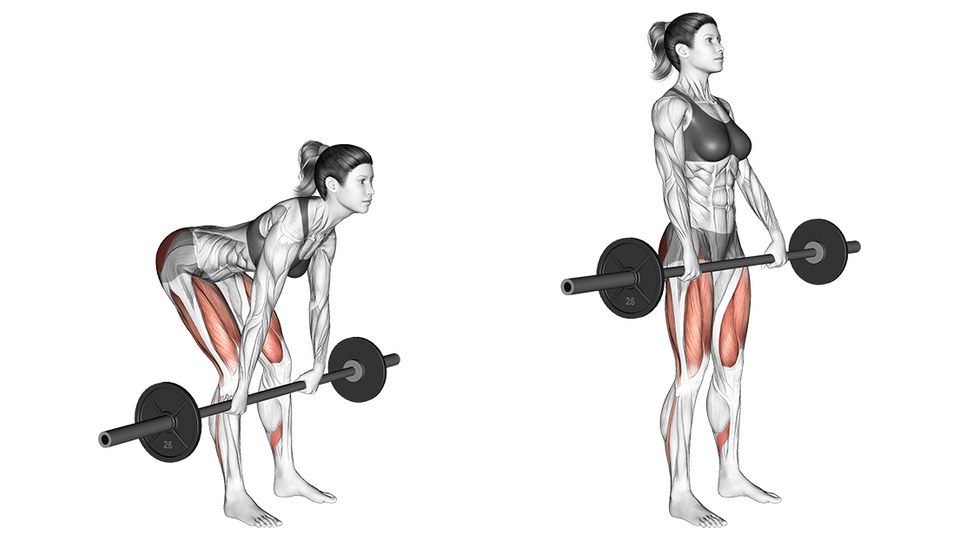
  • Two frames of the same anatomical figure, a woman, performing a barbell Romanian deadlift, shown from the side against white. Left: the bottom of the rep, hips pushed back, torso close to horizontal, knees clearly bent rather than locked, arms hanging straight with the bar at about knee height just in front of the shins. Right: the finish, standing tall and upright with the bar held at the hips. The barbell carries one plate a side. Highlighted in red on both frames are the glutes and the hamstrings down the back of the thigh, with the shading continuing into the calf; in the standing frame the fronts of the thighs and the forearms are shaded as well. The lower back is left unshaded in both.

    Different movement

    Romanian deadlift

    You need: Barbell and plates

    Why it fits
    Keeps hip-extension work through a standing hinge.
    What changes
    Hold a bar in front of the thighs with a steady spine and soft knees. The guide does not round and unroll the back; establish the standing bar position as its setup describes.
    See exercise guide
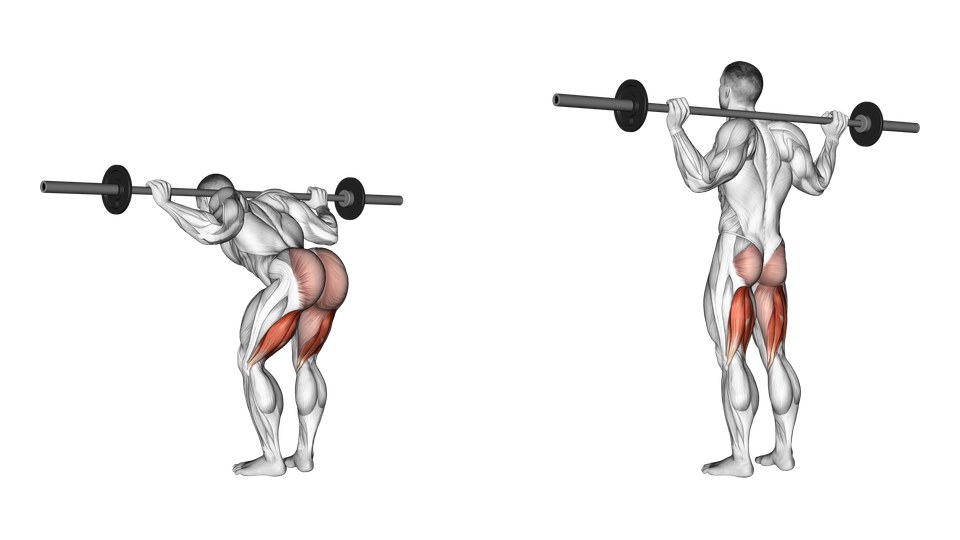
  • Anatomical illustration of a barbell good morning shown standing and hinged forward, with the hamstrings, glutes and lower back highlighted.

    Different movement

    Good mornings

    You need: Barbell and plates + Squat rack with safeties

    Why it fits
    Offers hip-hinge work with a bar supported across the upper back.
    What changes
    Rack safeties and a secure upper-back bar position replace the bench and ankle rollers. Keep the spine steady and stop before the back position changes; choose a new load.
    See exercise guide
See the original exercise guide

How we choose replacements

These are curated alternatives, chosen for the movement and the job the exercise does in a workout. A shared muscle group is not enough. Read what changes before choosing: support, range of motion, balance and resistance can all differ. If your goal is to improve a specific lift, alternatives do not replace practice of that lift.

Explore alternatives by exercise