Incline machine press alternatives

Incline dumbbell and barbell presses keep a reclined pressing setup. A flat chest-press machine offers a broader option when incline equipment is unavailable.

The original guides the handles while the back rests on a reclined pad. Free weights change hand freedom and unracking; a flat machine changes the pressing angle.

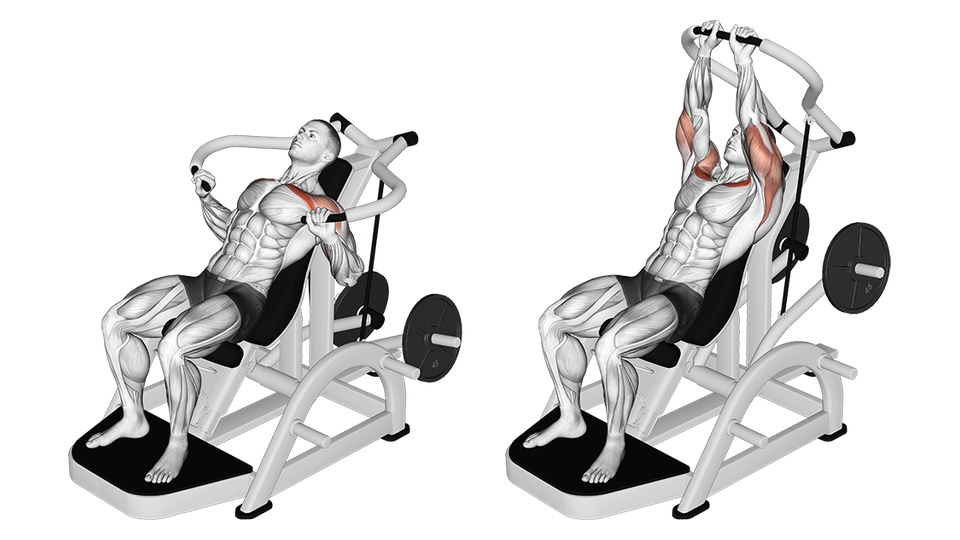
Anatomical illustration of a man performing an incline lever chest press, with the chest, front shoulders and triceps highlighted.
What equipment can you use?

Choose everything you have. Some exercises need two items, such as dumbbells and a flat bench. Choose floor space for options without equipment.

Your replacements

Choose your equipment above to see replacements.

Compare all alternatives

These options need different equipment. Use the finder above to show only the setups you can use.

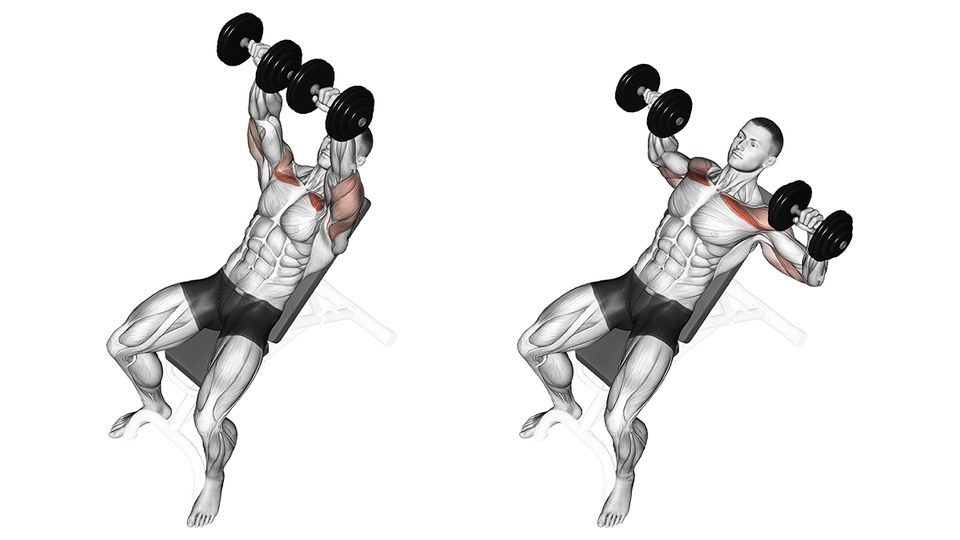
  • Anatomical illustration of a man pressing two dumbbells while lying back on a bench inclined at roughly forty-five degrees, shown twice side by side on a white background. In the left frame his arms are straight overhead and the two dumbbells are almost touching. In the right frame he is at the bottom of the rep, the dumbbells level with his chest and his elbows out from his torso, palms facing forward. The muscles of the chest and the front of the shoulder are shaded red in both frames, most strongly in the upper chest running from the collarbone out to the shoulder; the rest of the body is drawn in plain white. The back of the upper arm is not highlighted. The bench angle, the elbow position and the palms-forward grip shown are one option among several, not the required way to do the movement.

    Similar movement

    Incline dumbbell press

    You need: Dumbbells + Adjustable bench with incline and upright settings

    Why it fits
    Keeps bench-supported incline pressing.
    What changes
    Two free weights replace guided levers. Use the guide’s roughly 30-degree bench setup and its written elbow position; the illustration shows a steeper bench and wider upper arms.
    See exercise guide
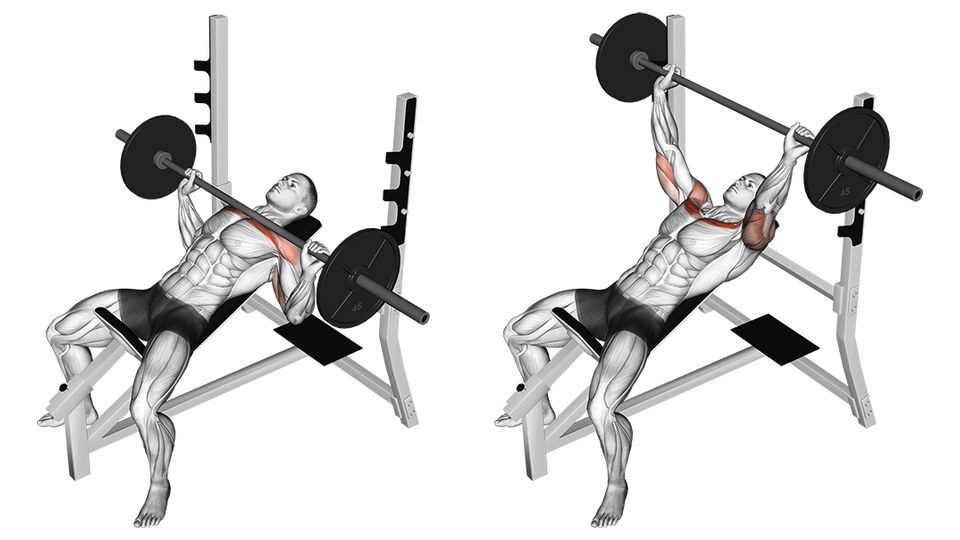
  • Anatomical illustration of a barbell incline bench press in two frames, side by side. The lifter lies on a bench set to roughly 30 to 45 degrees inside a squat-style rack with the barbell taken from the rack hooks. In the left frame the bar is at the upper chest with the elbows bent and tucked, and a band of the upper chest below the collarbone is highlighted. In the right frame the arms are locked out overhead and the back of both upper arms is highlighted instead.

    Similar movement

    Incline barbell bench press

    You need: Barbell and plates + Adjustable bench with incline and upright settings + Squat rack with safeties

    Why it fits
    Keeps a supported incline compound press.
    What changes
    A free bar fixes both hands together but requires unracking and re-racking. Use suitable rack safeties and the incline bench setting in the guide; choose a fresh barbell load.
    See exercise guide
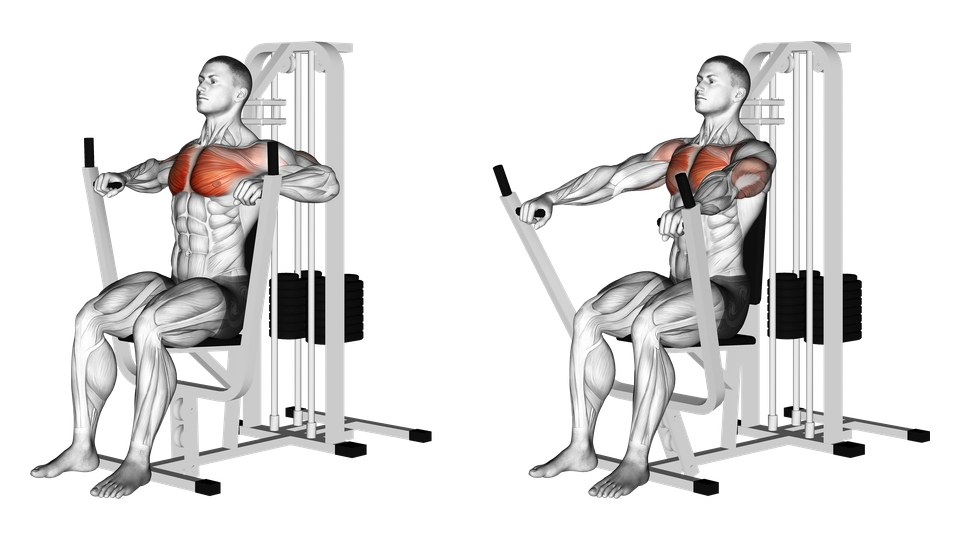
  • Anatomical illustration of a seated machine chest press at the bent-arm and extended-arm positions, with the chest, front shoulders and triceps highlighted.

    Different movement

    Chest press

    You need: Chest press machine

    Why it fits
    Offers guided chest pressing with back support.
    What changes
    The linked machine presses forward from mid-chest height instead of along an incline path. This is a broader pressing substitution when the angle can change.
    See exercise guide
See the original exercise guide

How we choose replacements

These are curated alternatives, chosen for the movement and the job the exercise does in a workout. A shared muscle group is not enough. Read what changes before choosing: support, range of motion, balance and resistance can all differ. If your goal is to improve a specific lift, alternatives do not replace practice of that lift.

Explore alternatives by exercise