
Glute bridge alternatives

Hip thrusts offer hip extension with upper-back support. A single-leg hip thrust changes support and side counting, while a machine adds external resistance.

The original is a two-foot bodyweight bridge on the floor, stopping when trunk and thighs line up. A bench, one planted leg or a machine changes range, balance and loading; do not copy its repetitions or load automatically.

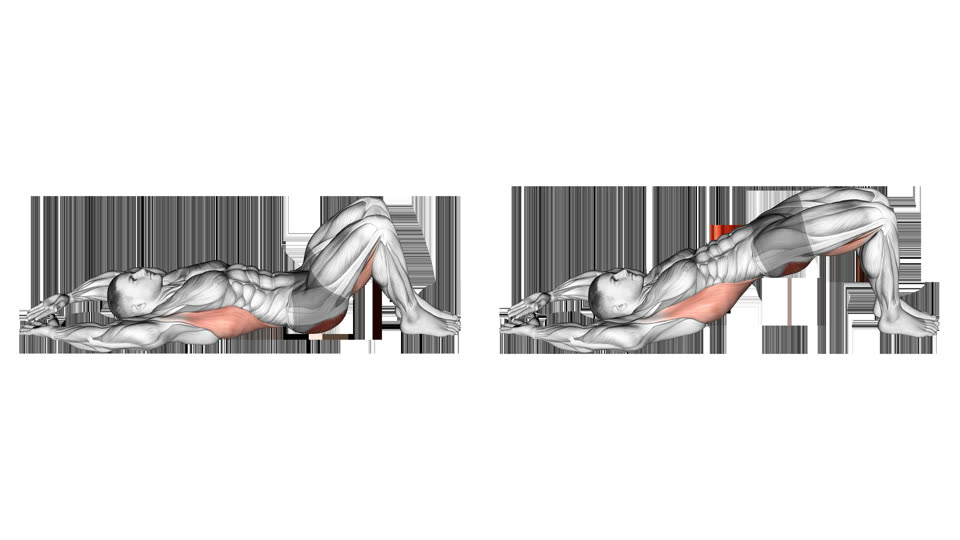
Anatomical illustration of a bodyweight glute bridge shown lying down and with the hips raised, with the gluteal region highlighted.
What equipment can you use?

Choose everything you have. Some exercises need two items, such as dumbbells and a flat bench. Choose floor space for options without equipment.

Your replacements

Choose your equipment above to see replacements.

Compare all alternatives

These options need different equipment. Use the finder above to show only the setups you can use.

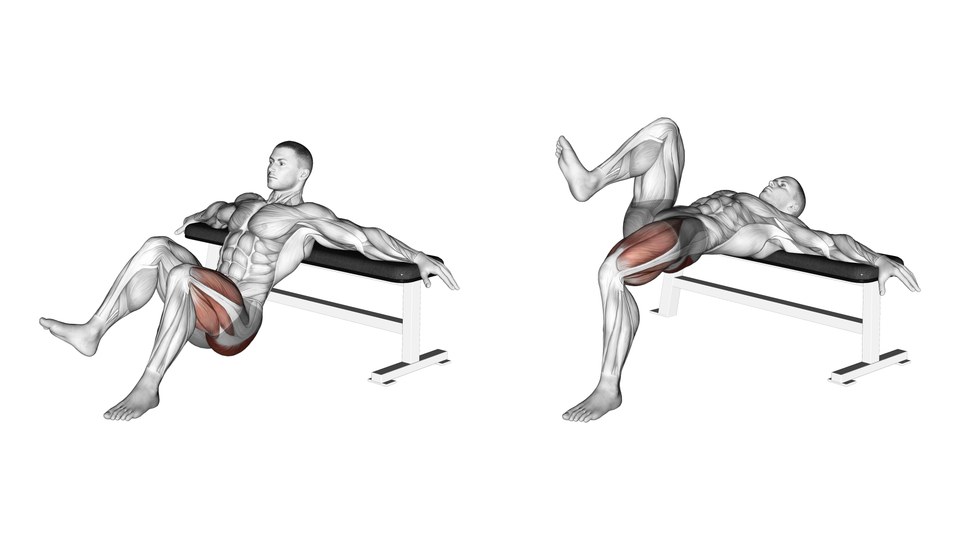
  • Anatomical illustration of a bodyweight single-leg hip thrust at the lowered and raised positions, with the working-side glute highlighted.

    Similar movement

    Single-leg hip thrust

    You need: Flat bench

    Why it fits
    Keeps controlled hip extension with a planted foot.
    What changes
    Support the upper back on a stable bench and keep the other leg raised. This replaces floor support and two-leg work; hold the pelvis level and complete each side.
    See exercise guide
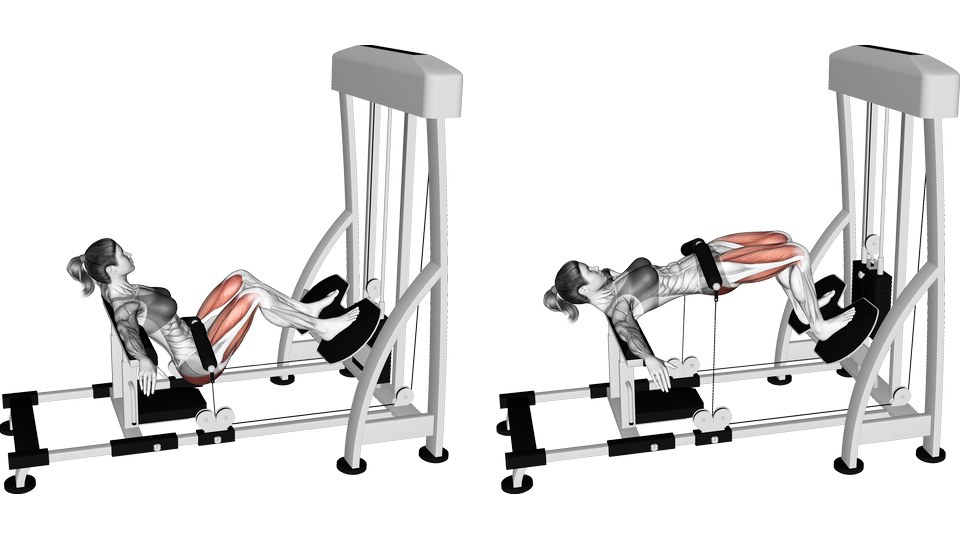
  • Anatomical illustration of a hip thrust machine at the lowered and raised positions, with the glutes highlighted.

    Similar movement

    Hip thrust machine

    You need: Hip thrust machine

    Why it fits
    Offers supported hip extension on a dedicated machine.
    What changes
    Set the hip pad, back support and feet securely before releasing the machine’s catch, as its guide describes. Machine loading and support replace the bodyweight floor setup.
    See exercise guide
  • Two side-view anatomical illustrations of a woman performing a barbell hip thrust on a white background. In the left frame her upper back rests on a flat bench, her knees are bent, her hips hang low in front of the bench and she steadies a thickly padded barbell across her hips. In the right frame she has raised the bar until her torso and thighs are nearly level, with both feet flat and the bar still held in place. Red shading covers the buttocks and broad areas of the back, inner and front of both thighs, corresponding to the gluteal, hamstring, adductor and quadriceps regions.

    Similar movement

    Barbell hip thrust

    You need: Barbell and plates + Flat bench + Barbell hip pad

    Why it fits
    Keeps hip extension with the feet planted.
    What changes
    Upper-back bench support and a padded bar across the hip crease replace the unloaded floor setup. Stabilize the bench, keep the ribs down and choose a new load.
    See exercise guide
See the original exercise guide

How we choose replacements

These are curated alternatives, chosen for the movement and the job the exercise does in a workout. A shared muscle group is not enough. Read what changes before choosing: support, range of motion, balance and resistance can all differ. If your goal is to improve a specific lift, alternatives do not replace practice of that lift.

Explore alternatives by exercise